Business News: Get the latest Business News, Live Share & Stock Market Updates, Top News from India and across world. Read Top Business News and updates on financial, economic and banking news on CNBCTV18.
cut case strengthen, but high growth keeps panel divided
Citizen’s MPC sees RBI rate-cut case strengthen, but high growth keeps panel divided
Economists on a Citizen’s MPC panel remain split over an RBI rate cut as low inflation signals economic slack while strong GDP growth raises doubts on the need for policy support.
By Latha Venkatesh
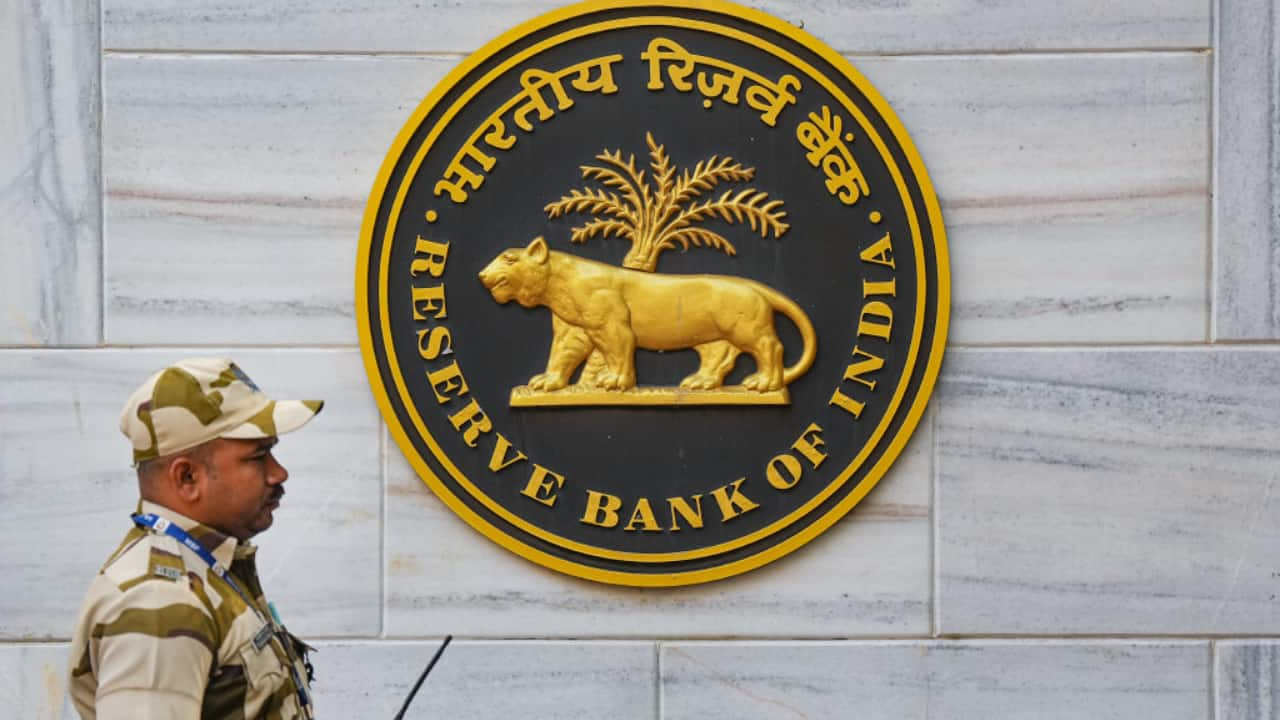
The Reserve Bank of India’s (RBI) next policy decision on December 5, 2025, has turned into a close call, with economists on Citizen’s Monetary Policy Committee (MPC) panel divided on whether the central bank should cut rates despite headline gross domestic product (GDP) growth of 8.2%.
Speaking on the panel, Sajjid Chinoy, Head of Asia Economic Research at JPMorgan, argued that the RBI should focus on its inflation mandate rather than the debate over potential growth.
He reminded that the central bank’s primary role is to keep inflation close to 4%, while also keeping an eye on growth. He pointed out that if inflation were at the top of the band, “most analysts would say the RBI needs to hike rates.” Today, the situation is the reverse.
Chinoy said overall inflation this year has been around 2.2–2.3% before recent goods and services tax (GST) cuts, and core inflation, after adjusting for gold and fuel, has been running at less than 3% for a year.
With headline inflation near 2% and underlying inflation near 3%, he argued this “suggests that there is still slack in the economy” and that “the decision is clear, that you need at this point to cut rates, to maintain the primacy of your mandate.”
Also Read | Shikhara’s Rahul Chadha says RBI cut likely, FII mood hinges on tariff rollback
He said judgments about the output gap are more difficult, but as long as core inflation stays near 3%, the RBI needs to be supportive and implement the inflation-targeting framework “symmetrically.”
Soumya Kanti Ghosh, Group Chief Economic Adviser at State Bank of India, agreed that inflation is set to undershoot earlier projections but cautioned against assuming an automatic rate cut.
He noted that the RBI’s inflation projections have been revised down through the year. The forecast started at 4% in April, moved to 3.7%, then 3.1%, and now 2.6%. “There is every possible that the final inflation number could be closer to 2%,” he said. For the next year, he believes inflation could also run “decisively below 4%.”
At the same time, he stressed the difficulty of providing firm forward guidance in what he called “a world of uncertainty.” On growth, he pointed out that GDP has remained high regardless of debates about the deflator or indirect taxes. “We need to understand that the GDP growth has continued to be strong,” he said.
Ghosh’s conclusion was that policy must balance both sides. He said inflation will significantly undershoot, but the RBI should still “keep the gunpowder in your arsenal over a longer period of time,” hinting at a more cautious approach on rate cuts despite low inflation.
Speaking about the quarter two GDP print of 8.2%, Sonal Varma, Chief Economist for India and Asia ex-Japan at Nomura, said the decision is “a tight” one and that, “taken at face value, the 8.2 and for the financial year 2025-26 (FY26) where we are now tracking closer to 7.5% does not suggest there is a need” for a rate cut.
Also read | India to cross $4 trillion GDP mark in FY26; nominal growth to improve in H2: CEA Nageswaran
However, she argued for a more detailed analysis of the numbers. She raised questions about the role of low deflators in lifting real GDP, the behaviour of nominal growth, and whether the output gap has really turned positive. Varma said the deflator is likely to fall further into negative territory in quarter three, which will “again hold up real GDP” and keep the same debate alive two months later.
Her team’s assessment is that steady-state growth has not yet stabilised in the 7.5–8% range and that growth may revert towards 6.5–7%. “Our view is it is not positive, and the deflators are exaggerating the real increase,” she said of the output gap, suggesting that underlying demand may not be as strong as headline numbers indicate.
The final decision will show how the RBI chooses to interpret its mandate at a time when high real GDP growth and low inflation are sending mixed signals to policymakers and markets.
For the full interview, watch the accompanying video
Catch all the latest updates from the stock market here
Check out our in-depth Market Coverage, Business News & get real-time Stock Market Updates on CNBC-TV18. Also, Watch our channels CNBC-TV18, CNBC Awaaz and CNBC Bajar Live on-the-go!

















)