Global Markets Grapple with Interest Rate Speculations and G...
01 Dec 2025



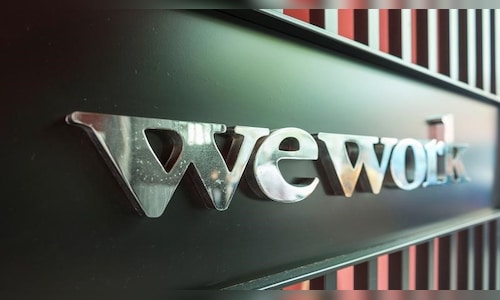
The Bombay High Court on Monday made a significant decision, dismissing two petitions that sought to halt WeWork India's planned initial public offering.
The petitioners, Vinay Bansal and Hemant Kulshrestha, had challenged the Securities and Exchange Board of India (SEBI) approval for the IPO, citing several key risks that were either inadequately disclosed or unclear.
The petitioners described the combination of these risks as “unprecedented” for investors.
A division bench of Justices R.I. Chagla and Farhan Parvez Dubash rejected the petitions, imposing a cost of ₹1 lakh on Vinay Bansal, who was directed to deposit the amount with the Maharashtra State Legal Services Authority within two weeks.
The court delivered the order orally, with a detailed judgment awaited.
Senior counsel Shiraz Rustomjee, appearing for SEBI, argued that courts should not interfere with regulatory decisions unless they are arbitrary or unconstitutional.
Rustomjee added that SEBI had exercised active oversight and required criminal proceedings to be listed as the first risk factor in the prospectus.
Senior counsels Darius Khambatta and Gaurav Joshi, representing WeWork India, said the company had complied with all disclosure requirements under the ICDR Regulations.
Khambatta and Joshi also questioned the timing of the petitions, stating that the draft prospectus had been in the public domain for months and the challenges were raised only at the final stage.
The court's decision removes a last-minute hurdle for WeWork India's market debut, paving the way for the company's IPO to proceed.
Investors will be keeping a close eye on the situation as the IPO's success will depend on various factors, including the market's reception and the company's ability to execute its business plan.
Stay up-to-date with the latest market news and updates on CNBC-TV18.
Watch our channels CNBC-TV18, CNBC Awaaz, and CNBC Bajar Live on-the-go!











)