
Kirloskar Pneumatic Allots 6,100 Equity Shares Under Employe...
22 Mar 2026


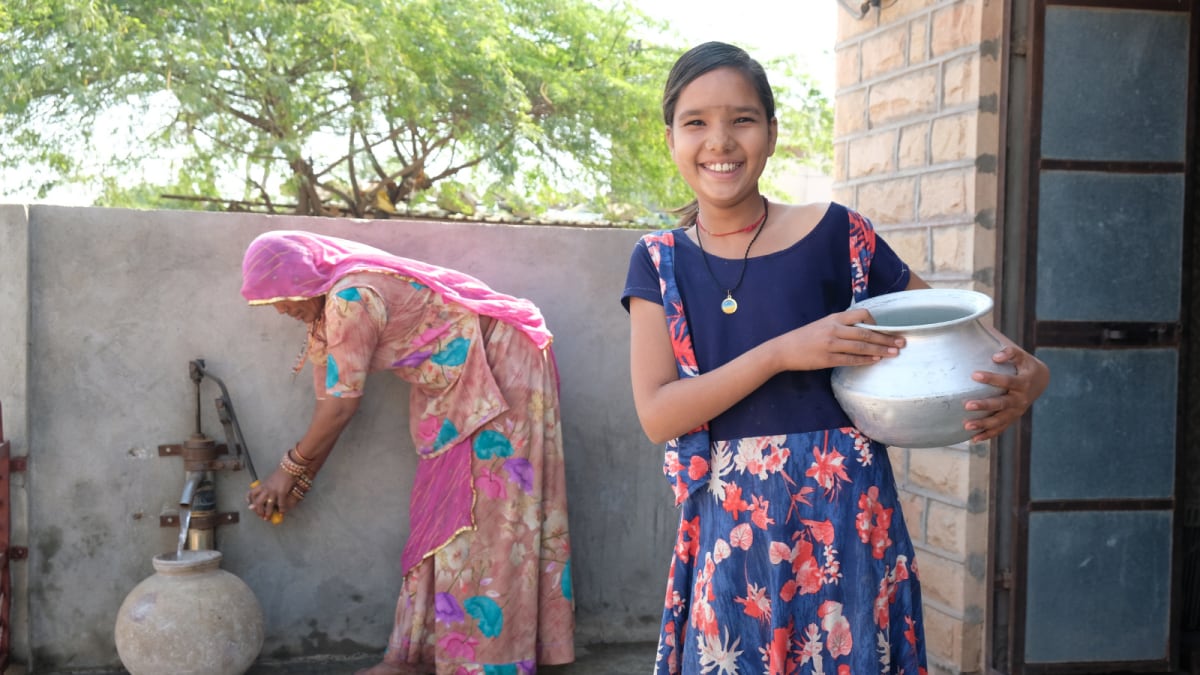
Water access in rural India is deeply linked to gender equity. Experts explain why women’s participation in water governance is key to building sustainable and inclusive systems.
Water is often discussed in terms of infrastructure, pipelines, access points, and supply systems. But on the ground, particularly in rural India, water is far more than a basic service. It is deeply tied to gender, shaping how time, labour, and opportunity are distributed within communities.
“Water is often framed as a basic service. Yet in reality, it is one of the most powerful determinants of gender equity in rural India," says Chandrakant Kumbhani, Chief Operating Officer, Community Development, Ambuja Foundation.
For millions of women and girls, the absence of reliable water access translates into a daily burden that remains largely invisible. Hours spent walking long distances to fetch water directly impact their ability to study, work, or participate in community life.
“The absence of reliable water is not merely an inconvenience, it is a daily constraint on time, health, education, and opportunity," Kumbhani notes, adding that this unpaid labour continues to limit women’s economic and social mobility.
This is where water access becomes transformative. When water is brought closer to home, the shift is immediate not just in convenience, but in outcomes.
“When water is brought closer to home, the shift is immediate and measurable. Time is freed. Girls are more likely to stay in school. Women are able to pursue livelihoods and contribute to household incomes," says Kumbhani.
What appears to be a basic intervention often becomes a catalyst for broader social and economic change. Yet, access alone is not enough.
Who participates in decision-making around water is equally critical. Across many regions, water governance structures continue to be male-dominated, despite women being the primary users and managers of water at the household level.
“Women and girls continue to bear the greatest responsibility for securing water, while having limited representation in how water resources are governed," says Prakash Keskar, Executive Director, Watershed Organisation Trust (WOTR).
Experience from community-led water programmes shows that when women are included in governance, the priorities shift in meaningful ways. Issues such as safety, sanitation, equitable distribution, and long-term sustainability begin to take centre stage.
“When women participate in water conservation, water harvesting and water governance, they help transform community thinking from viewing water as private wealth to recognising it as a shared resource that must be conserved and managed collectively," Keskar explains.
This shift in perspective is particularly important in the context of climate change, where water stress is intensifying and community resilience is becoming critical.
Kumbhani emphasises that women’s participation strengthens not just access, but the quality and inclusiveness of water systems. “When women are part of water governance, priorities shift from access alone to issues of safety, sanitation, health, and equitable distribution," he says.
Taken together, these insights point to a larger gap in how water is framed in policy and practice. The conversation often stops at infrastructure, how much water is available, how it is delivered but overlooks who benefits from it and who remains excluded.
“Placing women at the centre of water governance is therefore essential for building equitable and sustainable water stewardship," adds Keskar.
The larger point is clear: water cannot be treated as a standalone development issue. It sits at the intersection of gender equity, public health, education, and economic participation.
“Investments in water are not just investments in infrastructure, they are investments in unlocking the potential of half the population," says Kumbhani.
Beyond Access, Towards Equity
As India continues to invest in water security, the challenge is not just to expand access, but to rethink how water systems are designed and governed.
If water remains gender-blind in policy, it will continue to reinforce existing inequalities. But if approached with a gender lens, it can become one of the most powerful tools for enabling change.
Because in rural India, water is not just about survival, it is often where empowerment begins.