Securities transaction tax (STT) is a tax imposed on the value of securities transactions on recognised stock exchanges in the country. It applies to trades in equity mutual funds, equities, futures and options. STT is collected when the transaction occurs, regardless of the investor making a profit or loss.
Budget 2026: FM Nirmala Sitharaman announces hike in STT for futures trading
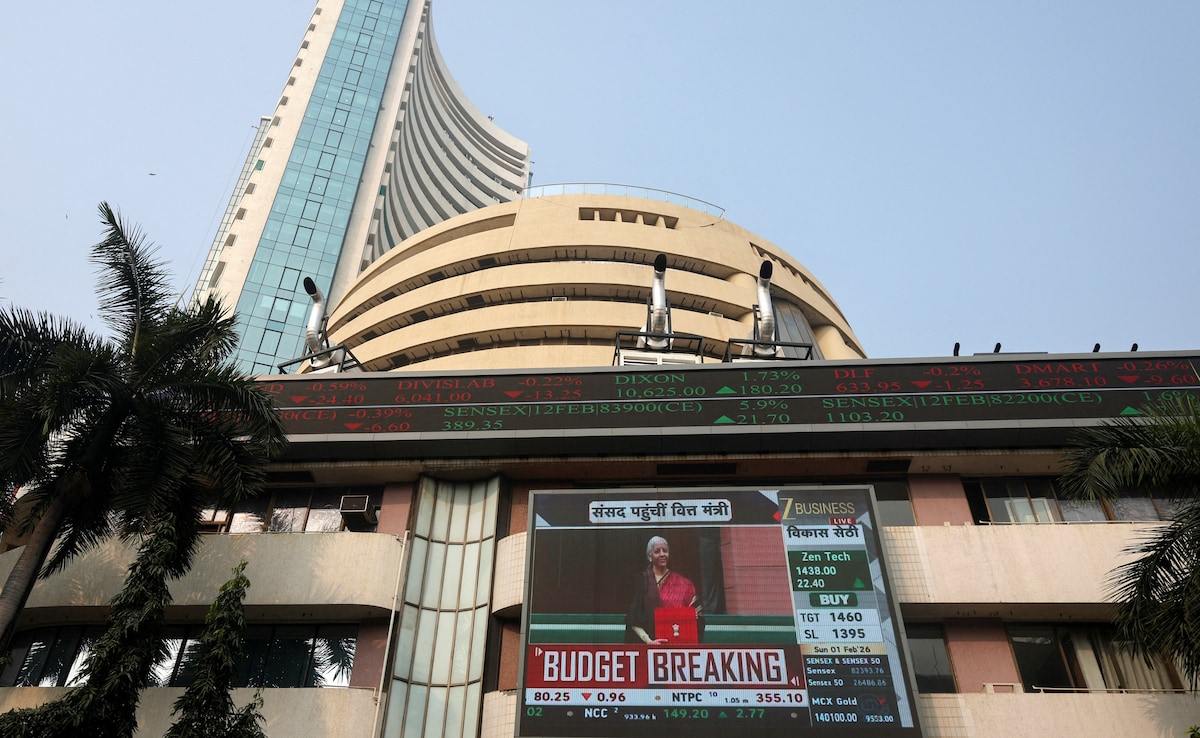
Shares of BSE, Angel One and Groww have tanked up to 10% after FM Nirmala Sitharaman has announced an increase in Securities Transaction Tax (STT) on futures.
By Shloka Badkar
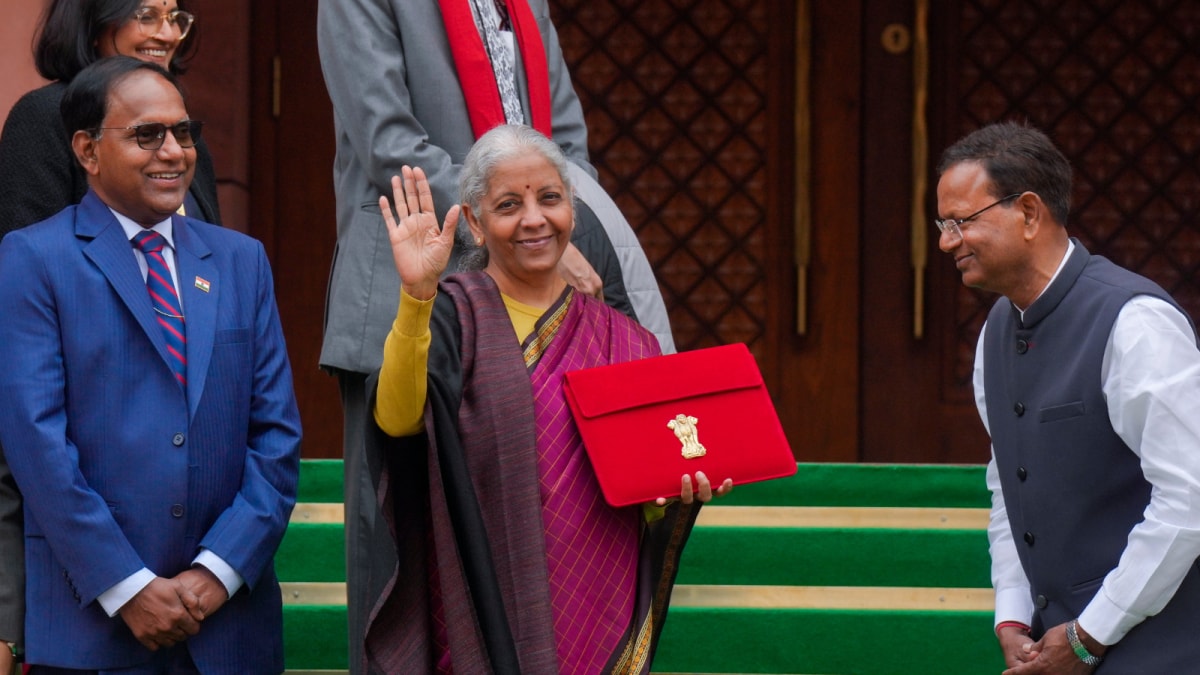
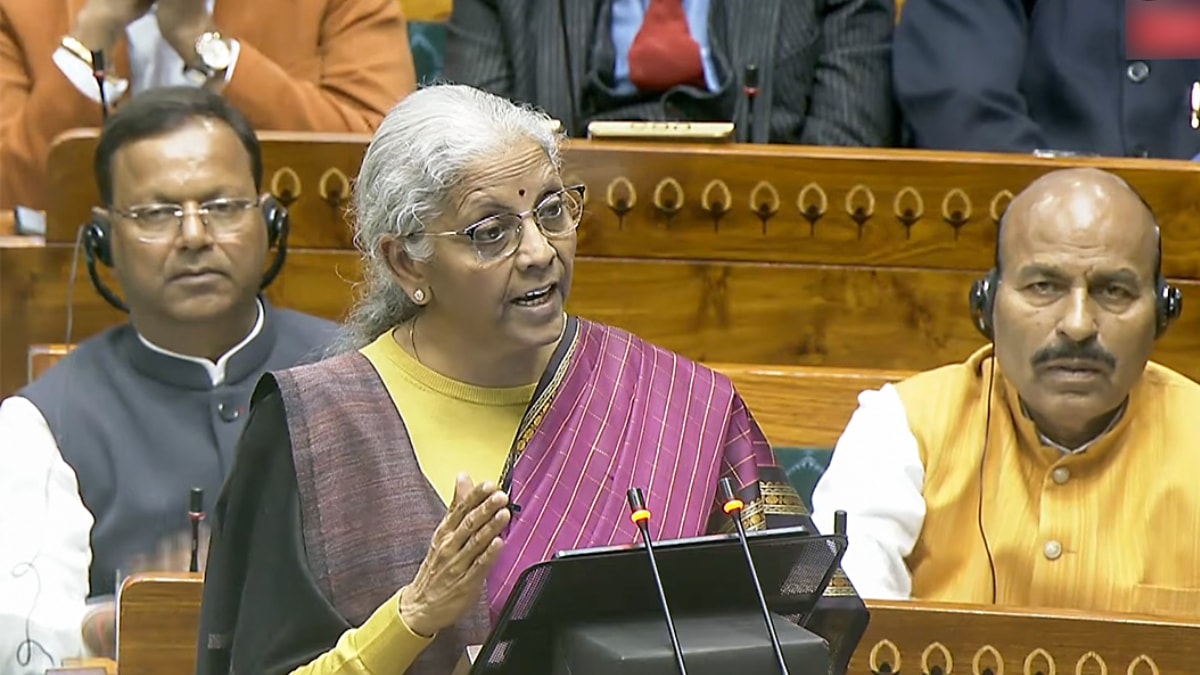
Finance Minister Nirmala Sitharaman on Sunday, February 1 proposed to raise Securities transaction tax (STT) on both, futures and options.
The Securities Transaction Tax on Futures has been raised to 0.05% from 0.02% earlier.
Finance Minister Nirmala Sitharaman presented the Union Budget 2026-27 in Parliament on Sunday, February 1.
What is STT?
Securities transaction tax (STT) is a tax imposed on the value of securities transactions on recognised stock exchanges in the country. It applies to trades in equity mutual funds, equities, futures and options. STT is collected when the transaction occurs, regardless of the investor making a profit or loss.
When was STT introduced in India?
STT was introduced in India on October 1, 2004. It was meant to replace the long-term capital gains (LTCG) tax, curb evasion in equity and derivatives trades and simplify tax collection.
However, the Union Budget 2018 reintroduced LTCG on listed equities, while STT remained in place.
Why does STT bother traders?
Investor concerns have increased ever since a sharp rise in STT was announced in the previous Budget.
The tax on the sale of options was increased from 0.0625% to 0.1% of the option premium. Meanwhile, futures trades now receive 0.02% of traded value, which is up from 0.0125%.
When a person buys or sells an equity, derivative contract or mutual fund, they are required to pay a nominal charge on every transaction, which is STT.
However, the previous Budget also increased capital gains tax, with LTCG tax rising to 12.5% from 10% and short-term capital gains (STCG) increasing to 20% from 15%.
Brokerages and asset managers are of the view that the cumulative effect dampens the appeal of equity-linked products, especially for active traders.
An investor is required to pay LTCG tax when they hold equities of a firm for over a year. Any holding period less than 12 months receives STGC tax.
Industry sought overhaul in capital market taxes
In November 2025, Finance Minister had held a pre-Budget meet with the capital market industry.
Sources had told CNBC-TV18 that the proposals reflected long-standing concerns regarding liquidity, tax parity and investor efficiency.
A reduction in STT, especially on cash market trades, topped the agenda. Market participants reiterated to the Finance Minister that STT on equity cash trades should be kept meaningfully lower than derivatives to restore balance between the two segments and also help revive the market depth.
Zerodha co-founder raises fresh concerns on STT
Zerodha co-founder Nithin Kamath recently raised fresh concerns regarding STT, saying that as a market participant he has long-hoped the Union Budgets will reduce the same, but it has steadily increased instead.
In a post on X, Kamath mentioned that STT was introduced when LTCG was scrapped. But, after the LTCG tax returned, the overall tax burden on investors had significantly increased.
He was referring to the 60% increase in STT on options and futures that was announced in Budget 2024. He said initially, the hike did not have much impact on trading volumes as the bull market had continued and participation kept increasing. However, the markets do not always remain bullish and the real impact of higher taxes had become visible over the past year, he said.
As per Kamath, the FY26 projected STT collections were 78,000 crore. However, the collections as of January 1 stood around 45,000 crore. Assuming that another 12,000 crore is collected by the end of March, the total collections would increase to around 57,000 crore, which is nearly 25% less than the projections.
Kamath is of the view that the Centre would have collected a lot more if it wasn't for the 2024 hike.