
Nearing retirement? How to protect your savings amid market...
06 Apr 2026


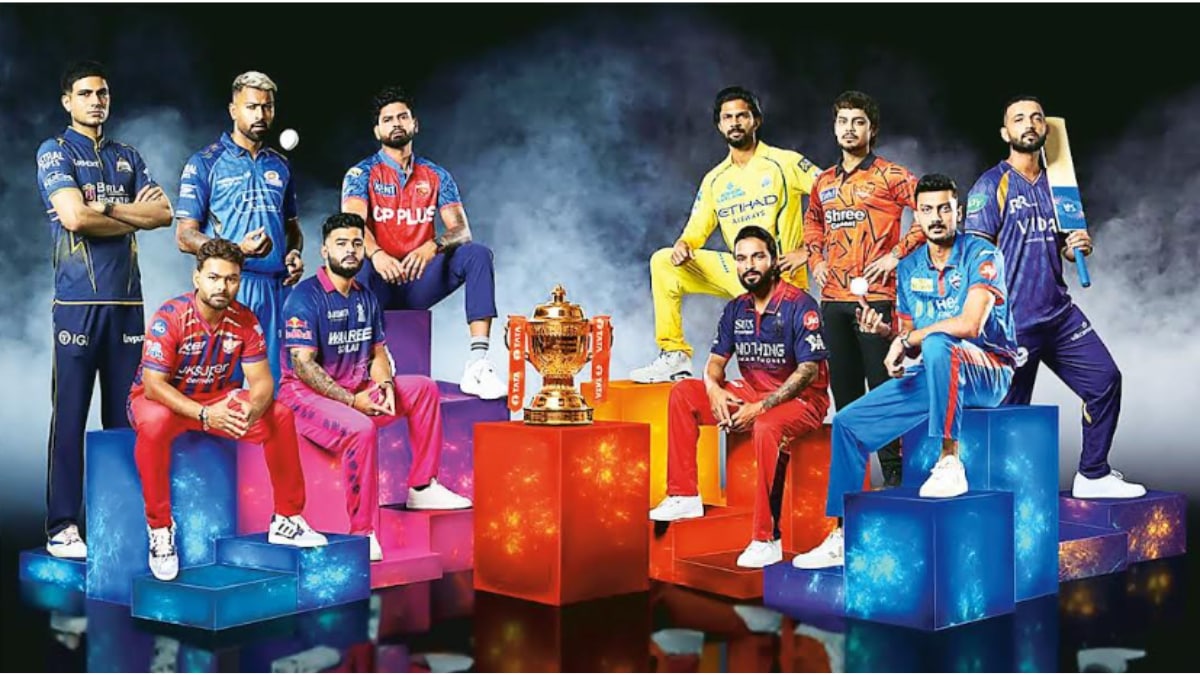
The IPL, whose business value reached an estimated $18.5 billion in 2025, has transformed individual franchises into solid investment bets, eliciting great interest from global private equity (PE) players. Their interest is driven primarily by a highly attractive business model, where around 70% of revenue comes from contracted central media pool, says Santosh N, managing partner, D and P Advisory.
“The business model is asset-light, margin-accretive with over 30% EBITDA margins, and benefits from extreme scarcity, considering there are only 10 teams. Layered onto this is India’s strong consumption and digital growth story,” explains Santosh. He adds that franchise owners can scale into global T20 leagues, creating a platform-style investment vehicle with multi-geography opportunity.
The growing interest from PE investors was initially triggered by a sensational deal involving Gujarat Titans and European PE firm CVC Capital, which sold a majority stake in the team, earning returns of more than 350% in a four-year term.
Experts say that each IPL franchise has a growing fan base and viewership which means that for PE investors, the league presents a stable opportunity with consistent per match economics. After all, the property also stayed resilient through turbulent times such as the pandemic and recent geopolitical challenges.
In the big league
Does the attention from global PE firms mean the IPL has achieved a status on par with sporting leagues such as the National Football League (NFL), the National Basketball Association (NBA) or the European football leagues? Experts say that the scale is much smaller than the NFL, which is valued over $225 billion, and NBA at $165 billion. However, on a per match basis, IPL is now the second-most valuable sports league globally after the NFL.
Harsh Talikoti, director & sports deal specialist at Houlihan Lokey, points out that while the NFL is also a profitable league like the IPL, most European football clubs are making losses largely because of high player wages and stadium related debt. The Union of European Football Associations, or UEFA, for instance, reported that top-tier clubs lost over $1.18 billion in 2025, driven by soaring player wages and high operating costs, with around 55% of clubs in some leagues remaining unprofitable.
In comparison, the fact that revenues are already locked in and costs are controlled in the IPL format make the teams far more investor-friendly. “The IPL teams are not responsible for managing stadium infrastructure, and the teams pay a fraction of their ticket sales earnings to lease the stadium to the Board of Control for Cricket in India (BCCI) or State cricket associations. There is also a salary cap on players,” Talikoti notes.
The real task for PE firms now lies in growing the remaining 20-25% of the revenue pool. According to Talikoti, clubs in other leagues around the world earn 40-50% of their revenue from media rights. This means that IPL franchises now need to grow their share of revenue from ticketing, merchandising and sponsorships. “A club like Manchester United for example earns around 15% of its revenue from merchandise sales. In the IPL teams, that number is less than 1%,” he says.
IPL franchise investments are also not without risks, as Pradyumna Nag, founder & CEO, Prequate Advisory, observes. “While viewership has started to reach its peak potential, the pricing that sponsors and advertisers are willing to pay are also starting to stabilise. More games each season mean that revenues per match will also dip,” says Nag.
A recent Media Partners Asia report, titled The IPL — Teams, Rights & Valuations, states IPL media rights are approaching a structural ceiling, with the 2028-32 cycle projected to be flat at $5.4 billion, effectively ending two decades of compounding growth, states.
The BCCI also has in the past, suspended and banned franchises for various reasons. That’s a significant risk for any new investor, argues Nag.
D and P Advisory’s Santosh adds that the heavy dependence on media rights also presents another risk for investors, especially since the 2028 auction may see a plateau. “Centralised governance under the BCCI, reliance on marquee players for brand value, increasing global T20 competition for talent, and limited exit liquidity are some of the other risks,” he says.






)
