OpenAI IPO: Differences Between Altman, CFO Over Launch Timi...
06 Apr 2026


Synopsis
Silver exchange traded funds have seen significant losses, prompting investor concern. A new domestic pricing rule is now in effect. Experts suggest rebalancing portfolios and potentially reducing silver exposure. They recommend shifting towards diversified equity funds for long-term wealth creation. Gold ETFs are considered a more stable alternative for hedging.
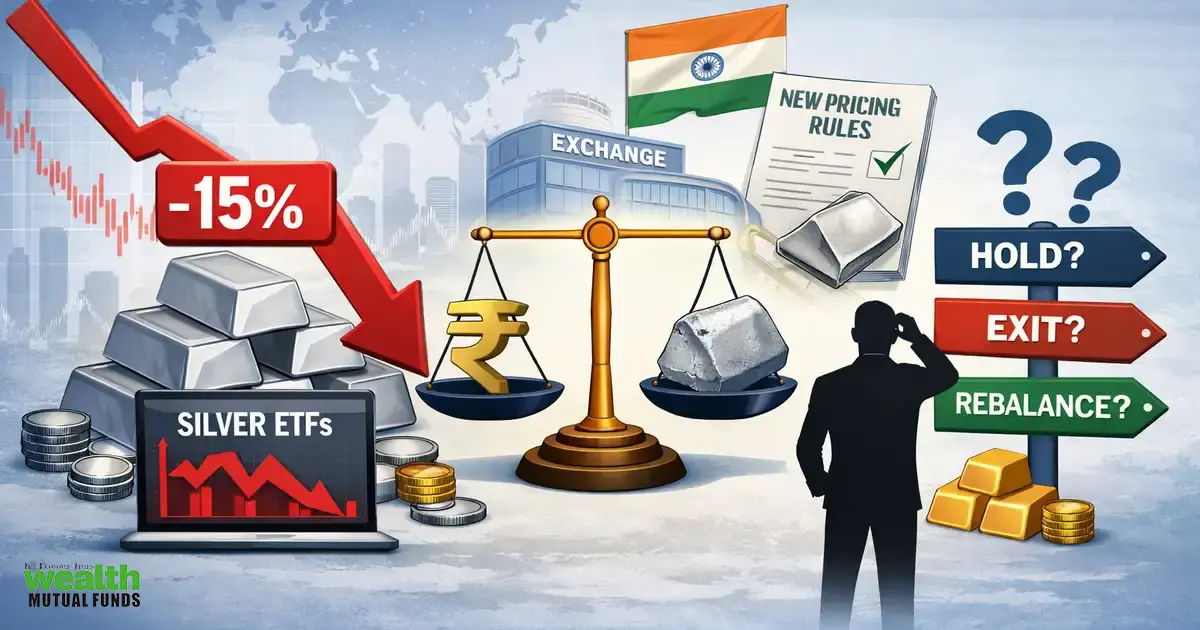
Silver exchange traded funds (ETFs) have come under sharp pressure in recent months, leaving investors worried about returns, their investments, and the way ahead. With losses of up to 15% in just two months and a new valuation rule effective April 1, many are re-evaluating their exposure to silver. The combination of global volatility, shifting commodity trends, and regulatory changes makes it crucial for investors to understand what lies ahead before making any allocation decisions.
Market experts say that the prudent approach now is to rebalance the allocation in these ETFs and if possible bring down the exposure to zero and move to diversified equity funds.
Also Read | SIP or lumpsum? Expert suggests best approach for first-time mutual fund investors with Rs 10,000
Best MF to invest
Looking for the best mutual funds to invest? Here are our recommendations.
View Details »
Rahul Khetawat, Fund Manager, 360 ONE Asset shared with ETMutualFunds that for investors who entered at higher levels, a rebalancing approach is more prudent, considering individual risk appetite, investment goals, and time horizon.
Khetawat further said that the fall was triggered by the Chinese regulator's crackdown on silver speculation, following which a major unwinding of leveraged positions occurred, this was subsequently compounded by outflows from global silver ETFs, leading to a sharp correction in silver prices and adding to the pressure were broader macro headwinds, including a stronger US dollar, softening industrial demand expectations, and a wider risk-off sentiment in markets.
Live Events
Hrishikesh Palve, Director, Anand Rathi Wealth Limited told ETMutualFunds that at this stage, decisions should not be driven by emotions but by asset allocation and for long term wealth creation, equity should remain the core of the portfolio considering its higher growth potential and existing investors can review their portfolios and gradually bring silver exposure to zero and move towards equity through diversified mutual fund categories.
Palve further said that investors should understand that the recent correction in silver prices has largely been driven by higher margin requirements at the Chicago Mercantile Exchange and uncertainty around US interest rates. Silver, unlike gold, has a strong speculative and industrial component, which makes its price movements sharper on both the upside and the downside. After a sharp rally, such corrections are quite normal, as precious metals often see declines of 20 to 30%. This comes after silver delivered around 154% returns over the past year.
The commodity based ETFs have declined significantly over the past two months, with all 17 funds in the category posting negative returns ranging from 13.76% to 14.79%.
Among the 17 ETFs based on silver metal, the UTI Silver ETF lost the most of around 14.79% in the last two months, followed by the DSP Silver ETF which slipped 14.04% in the same period. Bandhan Silver ETF lost the lowest at around 13.76% in the last two months.
Shift from silver to gold amid caution for FY27?
With the beginning of the new financial year now, many new investors who were looking to start their mutual fund SIP journey in this financial year, mutual fund experts recommend investing in a mix of large cap and flexi cap, consider gold for hedging against global uncertainties and silver can be avoided at this point.
The expert further said that in terms of commodities, gold can be considered (around 5–10%) as a hedge against global uncertainty and currency risks, silver can be avoided at this point, as a large part of its future expectations appears to be already priced into current valuations, limiting near-term upside.
So with several experts advising caution on silver for FY27, the question arises whether investors should continue holding or switch to gold ETFs, which are often seen as a more stable alternative.
Post analysing the historical performance of gold and silver and concluding that both silver and gold are less consistent compared to equity, with silver standing out as the more unpredictable asset, Palve said that silver has not been very reliable for long term returns, as its performance is closely linked to industrial demand and market cycles whereas Gold, on the other hand, has shown relatively better stability and can act as substitute for a part of the debt allocation.
However, investment decisions should start with understanding the current asset allocation in the overall portfolio and if there is already exposure to gold, it would be sensible to gradually shift any silver allocation towards equity through diversified mutual fund categories, Palve further said.
Also Read | Starting SIPs in new financial year? Experts suggest largecap, flexicap mix; prefer gold over silver
Khetawat said that Silver is an industrial metal — a high-beta, inherently volatile commodity. Post-correction, it can be revisited, but a clear portfolio allocation strategy should be followed. For existing holdings, the recommendation is to hold current units and gradually rebalance into other asset classes, including gold ETFs.
Impact of new valuation rule on gold and silver ETFs
From April 1, the new rule is - Mutual funds to use domestic spot prices for gold, silver ETF valuation. In this rule, fund houses will use polled spot prices published by recognised stock exchanges instead of the London benchmark.
At present, physical gold and silver held by Gold and Silver exchange traded funds (ETFs) are valued based on the AM fixing prices of the London Bullion Market Association. The final valuation is derived after adjusting the LBMA prices for metric and currency conversions, transportation costs, customs duty, taxes and levies, along with notional premium or discount to arrive at domestic prices.
In a circular dated February 26, Sebi said that with effect from April 1, mutual funds must value physical gold and silver using the polled spot prices published by recognised stock exchanges that are used for settling physically delivered gold and silver derivatives contracts.
Khetawat said that there will be no material impact. This is simply a change in valuation methodology. ETFs will now use domestic exchange-published spot prices for valuation, replacing the existing LBMA (London Bullion Market Association) benchmark.
On the other hand, Palve said the change in valuation methodology of Gold and Silver ETFs makes their pricing more relevant for Indian investors. Earlier, prices were linked to international benchmarks, which did not fully capture local factors like currency movements, import duties or domestic demand.
He further said that now, with domestic spot prices, the returns should reflect what is actually happening in the Indian market. This will also help in reducing tracking differences. Over time, investors should see ETF returns that are more aligned with real market prices, which brings better clarity and builds more confidence in these products.
Also Read | Which mutual fund should you add for 15 year SIPs? Expert breaks down multicap vs factor funds
Historical performance
In the last one month, silver ETFs have slipped upto 21.97%. In the last three months, silver ETFs went down upto 5.93%.
In January 2026, precious metals rose sharply due to global uncertainty, changing currency trends, and growing demand for safe assets which led to investors buying precious metals as protection against market risks, pushing prices to very high levels.
Despite a hefty correction in the last two trading sessions of the month, silver surged nearly 19%. Silver reached very high levels, close to record prices in January. On January 29, silver futures scaled fresh lifetime highs on the Multi Commodity Exchange (MCX), silver surged past the Rs 4 lakh mark for the first time.
Silver emerged better than gold in the starting month of the current calendar year because it benefits both as a precious metal and from industrial demand, which added to the buying pressure.
However, towards the end of the month, things changed quickly. Once prices became very high, many investors started selling to book profits. This caused a sudden fall in prices. On January 30, silver delivered a stunning reversal on the MCX, plunging up to 27% — or Rs 1,07,968 — in a single day, marking its worst-ever crash and dragging prices back below the Rs 3 lakh mark, just a day after the metal had surged to a record high of Rs 4 lakh.
The fall on January 31, silver delivered a stunning reversal on MCX, plunging up to 25% — or Rs 92,000 — in a single day, marking its worst crash in 15 years and dragging prices back below the Rs 3 lakh mark, just a day after the metal had soared to a record high of Rs 4 lakh.
In the last six months, these ETFs have delivered upto 58.21% return. In the last one year, silver ETFs delivered upto 124.78% return. In YTD, the loss has been less than 1% with Tata Silver ETF being the only one which lost upto 2.93% in 2026 so far.
What is the outlook for silver in FY27?
Palve said that for FY27, silver prices will depend on various factors like industrial demand from different areas like solar energy and electric vehicles and if industrial demand continues to grow, it can lend some support to prices of silver.
However, silver has been quite sensitive to global geopolitical developments, market sentiment and activity in derivative markets like COMEX which makes its movement less predictable and more volatile and given this nature, it may be better for investors to avoid silver as a part of their long term portfolio, Palve said.
Khetawat said industrial demand, followed by investment demand, will determine the trajectory of silver prices and the outlook for FY2026–27 is rangebound, with prices expected to trade between $50 and $75 per ounce.
Also Read | Silver & gold ETFs gain over 119% in FY26. Time to add, rebalance or book profits for FY27?
Key drivers to watch include the pace of the global green energy transition — given silver's significant role as a component in solar panels — the US Federal Reserve's interest rate trajectory, and broader geopolitical developments, all of which have historically influenced precious and industrial metal prices, he further said.
Disclaimer: Recommendations, suggestions, views and opinions given by the experts are their own. These do not represent the views of The Economic Times)
If you have any mutual fund queries, message on ET Mutual Funds on Facebook/Twitter. We will get it answered by our panel of experts. Do share your questions on ETMFqueries@timesinternet.in alongwith your age, risk profile, and twitter handle
(Catch all the Mutual Fund News, Breaking News, Budget 2024 Events and Latest News Updates on The Economic Times.)
Subscribe to The Economic Times Prime and read the ET ePaper online.
...moreless
(Catch all the Mutual Fund News, Breaking News, Budget 2024 Events and Latest News Updates on The Economic Times.)
Subscribe to The Economic Times Prime and read the ET ePaper online.
...moreless
Bold promises vs. hard proof: Indian IT faces an AI test this fiscal
How a cozy club controls India’s gold imports
Is govt’s fuel tax balancing act enough to avoid crude shock?
Crashes, chaos: A nightmarish fiscal Air India, IndiGo and govt may like to forget
Where aircraft go when they need a safe haven – or to die. As the Gulf war draws attention to ‘boneyards’, where does India stand?
Unconventional ways during war and uncertain times: 4 stocks with dividend yield of up to 5.9%
1
2
3