
Sensex, Nifty trade higher as hopes of US
Source: Lokmat Times
07 May 2026


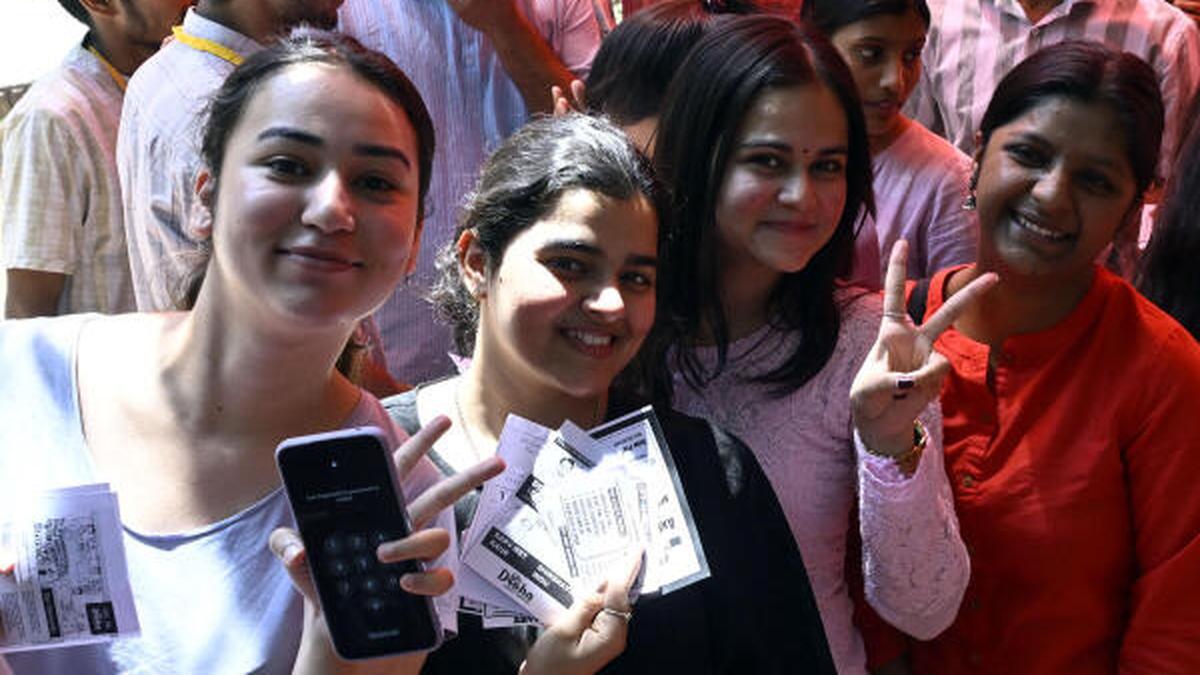
The Supernumerary Seats Scheme (SSS) by IITs, introduced in 2018 to increase the share of women in undergraduate engineering programmes by creating 20% additional seats exclusively for female students, has been fairly successful in boosting enrolment, albeit with some regional variation. Following the same scheme, JNU has also announced the introduction of 11% supernumerary seats for women in its B.Tech programmes.
(Sign up for THEdge, The Hindu’s weekly education newsletter.)
Approved at an Executive Council meeting in April, the proposal adds 14 seats per batch across Computer Science Engineering (CSE) and Electronics and Communication Engineering (ECE) at JNU’s School of Engineering. Importantly, these are supernumerary seats, created over and above existing capacity ensuring that the current reservation matrix remains untouched. Admissions are expected to continue through the Joint Seat Allocation Authority (JoSAA), aligning JNU with the national engineering admissions framework.
Does it address disparities?
Avinash Kumar, Secretary of the JNU Teachers’ Association (JNUTA), highlighted that though the scheme is the mirror move of IITs, it is important to note that their admissions entirely rely on the JEE Advanced, which is one of the toughest competitive exams in India. Hence, this introduction of supernumerary seats has improved gender diversity, without fundamentally altering the competitive process of admissions, or emphasizing disparities in preparations.
He talks about JNU’s deprivation points system, which, unlike supernumerary seats, operates within the admission process itself-reshaping merit by accounting for structural disadvantage. As per the JNU e-prospectus, candidates can receive up to a maximum of 12 deprivation points, which are added to their entrance performance. These points are awarded across three broad dimensions: Regional and Educational Disadvantage, Gender-Based Deprivation, Special Categories.
He said, “It is within this context that JNU’s own institutional history becomes very relevant. Until recent years, JNU had amassed a comparatively balanced gender ratio across various programmes. However, these admissions were not through any supernumerary provisions, but through a well designed structurally embedded admission policy, which is what we call it as deprivation points system. This system accounted for a more integrated form of inclusivity for gender alongside regional and socio-economic disadvantaged students.”
He informed, “During this deprivation system, women constituted around 53% of the students at the university in the year 2017-18, this figure stood out in the Indian higher education landscape, creating a niche for gender-balanced and inclusive academic environments.” “However, this balance”, he argued, “was not accidental but the outcome of a carefully crafted structural admission framework that integrated disadvantage directly into the merit evaluation.”
What makes this model different
The key distinction is where the intervention happens. Deprivation points are built into the merit list—they change who gets selected. Gender is also explicitly incorporated: women and transgender candidates receive five to seven additional points depending on whether they also belong to other disadvantaged categories such as SC/ST/OBC (NCL), PwD, or quartile districts. Certain groups, such as Kashmiri migrants, are also eligible for additional points. However, the system is not uniformly implemented across all courses, professional programmes such as B.Tech and M.Tech (CSE/ECE), among others,
Mr. Kumar further argued, “If gender is a source of deprivation, then it should be incorporated within the admission process, rather than addressing it through add-on mechanisms.” “However, the dissimilitude with the current proposal for the admissions through JoSAA in engineering programmes is stark. This scheme avoids the incorporation of deprivation points, effectively separating them from the JNU’s broader admission philosophy.”
Mr. Kumar further pointed out the internal trend to echo this concern, he shared “Following the recent changes in admission policies, specially the removal of deprivation-based criteria in certain programmes. The overall proportion of women students has dwindled in recent years, falling around 43-44% in the latest academic cycles.”
“That’s why,” he questioned, “it raises a bigger concern, whether this scheme of supernumerary seats can address disparities that are rooted in structural inequalities or encourage the gap further more?”
“Adding 11% seats may increase numbers at the margins but that does not change the underlying imbalance. Moreover, there is a huge risk of benefiting those who already have the resources to access these opportunities,” he added.
A measured intervention, not a unified policy
For some observers, JNU’s move reflects an expedient approach, useful for a purpose but limited; it is an intervention rather than a comprehensive gender policy.
The same was argued by Prof. Saurin Das of the IISER Kolkata who emphasized that the university is using supernumerary seats as a “practical tool” to address visible imbalances, rather than as part of a fully articulated, long-term framework. “The gender-based seats look like a targeted step,” he said, “but not necessarily one embedded within a broader policy vision.”
He additionally pointed out that the internal data driving the decision is not entirely clear. While the policy seems influenced by precedents set by institutions such as the IITs, greater transparency around JNU’s own applicant pool, intake patterns, and gender ratios would strengthen the rationale.
The IISER professor believes that the 11% figure itself appears cautious, as it reflects both infrastructural constraints and the relatively recent establishment of JNU’s engineering programmes, rather than an attempt to match national benchmarks. As these programmes are relatively new and operate with limited facilities, which naturally caps how much intake can be expanded in the short term. A modest percentage allows the university to introduce gender-based correction without straining existing resources.
He further said, “There are also structural choices that upheave further questions. Moreover, limiting the intervention to CSE and ECE may be administratively efficient, given their status as core programmes, but it concentrates inclusion within already high-demand disciplines rather than distributing it more evenly.”
Infrastructure, optics, and institutional balance
JNU’s decision to align the seat expansion with infrastructure growth is, in many ways, practical. However, Prof. Das emphasized that this could decelerate the pace of inclusion if capacity expansion dawdles behind demand. “Ideally, inclusion should not feel entirely dependent on infrastructure constraints,” he observed.
“Within the JoSAA framework for supernumerary, the idea of adding seats without disturbing existing allocations is standard. The more critical question is,” he further pointed, “whether these seats will be consistently filled and whether the students admitted through this route are sufficiently supported to succeed.”
Prof. Das further said, “This shows that the policy itself exists within a sensitive institutional context. Moreover, JNU has historically positioned itself as an institution anchored in equity-driven admissions, and any such perceived shift in the process, however incremental, can spark debate. Furthermore, the inclusion of a parallel 5% supernumerary provision for the wards of staff further complicates perceptions of fairness and prioritisation.”
“There could be perception issues among students,” Prof. Das noted, adding that mentoring systems and academic support structures would be essential to ensure a smooth transition and avoid unintended hierarchies within classrooms.
Beyond access: The limits of entry-level interventions
More comprehensively, the policy also highlights a lingering disagreement in India’s higher education reforms: the gap between access and continuity.
“Access is always appreciated, however that is not the end of the story, it is the beginning,” said Prof. Saumen Chattopadhyay, Associate Professor, JNU. He added, “The real question is whether this given access translates into sustained participation and, eventually, into independent career choices or not and this distinction becomes critical when situated within India’s ‘leaky pipeline’ in science.”
“While through such a process, enrolment at the UG level has become more easy, participation begins to thin out as students move through PG and then into research careers. The decline is not abrupt but cumulative,” Prof. Chattopadhyay explained.
The gendered leak
In the realm of life sciences, gender representation is comparably balanced at early stages. However in technical fields such as physics, engineering, and advanced research domains, the presence of women plummets significantly. Data from agencies such the Department of Science and Technology (DST) consistently point to this pattern.
Prof. Chattopadhyay noted, “According to the government’s Research and Development Statistics report, women constitute 43% of total enrolment in STEM disciplines at the higher education level (AISHE 2021–22), but account for only 18.6% of the country’s research and development (R&D) workforce. This huge gap becomes broader at the higher levels of the scientific career ladder.”
Women remain marginalised in permanent research roles and faculty positions across India’s premier institutions, with their presence in R&D concentrated at 45.87% in government institutions, 27.62% in higher education, and 26.51% in industry, unevenly in different sectors.
The divergence between near-parity in education and significantly lower representation in research careers is concerning, it is obvious that the participation is declining at successive stages despite strong entry-level numbers, he noted.
Importantly, he said, “this is not simply a question of dropout rates. However, you cannot look at participation at one stage in isolation,” Prof. Chattopadhyay noted. “Indeed, there is a path dependency, from school to undergraduate, postgraduate, and then research. Each stage shapes the next.”
Prof. Das further reiterated this worry by emphasising that the gap in gender diversity begins much earlier than university admissions. By the time students reach institutions like JNU, many disparities are already embedded, through schooling, preparation, and access,” he said. “To address this issue from the root, universities can intervene at the entry stage, however, they are not authorised to fully compensate for what happens before.”
A question of continuity, not just inclusion
Not only JNU, but evidence from other institutions such as IITs is instructive. It suggests that supernumerary seats can significantly improve gender representation but only up to a point. Beyond that, deeper structural issues begin to overpower.
Prof. Das further said, “As this approach again aligns with broader policy concerns. For example, over the past decade, initiatives such as the KIRAN Scheme have attempted to support women scientists through fellowships and re-entry pathways. However, without systemic improvements in mentorship, financial stability, and workplace flexibility, retention remains uneven.”
“Providing access is great but what matters more is not just admissions,” Prof. Das noted, “but whether these students survive the competition, perform well, and move ahead in STEM pathways.” “Training them, providing the right knowledge and making them fully ready for long-term success is the next step,” he added. “While JNU’s approach appears flexible, it would benefit from a clearly defined review mechanism to assess outcomes and recalibrate over time. Such measures should ideally function as temporary corrections rather than permanent fixtures.”
“So admission should be measured not merely by intake numbers but by how many women continue into research, higher studies, or industry roles.” He emphasized.
The larger question
India’s ambitions in science and technology depend not only on producing talent but also sustaining them. The major challenge is not merely to widen the pipeline but to prevent it from leaking.
JNU’s decision now fits between the intersection of two mammoth realities. On the one hand, it emphasizes a necessary corrective to historical imbalances in access. While also underscoring the limits of interventions that focus primarily on entry points.
Prof. Das echoed this concern and said, “This is like addressing the last stage of a much longer problem.” “Real change, he argued, will depend on broader steps that happen before students even reach universities, or making alterations in the system that allow them to stay, grow, and lead. Until then, policies like supernumerary seats may serve as important signals of intent but their success will ultimately be judged not by how many enter, but by how many remain.”

Source: The Financial Express