IRM Energy Q4 Profit Nearly Triples YoY; Earnings Call Recor...
Source: scanx.trade
09 May 2026


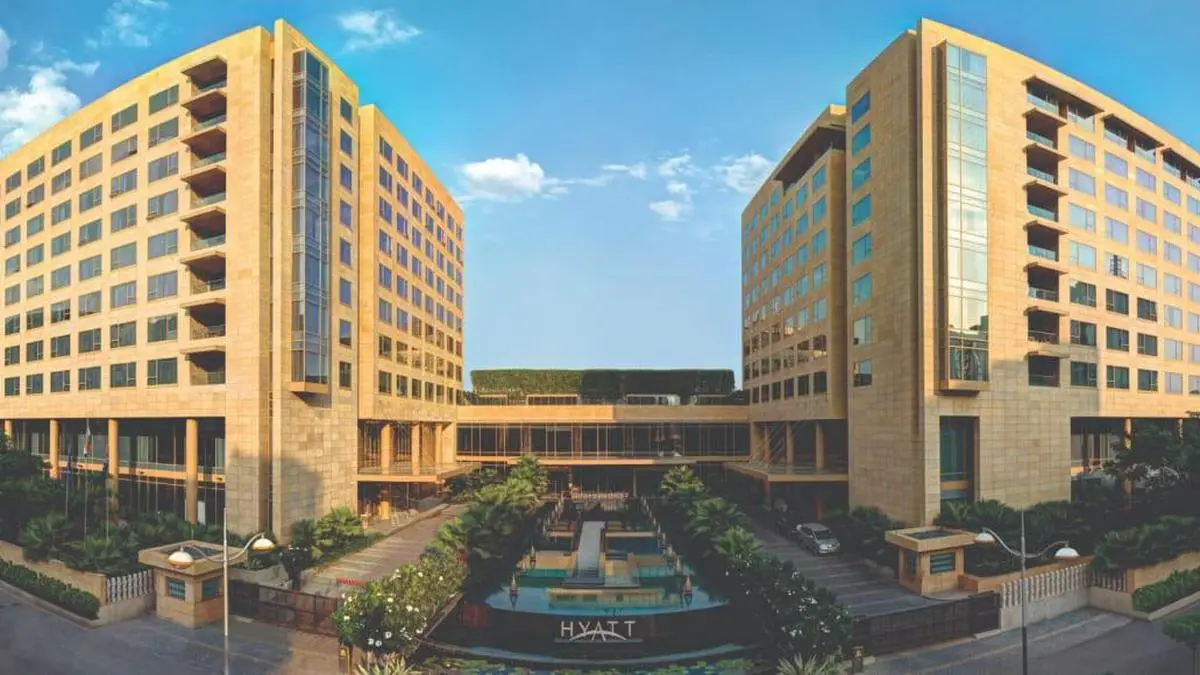
Amid the West Asia war-related disruption and impact on economy, inflation and stock markets, the structural long-term cycle in India’s hotel sector continues to remain favourable. Given the demand-supply gap, with business travel, meetings and exhibitions, and premium leisure-led business, demand is expected to outpace fresh room supply in key markets over the next few years. In this context, SAMHI Hotels requires a re-look.
When branded hotel ownership firm SAMHI Hotels came out with its IPO in September 2023 at ₹126 a share, our view was clear: investors can avoid the IPO.
The hesitation was not because the business lacked merit. SAMHI had scale, global hotel brands (Marriott, Hyatt, IHG), urban business-hotel exposure and an acquisition-led turnaround model. The concern was that the company was still loss-making, carried high debt (proforma at the time of IPO: over ₹2,800 crore, debt/adj. EBITDA 11x) and finance costs (then at 59 per cent of revenue) were eating into the benefits of a strong hotel upcycle.
Nearly three years later, the stock has had a full cycle of enthusiasm and correction. It touched a peak of about ₹255 (BSE), and a bottom of ₹120 in 2025, and now trades at ₹157.45. From the IPO price, it is still up 25 per cent, better than the broader Sensex (up 16 per cent), but has underperformed larger listed hotel peers such as Indian Hotels (up 56 per cent), EIH (up 41 per cent) and Chalet Hotels (up 34 per cent). SAMHI’s 38 per cent correction from peak, coupled with improving fundamentals, makes the risk-reward more interesting now.
At the current price and based on FY27 consensus earnings estimate per Bloomberg, SAMHI trades at a one-year forward PE of 14.6 times, less than two times price-to-book and around 9.3 times EV/EBITDA (was 16x during IPO). Its forward P/E now is at around 40 per cent discount to its own two-year average of about 24 times.
Having said that, the stock is not without risk, but the business is no longer the same leveraged, loss-making IPO story. Investors with a three-five-year perspective can accumulate the stock on dips, but only in small quantities, given the relatively-small market capitalisation of around ₹3,500 crore and still-meaningful debt (debt/adj. EBITDA at 4x), although leverage risk is significantly lower than at the time of IPO.
What has changed
SAMHI Hotels currently has a portfolio of over 6,500 rooms, with the break-up being 2,500-plus rooms in upper upscale and upscale segment, upper mid-scale 2,010 rooms, and the rest in mid-scale segment. Out of this, about 4,900 rooms are operational across 31 hotels.
The company’s business model encompasses its acquisition and turnaround-led approach, resulting in lower cost per key vis-a-vis average for hotels in India. SAMHI leverages the power of strong hotel brands, enjoys a strong demand base thanks to presence in high-density micro-markets. Its proprietary tools (SAMHIIntel, SAMConnect) help drive performance and efficiency.
The first major change is turnaround in bottomline profitability. At the time of the IPO, SAMHI had scaled up but had not shown sustained profitable growth (losses in FY21, FY22 and FY23). That has changed. The company reported adj. PAT of ₹99.1 crore in FY25 and over ₹216 crore for trailing twelve months (TTM). Due to low base, quarterly PAT numbers optically show sharp growth. The direction is important, quarterly PAT has remained positive since Q4FY24.
The second change is debt and interest cost. This was the biggest concern during the IPO. Debt has not disappeared, but it has moved in the right direction. At the time of the IPO, SAMHI wanted to cut loans, especially the high-cost ones. Total debt has come down from around ₹2,690 crore in FY23 to about ₹1,726 crore in the TTM period. Finance cost declined by around one-third year on year to ₹40.3 core in Q3FY26. Loan interest rate is now 8.3 per cent vs. 9.7 per cent in FY24. Annualised interest cost has also fallen 38 per cent to about ₹125 crore in December 2025. SAMHI should be able to fund its annual capex outlay, estimated at ₹180-210 crore, primarily through internal accruals.
The third change is operating momentum. SAMHI’s Q3FY26 same-store Revenue Per Available Room (RevPAR) grew 13.3 per cent, while total income rose 16.2 per cent. For 9MFY26, total income grew 13.5 per cent and consolidated EBITDA rose 15.2 per cent. The company did face a GST-related margin hit after the removal of input tax credit for hotels with room rates below ₹7,500, but even after this impact, consolidated EBITDA margin in Q3 stood at a healthy 36.9 per cent. The management expects GST impact to gradually fade in the medium term.
The fourth change is portfolio quality. SAMHI is moving up the chain. Ongoing rebranding and renovations are expected to increase the revenue share of upper upscale and upscale hotels from about 42 per cent now to about 60 per cent after projects are completed. This matters because the premium portfolio earns much higher room rates. For instance, upper upscale and upscale average room rate (ARR) stood at ₹12,537, compared with ₹7,904 for upper mid-scale and ₹4,385 for mid-scale in the third quarter.
A fifth, and newer, positive is SAMHI’s move into a more capital-light growth route. Its proposed 70 per cent acquisition (for ₹47 crore) of luxury hospitality platform RARE India gives it exposure to experiential leisure without buying the underlying hotels. RARE gives access to 67 hotels and 990 rooms across India, Nepal and Bhutan, covering curated assets such as forts, palaces, hill retreats and wildlife lodges. It has no hospitality assets. RARE currently earns B2B listing fees, but can build B2C commission income upon integration with Marriott’s ecosystem. This is important because one concern with SAMHI has been its acquisition-led model. RARE does not change the core business overnight, but it adds optionality. RARE can deliver higher returns, with potential B2C revenue from FY27.
What needs watching
Debt remains the main risk. The direction is better, but absolute debt is still high relative to profits and market capitalisation. A company with a market value of about ₹3,500 crore and debt of ₹1,726 crore (net debt ₹1,450 crore) cannot be treated like a risk-free hotel compounder such as IHCL. Any slowdown in ARR growth, occupancy or asset ramp-up can again expose the balance sheet.
The second risk is execution. The company has a large pipeline, including W Hyderabad (170 rooms), Westin Whitefield (200 rooms), Navi Mumbai (700 rooms), Hyderabad Financial District (260 rooms) and multiple rebranding projects. These can lift revenue and later margins as operating leverage kicks in, but delays or cost overruns can hurt. FY27 may also be more about ramp-up of recent additions than large new openings. The pipeline consists of a mix of new hotel openings, rebranding of existing assets and expansions of currently operational properties.
The third risk is that some positives are still assumptions. RARE’s B2C platform is promising, but the commission income is largely untapped today. Marriott integration, higher occupancy, new owner onboarding and platform scale-up have to be delivered. It should be viewed as attractive optionality, not the base reason to buy the stock.
The fourth risk is cyclicality. Hotels are enjoying a strong upcycle, helped by limited room supply, business travel, MICE (Meetings, Incentives, Conferences, and Exhibitions), premium pricing and higher occupancies. If the cycle weakens, smaller leveraged players can correct faster than stronger peers.
SAMHI deserves a better view today than it did at IPO. The original caution was valid because the company was loss-making, highly leveraged and still proving its model. But the facts have changed. It is profitable, finance costs are falling, credit metrics have improved, premiumisation is underway and valuation has corrected sharply.
Published on May 9, 2026

Source: The Hindu Business Line