
Brand Concepts Limited: Promoter Transfers 13.01% Equity Sta...
Source: scanx.trade
12 May 2026


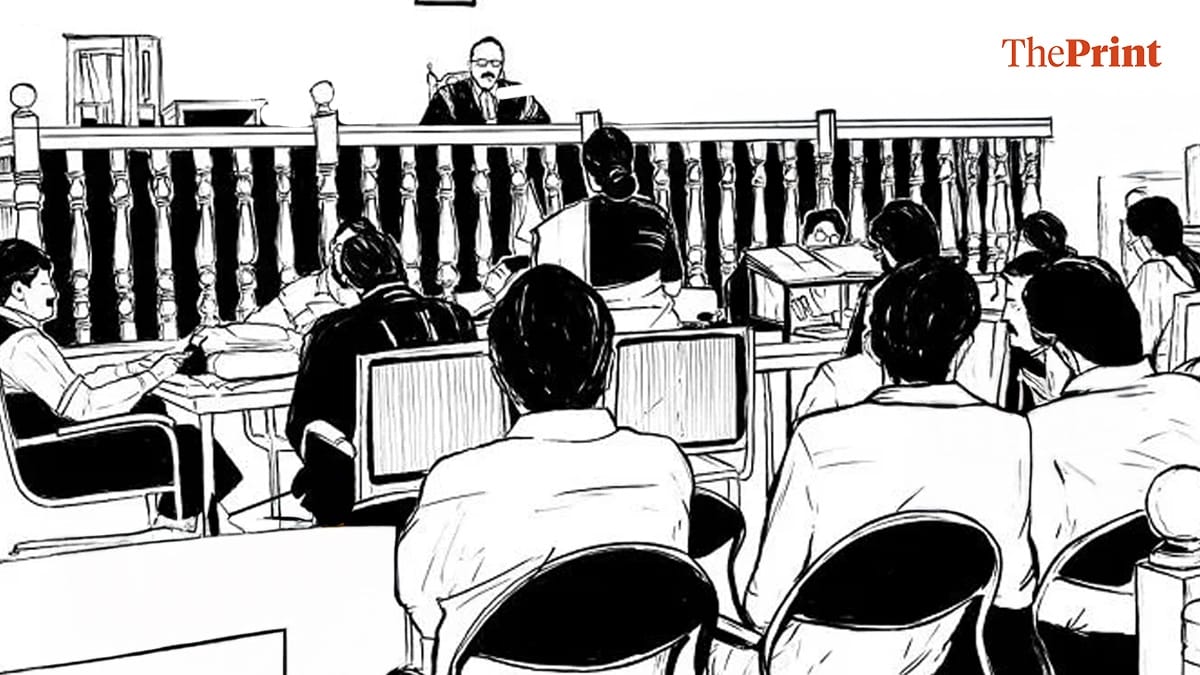
“The non-payment of the balance consideration within the time stipulated in the decree by itself does not amount to abandonment of the contract,” the top court said, emphasising that wilful negligence or clear refusal to perform must be shown before such a drastic consequence is imposed.
The dispute arose from an agreement in 2011, under which the respondent had agreed to sell 3.75 acres of land to the appellant at a rate of Rs 16 lakh per acre. An advance of Rs 2.5 lakh was paid at the time of the agreement.
Following a gap of six years with no payment, in 2017, the buyer issued a legal notice within time expressing readiness to pay the balance amount, but the seller refused to accept the notice. The buyer then went to the trial court seeking specific performance of the agreement.
The trial court directed the buyer to pay the balance amount of Rs 57.5 lakh within one month, following which the seller was required to execute and register the sale deed.
However, due to a series of adjournments, non-service of notices, and later the COVID-19 lockdown, the balance amount was ultimately deposited in court only in 2020.
Despite this, the execution court later dismissed the execution proceedings in 2023, holding that the decree was conditional and had become unenforceable due to non-deposit of the amount within the time fixed by the decree.
The high court upheld this decision, prompting the buyer to approach the Supreme Court.
Allowing the appeal, the Supreme Court held that a decree for specific performance is like a preliminary order, and the court that passes it retains control over it until it is fully executed.
The bench highlighted the importance of Section 28 of the Specific Relief Act, 1963, which governs the cancellation of contracts after such a decree.
The provision gives courts the discretion either to rescind the contract or to extend the time to complete it. But the power is not automatic, and cancellation does not follow as a matter of course merely because there is a delay.
Criticising the lower courts for adopting a “hyper-technical approach”, the court made it clear that, where necessary, courts can balance “equity” by directing the buyer to compensate the seller for delay, rather than nullifying the decree altogether.
In this context, “equity” refers to fairness and justice as opposed to rigid, mechanical application of rules, especially in matters where the law confers discretion on courts.
The Supreme Court restored the execution proceedings and remitted the matter to the trial court for fresh consideration.
Alfreza Ahmed is an alum of ThePrint School of Journalism, currently interning with ThePrint.
(Edited by Sugita Katyal)

Source: The Financial Express

Source: The Economic Times