Tata Elxsi Issues Newspaper Notice on IEPF Equity Share Tran...
Source: scanx.trade
12 May 2026


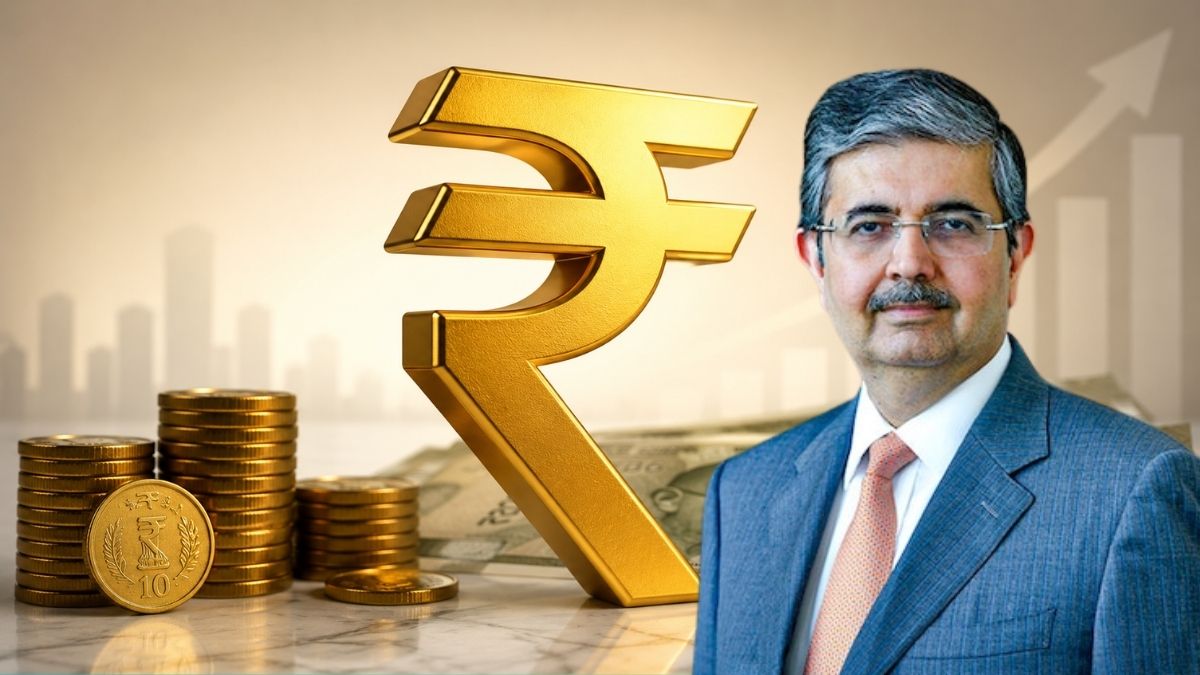
Speaking at a Confederation of Indian Industry (CII) event, Kotak said a genuinely self-reliant country is the one that “does not need to depend on somebody else’s money or power.”
“A truly Aatmanirbhar, self-reliant country is the one which does not need to depend on somebody else’s money or power,” he said.
Against the backdrop of global economic uncertainty triggered by the West Asia conflict, Modi had appealed to people to avoid destination weddings abroad, limit foreign travel and opt for work-from-home, a pandemic-era practice, wherever possible.
‘Global environment is becoming increasingly fragmented’: Uday Kotak
Kotak, founder of private sector lender Kotak Mahindra Bank, said the global environment is becoming increasingly fragmented, with countries prioritising their own strategic interests, making it imperative for India to strengthen its domestic economic foundations.
Calling it a “provocative” statement for a finance professional, Kotak said, “India has financialized too early.” He said many companies have become excessively focused on quarterly earnings, stock prices and employee stock option gains, instead of building businesses with a three-to-five-year perspective.
“I would strongly urge companies to not be excessively focused on the short-term stock price… but think about building a company three to five years,” he said.
Kotak said India had relied heavily on foreign portfolio investment (FPIs) for many years and only after the pandemic did domestic investors begin to play a larger role in capital markets.
Kotak calls for better capital allocation
He urged companies to reinvest profits rather than simply managing large treasury portfolios.
“Corporate India has got a phenomenal tax rate. What have you done with it? Are we reinvesting or running corporate treasuries?” he asked.
Kotak said governments are generally poor allocators of capital and suggested that policy support should focus on encouraging fresh investments through additional investment allowances rather than relying solely on existing tax incentives.
He also stressed the need for India to strengthen its economic balance sheet and P&L by boosting domestic production, increasing exports, and reducing import dependence.
“We need our balance sheet and P&L to be able to produce, or there will come a time when we will find it difficult to buy,” he said.
While acknowledging that India’s macroeconomic position has improved significantly, with a lower current account deficit and stronger foreign exchange reserves, he warned that vulnerabilities remain, especially if oil prices rise sharply or foreign capital flows reverse.
Kotak urged Indian businesses to move out of their comfort zones and focus on what they can do for the country rather than relying solely on government support.
More money into private market
He also advocated strengthening the country’s domestic private equity, venture capital and alternative asset ecosystem, saying these institutions are essential for funding entrepreneurship and long-term economic growth.
He said pension funds and insurance companies, which are accumulating large pools of household savings, should gradually be allowed to allocate more money to private markets in a regulated manner with adequate safeguards.
Kotak highlighted the growing influence of mutual funds in reducing India’s dependence on foreign capital.
According to Kotak, the rise of retail participation in mutual funds has helped create a domestic equity culture and provide a stable source of risk capital.
“We have got domestic savings. If at all, our responsibility is… to make sure that mutual funds truly remain,” he said, stressing the need to preserve investor trust.

Source: The Economic Times

Source: The Economic Times