Question before policymakers is whether public money is being deployed to maximise public good, equity, and real environmental outcomes
EV subsidy or private enrichment?
By Pradeep S Mehta, Secretary General, CUTS International
Last month, while hearing a long-running matter on air quality in Delhi-NCR, the Supreme Court issued a pointed caution: There cannot be a single-technology solution such as electric vehicles (EVs) introduced without first examining its consequences for its carbon friendliness and the cost to the economy and the people. All such interventions must demonstrably serve the larger public good and therefore the apex court underlined the need for evidence-based, citizen-centric policymaking rather than narrow or siloed approaches.
This judicial observation is timely, because India’s current approach to promoting EVs raises precisely these concerns.
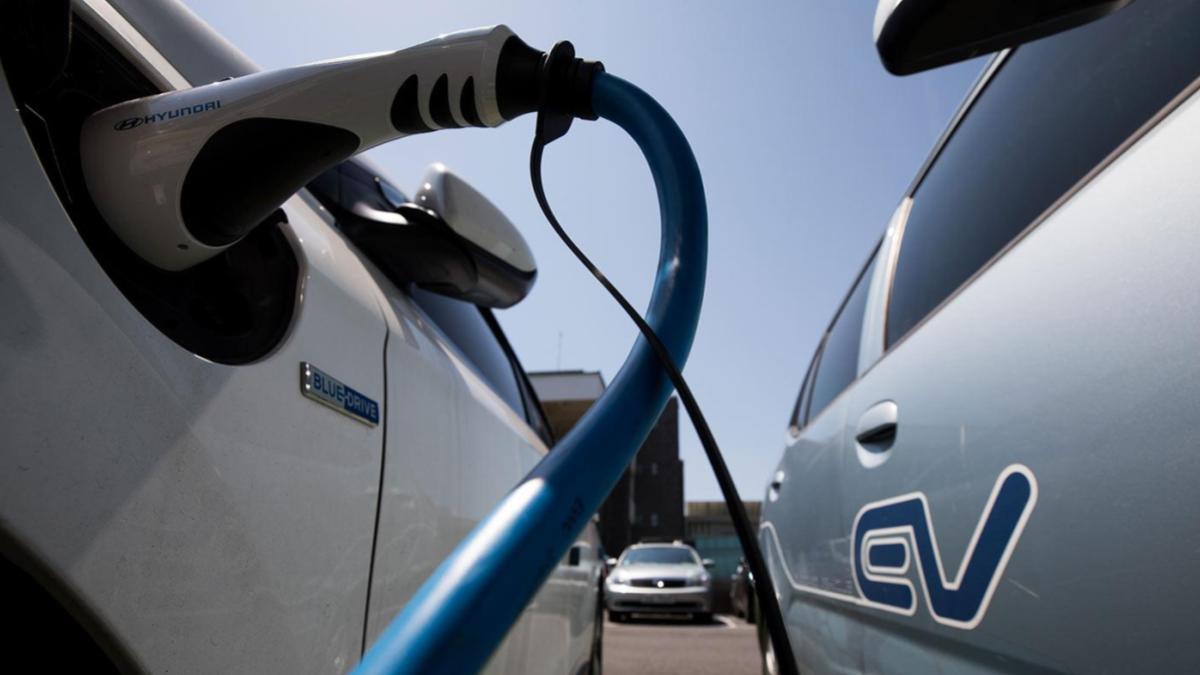
India’s EV push is often framed as essential to achieving two critical imperatives—reducing oil imports and lowering carbon emissions. These are undoubtedly important policy goals. But even well-intentioned transitions must be assessed through the lens of outcomes, efficiency, and fairness in the use of taxpayer money.
Over just the last three years, India has spent close to Rs 30,000 crore in direct and indirect support for electric cars. This includes purchase incentives, a lower goods and services tax rate, and widespread waivers on registration and road taxes. Yet, despite more than a decade of active policy support, electric cars still account for only about 4% of new car sales in the country.
Such a wide gap between fiscal effort and adoption outcomes warrants serious examination.
Public subsidies are not freebies. Every rupee committed here is a rupee unavailable for other priorities—healthcare, nutrition, education, rural employment, or urban public transport. In a developing economy with multiple competing demands on public finances, choices matter deeply. When the state underwrites private vehicle purchases, it is implicitly treating them above other essential needs.
The generosity of India’s EV incentives is striking. When central and state benefits are combined, government support can amount to ~35-60% of the ex-factory price of an electric car, depending on the model and location. This goes far beyond correcting a narrow market failure, it represents deep fiscal underwriting of private consumption.
Who benefits most from this support is not a matter of conjecture. A 2022 study by Harvard Law School found that EV subsidies disproportionately accrue to higher-income households, as these buyers are more likely to afford the upfront cost, own multiple vehicles, and have access to private charging. In India, electric cars are predominantly purchased by affluent households, often as a second or third car. The result is a regressive dynamic—taxpayers across income groups are helping subsidise assets largely owned by the well-off.
This imbalance becomes sharper when viewed alongside mixed signals in the domestic EV discourse. Just a month ago, the head of Tata Motors’ passenger vehicle business said that price parity between EVs and internal combustion engine cars had already been achieved. However, amid discussions around the Union Budget, he sought more incentives on EVs.
This contrast underlines the need for greater clarity and consistency in subsidy policy. If market parity has indeed been reached, it is reasonable to ask whether broad-based purchase incentives remain the most efficient use of public funds. Policy design must be guided by transparent, evidence-based assessment, rather than shifting narratives.
Globally, governments are also reassessing the cost-effectiveness of EV subsidies. Germany ended its federal electric car purchase subsidy in 2023 amid fiscal pressures. The UK phased out direct grants for electric cars earlier, while in the US, several states have tightened eligibility criteria and capped benefits. China, after more than a decade of aggressive promotion, withdrew its national EV purchase subsidies at the end of 2022, shifting its focus towards infrastructure and regulatory measures.
In India, the limited impact of subsidies is compounded by a persistent infrastructure and fiscal deficit. The primary barrier to wider EV adoption is not consumer reluctance but the lack of a reliable public charging network located conveniently. Redirecting a meaningful portion of subsidy expenditure towards charging infrastructure would create durable public assets, address range anxiety, and benefit all future users rather than a narrow group of early adopters.
There is also a more immediate and cost-effective opportunity to address vehicular pollution. Diesel cars, though a minority of the fleet, contribute disproportionately to harmful emissions. In Delhi-NCR, diesel cars account for around 19% of the car fleet but are responsible for nearly 83% of vehicular particulate emissions, with PM2.5 and nitrogen oxide emissions far higher than petrol vehicles.
Instead of spreading scarce resources thinly across EV subsidies, policymakers should take a far more decisive stance—a clear ban on diesel cars with immediate effect, supported by accelerated and strictly enforced vehicle scrappage. Such a move would deliver immediate air quality gains at a fraction of the fiscal cost currently being incurred.
A more balanced mobility strategy would therefore include policy options such as sustained investment in public charging infrastructure, effective scrappage implementation, promotion of cleaner alternatives such as biofuels and CNG, and a clear road map to exit the most polluting technologies—starting with diesel.
After spending Rs 30,000 crore in just three years for limited penetration, the Supreme Court’s warning deserves close attention. The question before policymakers is no longer whether India should pursue cleaner mobility but whether public money is being deployed so that it maximises public good, equity, and real environmental outcomes.
Disclaimer: The views expressed are the author’s own and do not reflect the official policy or position of Financial Express.