The Economic Survey also noted that while private equity and venture capital funding has fuelled the expansion of the microfinance sector, it has also been accompanied by recurring stress, including over-lending and over-indebtedness.
Economic Survey calls for tighter credit practices at microfinance institutions
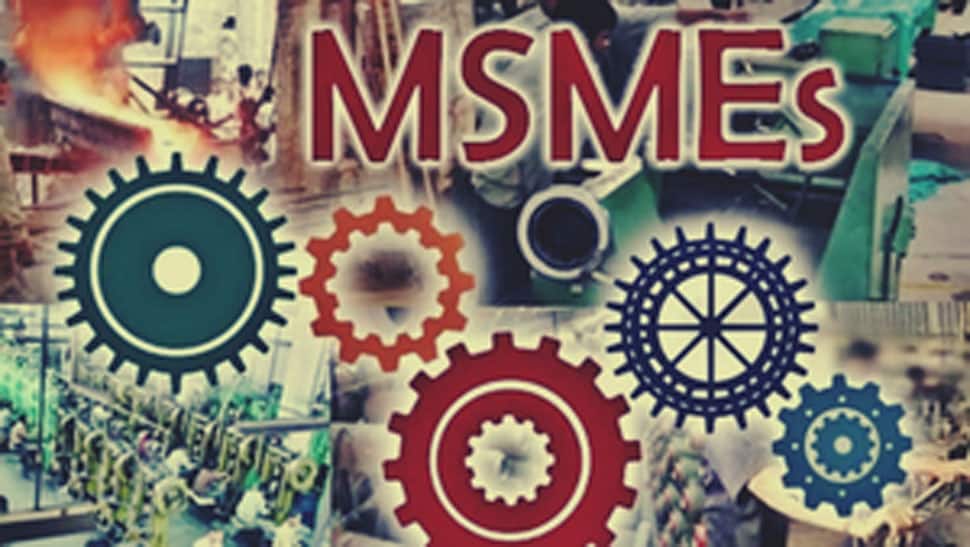
Mumbai: The Economic Survey 2026 has flagged structural gaps in the microfinance sector, urging microfinance institutions (MFIs) to strengthen credit assessment and product design to rein in aggressive lending and rising borrower stress. The Survey noted that MFIs largely do not offer tailored credit products with differential pricing across borrower categories, limiting their ability to appropriately price risk.
The Economic Survey also noted that while private equity and venture capital funding has fuelled the expansion of the microfinance sector, it has also been accompanied by recurring stress, including over-lending and over-indebtedness.
“MFIs are presently not seen to offer tailored credit with differential pricing for different categories,” the Survey said. “In some instances, lending may become more competitive when multiple MFIs serve the same borrowers, which may be symptomatic of deeper incentive structures within the MFI system that are contributing to aggressive lending strategies.”
The Survey also highlighted operational constraints, including the lack of a primary and standardised framework for assessing household income. In the absence of reliable cash-flow data, income assessments may be imprecise, forcing MFIs to rely on internal estimation methods. Further, MFIs often have limited visibility into borrowers’ exposure to other forms of credit such as gold loans, agricultural loans and cooperative society lending, constraining their ability to accurately assess total repayment obligations at the time of loan origination, it stated.
The economic survey also noted that while the entry of formal funding sources such as private equity (PE) and venture capital (VC) has supported the sector’s expansion, it has also coincided with repeated episodes of stress, including overlending, borrower over-indebtedness and a rise in non-performing assets. These cycles underscore how rapid credit expansion, combined with strong financial return expectations, can create vulnerabilities at both institutional and household levels.
Live Events
You Might Also Like:
Economic Survey 2026: How Kochi can show the 'way' to other cities
The Survey raised concerns that increasing financialisation may, in some contexts, have weakened the original balance between social objectives and financial sustainability in microfinance. As MFIs became more integrated with capital markets, growth-oriented incentives—such as portfolio expansion, yield metrics and valuation outcomes—have increasingly shaped strategic decisions, while social outcomes are often assumed rather than explicitly measured, it said.
It noted that commonly used scale-based ‘impact’ indicators, such as the number of borrowers, loan portfolio size, share of women borrowers or geographic reach, are easier to report but weakly linked to household welfare. In practice, such metrics can inadvertently reward more intensive lending, frequent loan top-ups and deeper credit penetration, even where borrower repayment capacity is limited.
You Might Also Like:
Economic Survey 2026: CEA confident of India's 6.8%-7.2% growth aim for FY27 in real terms despite an upcoming tweak
Over the past decade, the microfinance sector expanded rapidly, with the number of active borrowers nearly doubling from 330 lakh in FY14 to 627 lakh in FY25, as per data shared in the survey. During the same period, the gross loan portfolio grew nearly seven-fold from Rs 33,517 crore to Rs 2,38,198 crore, while branch networks expanded from 11,687 to 37,380. However, this growth reversed in FY25, with outstanding loans declining 14% year-on-year, a slowdown the Survey attributed to credit overexposure following a surge in pent-up demand after the pandemic.
(You can now subscribe to our Economic Times WhatsApp channel)
(Catch all the Business News, Breaking News and Latest News Updates on The Economic Times.)
Subscribe to The Economic Times Prime and read the ET ePaper online.
...moreless
(You can now subscribe to our Economic Times WhatsApp channel)
(Catch all the Business News, Breaking News and Latest News Updates on The Economic Times.)
Subscribe to The Economic Times Prime and read the ET ePaper online.
...moreless