
Gujarat State Petronet Limited Fixes Record Date for Composi...
29 Apr 2026


Synopsis
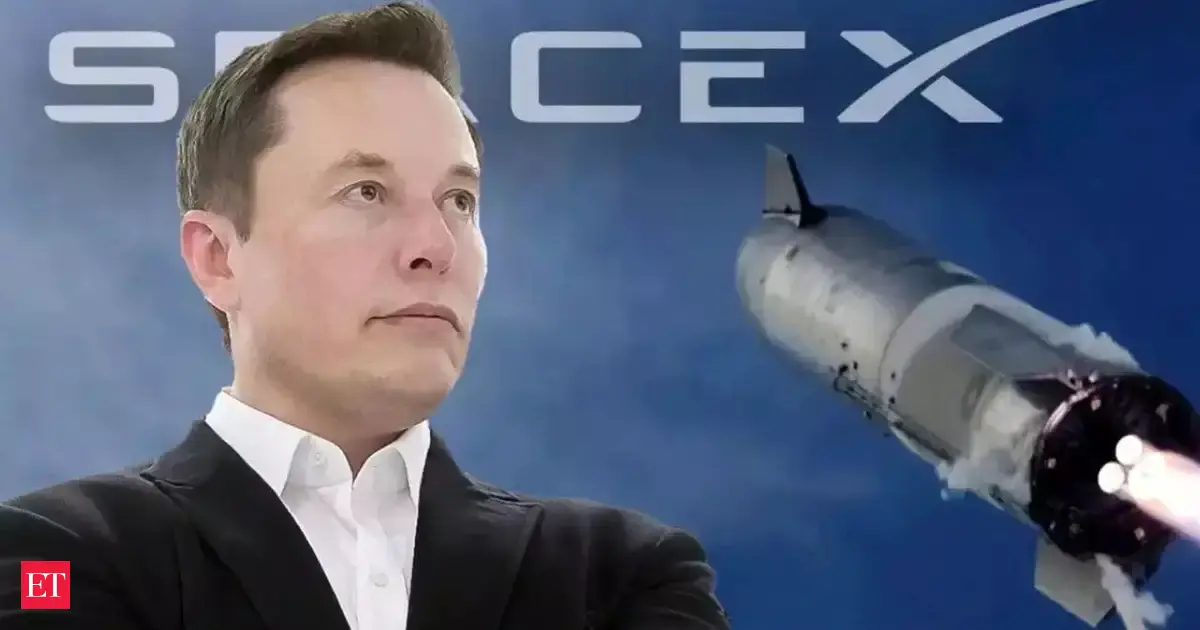
The SpaceX IPO is targeting a massive $1.75 trillion valuation. That number alone is historic. But the real shock is the Elon Musk pay package tied to it. Elon Musk will earn 200 million shares only if SpaceX hits $7.5 trillion and builds a Mars colony of one million people. This is not a normal CEO deal. The SpaceX IPO also gives Musk unmatched control through super-voting shares.
The SpaceX IPO is already shaping up to be the biggest in history, targeting a staggering $1.75 trillion valuation and over $50 billion in fundraising. But what’s truly grabbing global attention is the unprecedented compensation plan for Elon Musk—a package tied not just to financial milestones, but to humanity’s expansion beyond Earth. At the center of this story is a bold condition: Musk could receive 200 million super-voting shares only if SpaceX reaches a $7.5 trillion valuation and successfully establishes a permanent Mars colony with at least one million residents.
This isn’t just executive pay. It’s a high-stakes blueprint for the future of civilization. The SpaceX IPO filing reveals a structure where Musk earns nothing unless these extreme targets are met. In a world where CEO compensation often guarantees massive payouts, this all-or-nothing model flips the script. It answers a critical question upfront: Musk gets paid only if SpaceX achieves outcomes that redefine industries—and possibly human existence itself.
The SpaceX IPO also signals a deeper shift in corporate governance and investor expectations. With Musk holding powerful super-voting shares and effectively controlling his own removal, investors are being asked to bet not just on a company, but on a singular vision. This makes the SpaceX IPO one of the most unconventional, ambitious, and controversial public offerings ever attempted.
SpaceX IPO compensation plan: How Elon Musk’s Mars vision shapes executive pay
The SpaceX IPO compensation structure stands apart from anything seen in modern corporate history. Unlike traditional CEO packages, which rely on revenue growth or stock price targets, this plan ties Musk’s rewards to outcomes that sound closer to science fiction than quarterly earnings.
To unlock the largest portion of his compensation, Musk must oversee the creation of a self-sustaining Mars colony with one million people. At the same time, SpaceX must reach a $7.5 trillion valuation—more than double the current market cap of the world’s largest companies. These dual conditions transform the SpaceX IPO into a long-term bet on technological breakthroughs, interplanetary logistics, and human migration.
Live Events
Additionally, Musk can earn up to 60.4 million extra shares if SpaceX achieves other valuation milestones and successfully deploys space-based data centers capable of delivering 100 terawatts of computing power. This ties the SpaceX IPO not only to space exploration, but also to the future of artificial intelligence infrastructure.
Crucially, if these targets are not met, Musk receives nothing. Since 2019, he has drawn a modest salary of just $54,080 annually. This reinforces a pattern seen in his leadership style—low fixed pay, but massive upside tied to extreme performance.
Why the SpaceX IPO governance structure gives Elon Musk unmatched control
Beyond compensation, the SpaceX IPO filing reveals another critical detail: Elon Musk cannot be removed as CEO or chairman without his own consent. This is made possible through a dual-class share structure, where Musk will control Class B shares carrying significantly higher voting power.
In most public companies, boards retain the authority to remove executives. However, the SpaceX IPO structure effectively centralizes that power in Musk’s hands. If he maintains a significant portion of his super-voting shares, he can control board composition and decision-making indefinitely.
Corporate governance experts note that while dual-class structures are common in tech IPOs, the level of control in the SpaceX IPO goes further than usual. It creates a scenario where investors have limited influence over leadership decisions, even as they provide capital.
This raises an important trade-off. Investors gain exposure to one of the most innovative companies in the world, but at the cost of traditional checks and balances. The SpaceX IPO, therefore, becomes as much about trust in Musk as it is about financial returns.
Can SpaceX really reach a $7.5 trillion valuation and build a Mars colony?
The question dominating investor discussions is simple: are the SpaceX IPO targets even achievable?
Today, SpaceX is already a leader in reusable rocket technology and satellite deployment. Its Starship program aims to dramatically reduce the cost of space travel, a critical step toward Mars colonization. However, building a self-sustaining colony with one million people involves challenges far beyond transportation.
It requires life-support systems, food production, radiation protection, and an entirely new economic model. SpaceX itself acknowledges that millions of tons of cargo would need to be delivered to Mars to support such a population.
On the financial side, reaching a $7.5 trillion valuation would require SpaceX to dominate multiple industries simultaneously. These include satellite internet, deep-space logistics, defense contracts, and possibly space-based computing infrastructure.
The inclusion of 100 terawatts of orbital computing capacity in the compensation plan suggests Musk envisions SpaceX playing a major role in the AI economy. If realized, this could redefine how data centers operate, shifting them from Earth to space.
Still, the scale of these ambitions means the SpaceX IPO is less about current performance and more about future potential. It’s a bet on exponential growth across multiple frontiers.
What the SpaceX IPO means for investors, tech industry, and the future
The SpaceX IPO is not just another market event. It represents a turning point in how companies define success and reward leadership. By linking compensation to outcomes like Mars colonization, SpaceX is signaling that its mission goes far beyond profits.
For investors, this creates both opportunity and risk. On one hand, the upside is enormous if SpaceX achieves even a fraction of its goals. On the other, the lack of governance control and the ambitious nature of the targets introduce significant uncertainty.
For the tech industry, the SpaceX IPO sets a new benchmark. It challenges the idea that companies should focus solely on near-term financial metrics. Instead, it emphasizes long-term, transformative goals that could reshape entire sectors.
Perhaps most importantly, the SpaceX IPO forces a broader reflection. It asks whether capital markets are ready to support ventures that aim to extend human life beyond Earth. It also raises questions about accountability when so much power is concentrated in a single leader.
By the end of this story, one thing becomes clear. The SpaceX IPO is not just about raising money or rewarding a CEO. It’s about redefining what a company can aim for—and how far humanity is willing to go to achieve it.
FAQs:
Q1. Will Musk really earn 200 million shares for a mars colony?
The SpaceX compensation plan clearly states that Elon Musk will receive 200 million super-voting shares only if two extreme conditions are met together. The company must hit a $7.5 trillion valuation and successfully establish a permanent Mars colony with at least one million residents. This means the payout is entirely performance-driven, with zero guaranteed reward unless both technological and financial milestones are achieved at an unprecedented scale.
Q2. Why can no one remove Elon Musk as CEO?
Under the SpaceX IPO structure, Elon Musk will control high-powered Class B super-voting shares that give him decisive authority over board decisions. This setup allows him to effectively block any attempt to remove him, since his voting power dominates the process. As a result, investors in SpaceX will have limited influence over leadership changes, making this one of the most founder-controlled governance models in modern IPO history.
(You can now subscribe to our Economic Times WhatsApp channel)
(Catch all the US News, UK News, Canada News, International Breaking News Events, and Latest News Updates on The Economic Times.)
Download The Economic Times News App to get Daily International News Updates.
...moreless
(You can now subscribe to our Economic Times WhatsApp channel)
(Catch all the US News, UK News, Canada News, International Breaking News Events, and Latest News Updates on The Economic Times.)
Download The Economic Times News App to get Daily International News Updates.
...moreless
Explore More Stories
Nova Scotia Car Crash: Man killed, three injured in two-vehicle collision in Shubenacadie; probe on
Quote of the Day by Queen Elizabeth II: ‘To be inspirational you don't have to save lives or…’
Who was Brandon Malcolm? Cop killed in motorcycle crash on Highway 401 in Ontario
What are lie-flat seats? Air Canada gears up for big upgrade with new single-aisle aircrafts
Quote of the Day by Ian Hacking: ‘The social risks that worry us are not random…’
3 killed in early morning house fire in Lower Sackville, Nova Scotia; probe on
Quote of the Day by American fighter pilot Eddie Rickenbacker: ‘Courage is doing what you are afraid to do, there can be no…’
Quote of the day by Graham Bell: 'Before anything else, ...is the key to success' - The genius who made long-distance conversation possible
Police arrest third suspect in April 13 fatal shooting in Amherst, Nova Scotia
Quote of the Day by Isaac Newton: Plato is my friend, Aristotle is my friend, but my greatest friend is…’
Earth Day 2026: How Canadian cities are turning April 22 into action, from clean-ups to climate learning
Quote of the Day by Canadian Philosopher Charles Taylor: ‘The only meaningful life is that which is deepened by carrying through these commitments, living through the dead periods in order to…’
WestJet slashes flight capacity due to soaring jet fuel prices as US-Iran war keeps Middle East on the edge
1
2
3