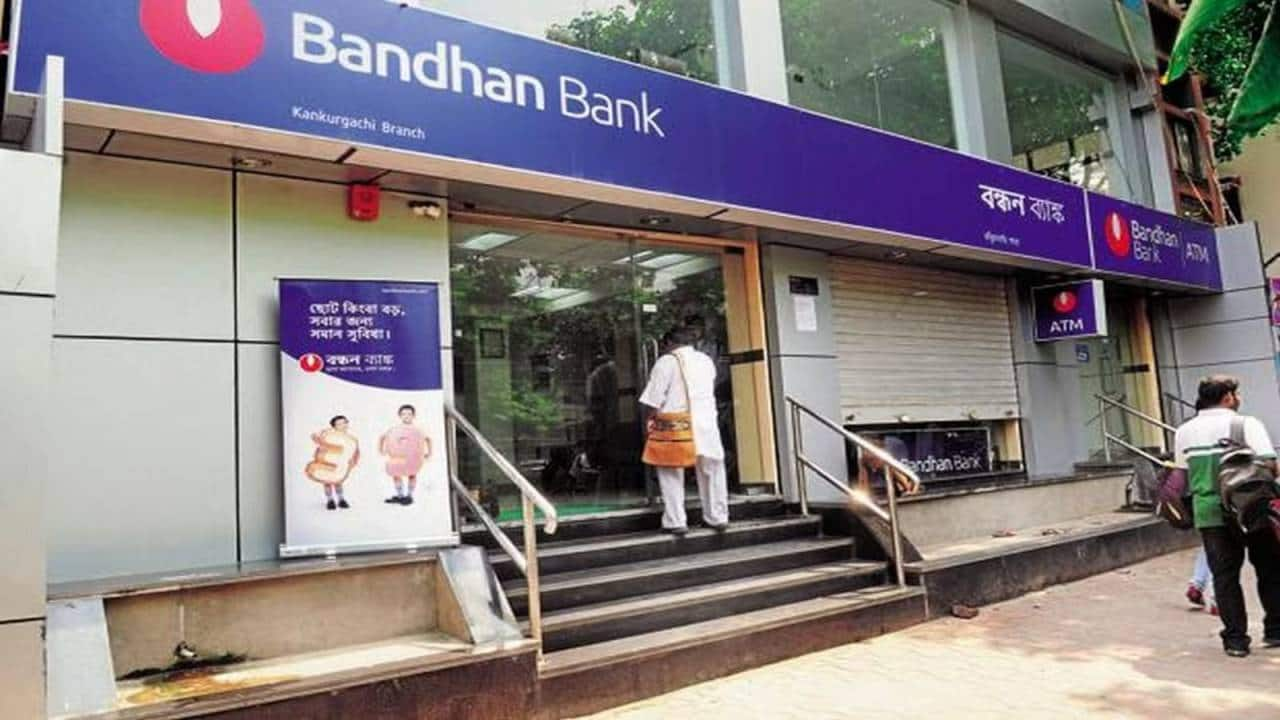
Bandhan Bank stock falls 7%, top midcap loser today as promo...
16 Mar 2026



Synopsis
According to Sebi norms, focused equity mutual fund schemes must invest in a portfolio of maximum 30 stocks. These schemes have no other restrictions when it comes to investing- like flexi cap schemes they can invest in any market capitalisations and sectors.
Many mutual fund investors believe that a concentrated portfolio would help them to earn better returns. They believe many mutual fund schemes offer average returns because they have an extremely large diversified portfolio. Such investors may consider investing in focused mutual fund schemes.
According to Sebi norms, focused equity mutual fund schemes must invest in a portfolio of maximum 30 stocks. These schemes have no other restrictions when it comes to investing- like flexi cap schemes they can invest in any market capitalisations and sectors. If that investment strategy appeals to you, you can get to know more about focused equity schemes.
Also Read | Mutual fund portfolio down Rs 1.5 lakh in 12 days. Is the decline due to regular plans or market volatility?
Best MF to invest
Looking for the best mutual funds to invest? Here are our recommendations.
View Details »
As you can see, these schemes have a concentrated portfolio. That means that the fund manager will choose stocks based on his or her conviction and take a meaningful exposure in the stock. Such investments can pay off handsomely if the call goes right. However, if a few calls go wrong, the scheme will suffer a lot. This is the trouble with concentrated bets.
Similarly if the manager succeeds in identifying the sectors and market capitalisations ahead of the market, it will benefit the scheme a lot. If the call goes wrong, the scheme will suffer a lot. Once again this is the peril of having a concentrated portfolio. You will gain a lot or lose a lot - depending on your stock-picking skills.
Live Events
If you are ready to take more risk and have an investment horizon of around seven years, you may invest in these schemes. Here are our recommended focused equity mutual fund schemes. Follow our monthly updates to keep track of your investments.
SBI Focused Fund has been in the second quartile in the last three months. The scheme had been in the third quartile earlier. Sundaram Focused Fund has been in the third quartile for the last 11 months. The scheme had been in the fourth quartile before.
Also Read | Mutual funds reduce investments in IT stocks in February, weight slips to 8 year low
Best focused equity mutual funds to invest in March 2026
360 ONE Focused Equity Fund
SBI Focused Fund
Sundaram Focused Fund
Quant Focused Fund
Methodology:
ETMutualFunds.com has employed the following parameters for shortlisting the equity mutual fund schemes.
1. Mean rolling returns: Rolled daily for the last three years.
2. Consistency in the last three years: Hurst Exponent, H is used for computing the consistency of a fund. The H exponent is a measure of randomness of NAV series of a fund. Funds with high H tend to exhibit low volatility compared to funds. The H exponent is a measure of randomness of NAV series of a fund. Funds with high H tend to exhibit low volatility compared to funds with low H.
i) When H = 0.5, the series of returns is said to be a geometric Brownian time series. This type of time series is difficult to forecast.
ii) When H is less than 0.5, the series is said to be mean reverting.
iii) When H is greater than 0.5, the series is said to be persistent. The larger the value of H, the stronger is the trend of the series
3. Downside risk: We have considered only the negative returns given by the mutual fund scheme for this measure.
X =Returns below zero
Y = Sum of all squares of X
Z = Y/number of days taken for computing the ratio
Downside risk = Square root of Z
4. Outperformance: It is measured by Jensen's Alpha for the last three years. Jensen's Alpha shows the risk-adjusted return generated by a mutual fund scheme relative to the expected market return predicted by the Capital Asset Pricing Model (CAPM). Higher Alpha indicates that the portfolio performance has outstripped the returns predicted by the market.
Average returns generated by the MF Scheme =
[Risk Free Rate + Beta of the MF Scheme * {(Average return of the index - Risk Free Rate}
5. Asset size: For Equity funds, the threshold asset size is Rs 50 crore
(Disclaimer: past performance is no guarantee for future performance.)
(Catch all the Mutual Fund News, Breaking News, Budget 2024 Events and Latest News Updates on The Economic Times.)
Subscribe to The Economic Times Prime and read the ET ePaper online.
...moreless
(Catch all the Mutual Fund News, Breaking News, Budget 2024 Events and Latest News Updates on The Economic Times.)
Subscribe to The Economic Times Prime and read the ET ePaper online.
...moreless
Why gold volume is plunging in GIFT City when prices soar
SaaS faces an AI shake-up. An opportunity for Indian IT?
As countries trade gold for guns, can Indian defence stocks be quiet winners?
Looking for a job? This city has plenty, few takers
Stock Radar: JSW Energy stock gives a breakout from a symmetrical triangle pattern; what should investors do?
Buy, Sell or Hold: Motilal Oswal maintains Buy on VA Tech Wabag; sees over 20% upside in RIL
1
2
3