Myntra CEO Nandita Sinha set to quit; Sharon Pais likely suc...
02 Apr 2026


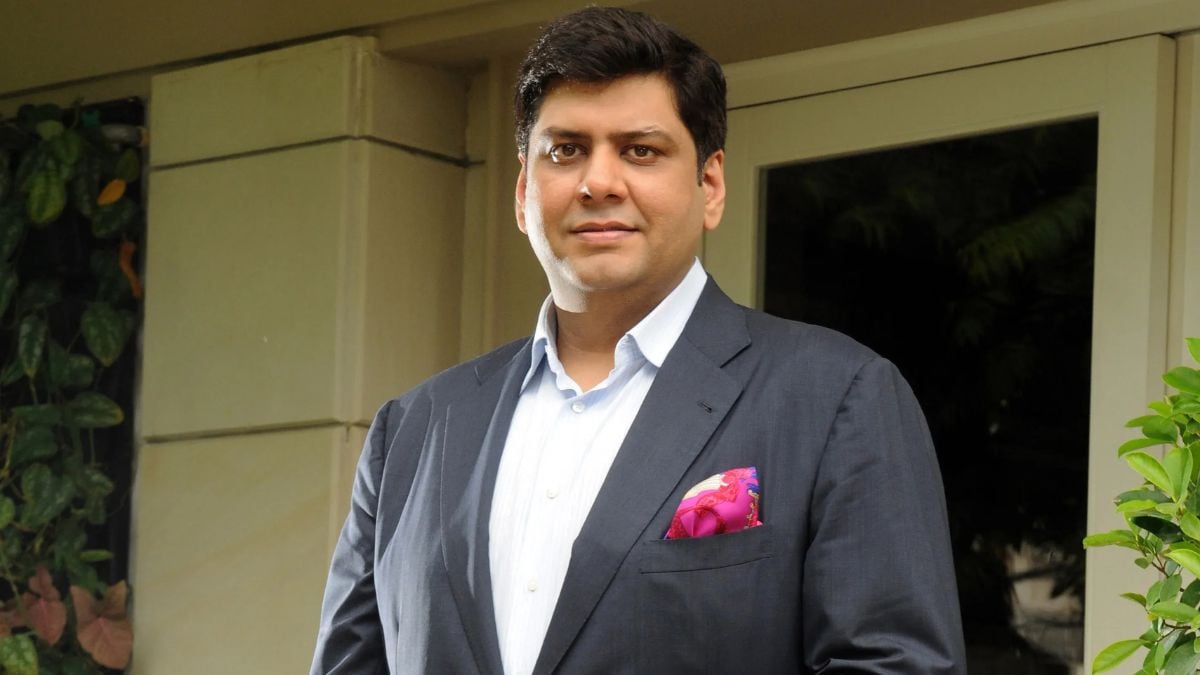
Despite the geopolitical turmoil in West Asia and its spillover effects on global markets, Hero FinCorp is staying firmly on course with its long-term growth strategy. While the NBFC has not seen any material impact on business metrics, the volatility has prompted it to wait before taking a final call on its planned IPO, with a 45–50 day approval window still open. Abhimanyu Munjal, managing director & chief executive, Hero FinCorp tells Mahesh Nayak that funding is not a constraint, and the NBFC remains focused on expanding its Rs 56,000 crore AUM while aiming to double its customer base over the next three-four years. Excerpts:
Has the West Asia turmoil impacted Hero FinCorp’s business as well as fundraising plans?
As things stand today, across all business metrics, we feel very good and so far we have not seen any impact on our operations. Nevertheless, we are monitoring the situation daily. On the fundraising front, our IPO approval window of 45–50 days is still open, and we are taking a wait and watch approach given these unpredictable, unprecedented times. We had planned to raise about Rs 3,500 crore, including Rs 1,700–1,800 crore of primary capital, and will take a call depending on how the environment evolves.
Which sectors are you most closely watching for stress?
We are closely monitoring sectors that are showing early signs of stress, particularly specialty chemicals, fertilisers, ceramics and certain manufacturing clusters. These pressures are highly location specific and micro market driven, which is why our scrutiny has intensified. While 65% of our overall book is retail and continues to perform well, MSME exposures require sharper vigilance. Our risk team evaluates these segments daily, issues advisories, and ensures that incremental onboarding remains extremely selective to protect portfolio quality in this environment.
Will this environment force you to slow down your business plan?
We are building a business for perpetuity. We are not a private equity player who’s here for the short run. Our diversification gives us the flexibility. If we see stress in MSME, we can push capital to retail; if retail slows, we can shift to structured finance. Short term plans may shift, but the long term strategy remains intact. Today, about 65% of our incremental book is secured, and we expect this proportion to rise, giving us additional stability in a volatile environment. Secured is good… it reduces our NIM but through AI and technology our OPEX leverage will also come into play.
How is AI transforming your operations, especially in deeper Bharat markets?
Artificial Intelligence (AI) is transforming our business by allowing us to scale deeply into Bharat without relying on heavy branch expansion. Today, AI handles nearly 60% of all customer service requests, and has reduced onboarding fields from 90 to just three, making the journey frictionless. My goal is to give aspiring India a true white glove experience which is transparent, fast and bias free; and technology enables exactly that. It helps us serve millions efficiently while keeping costs and turnaround times low.
What are your key growth engines for the next three years?
We aim to grow by deepening customer relationships and increasing the number of lending products per customer from 1.25 to 2–2.5 by supporting them through every stage of their financial journey. As aspiring India trades up from a 2-wheeler to a car, and then to a home, we want to be their natural partner, enabled by AI led segmentation and next best offer models. Partnerships with Maruti, MG Motor, Spinny and Cars24 will drive high quality customer acquisition. In housing, we will expand from 90 to 150–160 branches across 12 states. EV financing is another major thrust. With 30 million customers, we aim to replicate six years of acquisition in just three-four years.
Do you expect RBI to intervene with rate cuts to support growth?
We are not immune to the current volatility, but I believe the RBI’s wait and watch stance is appropriate for this environment. The sharp rise in the 10 year G sec and fiscal pressures are real, yet the NBFC sector is far more resilient today. After IL&FS, the industry has strengthened its liquidity buffers and ALM discipline, so we are better positioned to absorb shocks without depending on immediate rate cuts.