Max Healthcare Institute Completes Acquisition of ~58.28% Co...
Source: scanx.trade
18 May 2026


Synopsis
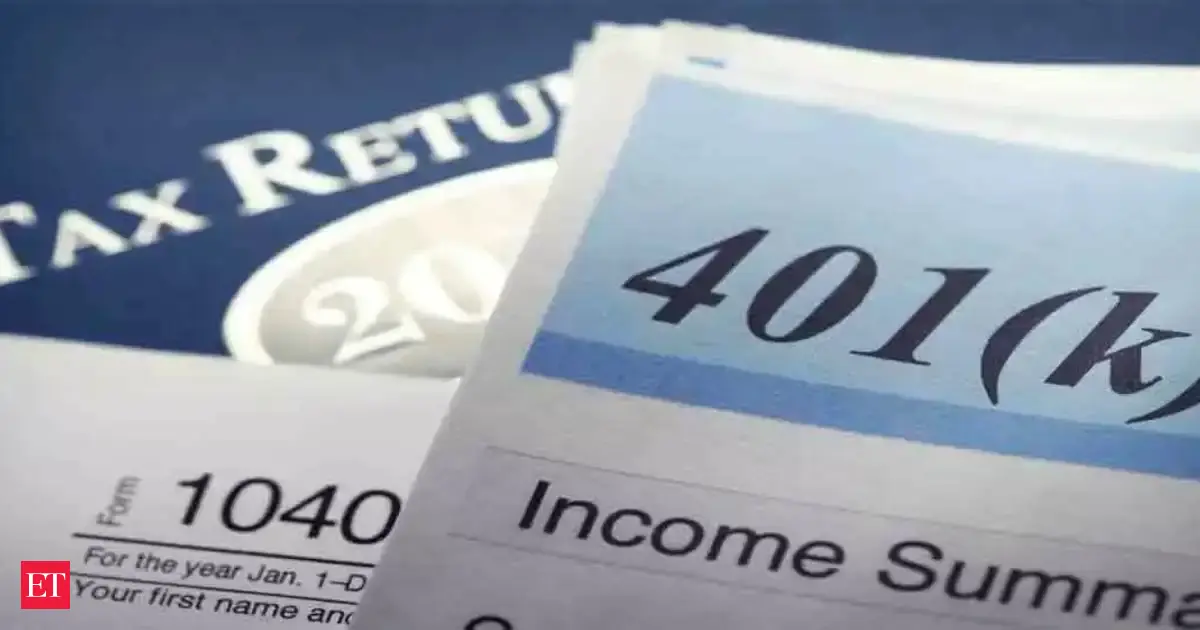
Trump 401(k) private market investments are becoming one of the biggest retirement and economic debates in the United States. The White House says opening America’s $30 trillion 401(k) system to private equity could add nearly $35 billion to US GDP. That number is now driving fresh discussions across Wall Street, retirement firms, and economic policy circles. Supporters say ordinary workers have stayed locked out of high-growth private investments for years while wealthy investors and pension funds captured bigger returns. The Trump administration believes broader access to private markets, venture capital and push more money into fast-growing American companies.
The debate over retirement investing in America is changing fast as the Trump administration pushes a major shift in how 401(k) plans work. Advisers close to President Donald Trump now argue that opening 401(k) retirement plans to private market investments could unlock billions in economic growth while also reshaping long-term wealth creation for ordinary Americans. According to a new economic analysis, the proposal could increase United States GDP by nearly $35 billion by allowing retirement savers greater access to private equity and alternative investments.
The Council of Economic Advisers believes the current system blocks millions of workers from accessing parts of the economy where some of the strongest long-term growth has occurred. The White House economic team says retirement capital should flow more freely toward productive private businesses that may deliver stronger returns over time. Their analysis estimates broader access to private markets could raise investment activity, improve productivity, and strengthen overall economic output.
Why Trump advisers want private equity investments inside 401(k) retirement plans
The Trump administration’s economic advisers believe private market investing could reshape how retirement wealth grows in America. Their argument centers on one powerful idea: ordinary workers should have access to the same investment opportunities that large pension systems and wealthy institutions already use.
Today, pension funds for teachers, firefighters, and government workers allocate roughly 20 percent of their assets into private markets like private equity, venture capital, and infrastructure investments. By comparison, only about 0.1 percent of 401(k) money currently enters those areas. Advisers argue this imbalance has created a two-tier retirement system where institutional investors benefit from growth opportunities unavailable to average savers.
Supporters additionally believe higher long-term returns may encourage households to save more aggressively for retirement. Over time, that could increase national capital formation and strengthen economic resilience. Advisers described the projected $35 billion GDP increase as conservative because the estimate focused mainly on private equity and excluded broader alternative assets like hedge funds and venture capital.
Live Events
How direct indexing and taxable investing are reshaping retirement wealth strategies
The debate over private markets comes as affluent Americans already use sophisticated investment strategies beyond traditional retirement accounts. One increasingly popular approach is direct indexing, where investors own individual stocks that mirror an index instead of holding a single ETF like SPY.
Direct indexing allows investors to harvest tax losses from underperforming stocks while maintaining overall market exposure. Even during strong market years, many individual stocks inside the index decline. Investors can sell those losing positions to offset capital gains taxes while keeping their broader investment strategy intact.
This strategy has gained attention among high-income households because tax-loss harvesting can generate substantial savings over time. Financial advisers say wealthy investors often coordinate direct indexing with Roth conversions, RSU vesting schedules, and concentrated stock sales to reduce taxable income while preserving long-term growth.
What risks do private market investments create for ordinary retirement savers?
Critics warn that opening 401(k) plans to private equity could expose ordinary workers to complicated risks many investors may not fully understand. Unlike publicly traded companies, private firms disclose far less financial information and often operate with lower transparency.
Private equity investments also tend to charge significantly higher fees compared with traditional index funds and ETFs. Those costs can quietly erode long-term retirement returns, especially during weaker economic periods. Some experts fear retirement savers may end up paying premium management fees without fully understanding the tradeoffs involved.
Liquidity remains another major concern. Traditional retirement investments can usually be sold quickly during emergencies or market changes. Private market assets, however, often lock investor money for years. During economic downturns, valuations may also shift sharply, creating uncertainty about what investments are truly worth.
Could Trump’s 401(k) private markets proposal change retirement inequality in America?
The larger issue underneath the 401(k) private markets debate is retirement inequality. Wealthy Americans already invest heavily in private companies through private equity funds, venture capital partnerships, and institutional investment vehicles. Most ordinary workers, however, remain concentrated in public markets through standard mutual funds.
Trump advisers argue that restricting private market access effectively limits wealth-building opportunities for millions of middle-class households. Supporters believe broader participation could help workers benefit from economic sectors that often grow rapidly before companies ever reach public stock exchanges.
Critics respond that access alone does not automatically create wealth. They argue financial literacy, transparency, and investor protections matter just as much as investment availability. Some economists also caution that private market performance can become highly cyclical, especially during periods of rising interest rates or economic stress.
FAQs:
Q1. Can Trump’s 401(k) private market plan really increase US economic growth by $35 billion?
Trump administration advisers believe allowing 401(k) retirement plans to invest in private equity and alternative assets could push more capital toward fast-growing businesses and productive sectors. The White House Council of Economic Advisers says this shift may increase investment activity, business expansion, and long-term productivity, potentially adding nearly $35 billion to the US economy while also giving retirement savers access to opportunities usually reserved for wealthy institutions.
Q2. Why are experts divided over private equity investments inside 401(k) retirement accounts?
Supporters argue private market investments could deliver stronger long-term retirement returns and reduce the investment gap between ordinary workers and elite investors. Critics, however, warn that private equity funds often carry higher fees, lower transparency, and liquidity risks that average retirement savers may not fully understand, especially during periods of economic uncertainty and stock market volatility.
(You can now subscribe to our Economic Times WhatsApp channel)
(Catch all the US News, UK News, Canada News, International Breaking News Events, and Latest News Updates on The Economic Times.)
Download The Economic Times News App to get Daily International News Updates.
...moreless
(You can now subscribe to our Economic Times WhatsApp channel)
(Catch all the US News, UK News, Canada News, International Breaking News Events, and Latest News Updates on The Economic Times.)
Download The Economic Times News App to get Daily International News Updates.
...moreless