Market experts at the Crystal Gazing Summit by PMS AIF World say Israel's strike on Iran is unlikely to cause lasting equity market damage.
'Start to buy': Panel at summit by PMS AIF World sees opportunity in the noise as Iran strike rocks sentiment
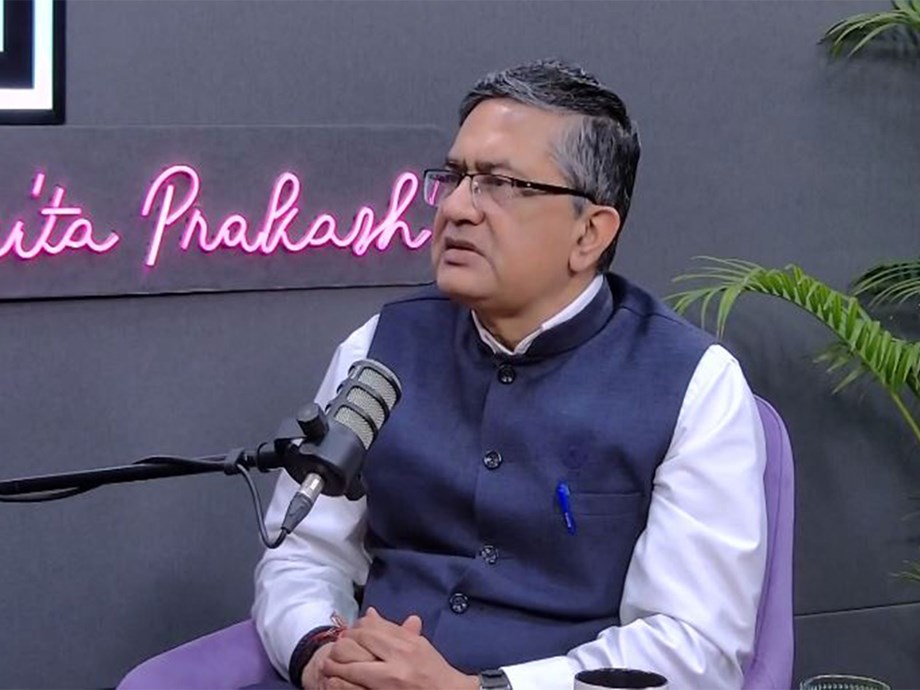
As news broke of Israel's strike on Iran, three seasoned market veterans — Amit Jeswani of Stallion Asset, Pawan Bharaddia of Equitree Capital Advisors, and Radha Raman Agarwal of Swyom Advisors - spoke at the Crystal Gazing Summit, organised by PMS AIF WORLD, and shared their unfiltered views on how markets would react and what their strategy looks like heading into March.
The Iran Strike: A Non-Event for Markets?
All three panelists were remarkably aligned on this: the Israel-Iran development, while dramatic in geopolitical terms, is unlikely to cause lasting damage to equity markets. Jeswani called it a "known unknown" — an event that had been discussed and anticipated for weeks, and therefore already priced in by markets that are, as he put it, "too smart to not discount that event." He drew a sharp contrast with COVID-19, which was a true "unknown unknown" that blindsided investors with an unquantifiable earnings impact.
Bharaddia added an interesting twist to this argument: the uncertainty of whether the strike would happen at all was arguably more damaging to market sentiment than the event itself. "What markets don't like is uncertainty," he noted. "The last three weeks, we were having it blow hot, blow cold — that kept everybody on tenterhooks." Now that the event has materialized, he argued, markets can at least begin processing what comes next with greater clarity.
Agarwal concurred, noting that while a knee-jerk reaction is likely, it would be shallow and short-lived. The broader market, he observed, has already absorbed a significant correction over the past 18 to 24 months, leaving most of the bad news already factored in.
What to Expect on Monday
The consensus is that Monday will likely open with some weakness — but nothing alarming. Jeswani was the most direct, calling the event a "non-event" and drawing parallels with the Russia-Ukraine conflict, where even Russian markets fell only 2-3%. He does not expect a significant cut when markets open. Bharaddia echoed this, saying any sentimental reaction on Monday would "phase out much sooner than later." Agarwal preferred to wait and observe Monday's developments before acting, but made clear he does not anticipate a deep or sustained fall.
The message across the board: do not panic, do not liquidate, and do not mistake a sentiment-driven dip for a fundamental deterioration.
The March Strategy: Buyers, Not Bystanders
When asked point-blank how they plan to approach March, all three managers leaned firmly in one direction — buying.
Jeswani, who currently holds about 13-14% cash, said this is an "outcome, not a strategy" — cash accumulated while waiting for the next bull market leaders to emerge. He believes the bull market may have started as early as February 1st, and expects sector leaders to become clear within four to eight weeks of that starting point. His plan is to be fully deployed by April. "Between March and April, we will be fully in," he said without hesitation.
Bharaddia said his firm is actively increasing allocations, describing current levels as "really, really attractive." While he advocates staggered investing given the inherent volatility of the small and micro-cap space, the direction is clear — he is a buyer, not a seller.
Agarwal, currently sitting at about 10% cash, said he plans to deploy it in a staggered manner with a target to be fully invested by April 15th. While Monday warrants a watchful eye, March and beyond represent an opportunity he does not intend to sit out.
The Bigger Picture: Where Are We in the Market Cycle?
Beyond the geopolitical noise, all three managers believe Indian markets — particularly the small and mid-cap segment — are in the final stages of a bear market that has run for roughly 17 to 18 months. Jeswani pointed to a striking data point: right now, fewer than 6% of stocks are making new highs, and the correlation between earnings growth and stock price performance has fallen to 0.3 against a long-term average of 0.72-0.73. Historically, such dislocations have preceded powerful recoveries. "There are companies growing at 30-40% where stocks are down 20%," he said.
Bharaddia, who focuses on the 1,000 to 5,000 crore market cap segment, noted that valuations in this space have corrected sharply — by 30-35% over the past 15-18 months — bringing them close to or even below 10-year averages in some cases. He cited historical evidence suggesting that every time this kind of valuation setup has occurred, returns in the following 12 months have been in the range of 40-70%.
Agarwal pointed to improving earnings as the next catalyst, noting that Q3 results were already slightly better and expecting Q4 to reflect further recovery. He also highlighted themes he finds compelling: premiumisation of consumption, manufacturing, and the healthcare and hospital sector.
PMS AIF WORLD is India’s leading wealth services firm specialising in alternative investments, serving over 800 clients across Rs 2,200 crore in PMS and AIF assets. The firm follows a knowledge-first philosophy with the belief that when knowledge leads, wealth follows, and it focuses on delivering well-informed investing for its alpha seeking clientele.