
Chatterbox Technologies reports no deviation in IPO fund use
Source: scanx.trade
20 May 2026


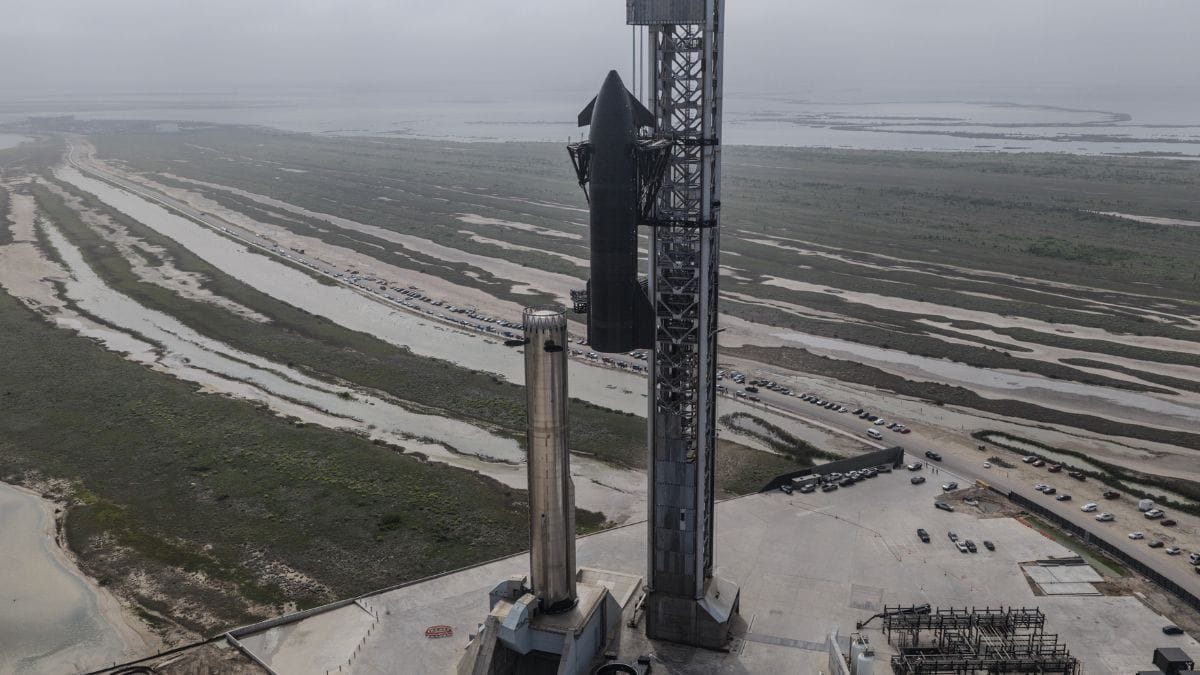
New Delhi: Starship Version 3 is stacked and ready at the SpaceX starbase with a liftoff expected at 6:30 PM ET on 21 May from Texas. This will be the 12th test flight of the Starship rocket, the largest one ever built. Elon Musk wants it to carry humans and cargo to Mars.
Starship V2 was launched on 13 October 2025. Since then, the rocket has been upgraded with Raptor 3 engines, giving it a higher thrust, an enhanced heat shield system with more durable and resilient tiles, bigger propellant tanks that can hold more fuel, and a larger payload capacity.
The launch also comes at a time when SpaceX is preparing for its Initial Public Offering. With the IPO likely next month, investors have their eyes on how Starship performs this time and what that means for SpaceX’s future ambitions.
Also read: Why OpenAI, Anthropic, and SpaceXAI are testing NVIDIA’s new Vera CPU
A complex rocket
One of the key aspects of the Starship V3 is its powerful engines. The 70-m tall Super Heavy Booster, equipped with 33 Raptor 3 engines, will be able to produce a thrust of 18 million pounds at lift-off. Such powerful engines are important for Musk’s vision. He wants Starship to carry large batches of satellites and even fuel tankers to space. The tankers will help refuel other rockets that can then continue longer missions.
SpaceX’s ultimate plan is to send out a Starship into orbit, and then send up other Starships, which will act as tankers carrying fuel for the first rocket.
This time, as Starship launches, it will release small experimental satellites that will observe how the rocket’s new heat shield reacts in space and how it responds to the extremely high temperatures it must endure when re-entering the earth’s atmosphere.
During reentry, temperatures often rise over 1,500 degree Celsius. Heat shield tiles could crack or fall off, which would eventually destroy the spacecraft.
Musk has often said that building the heat shield tiles on Starship have been one of the hardest challenges for SpaceX. They are essential for SpaceX to reuse the Starship in the way airplanes are used today.
The rocket’s ability to carry heavy cargo into space is also being tested in the upcoming flight.
Currently, Falcon 9, a rocket developed by SpaceX, is one of the world’s most-frequently used satellite launch vehicles. It carries commercial satellites as well as SpaceX’s own Starlink internet satellites into orbit. However, if Falcon 9 can be thought of as a delivery truck for satellites, then Starship is expected to become a cargo ship.
Starship is also a key part of NASA’s Artemis programme. The Artemis IV mission hopes to use Starship to take astronauts back to the moon again in 2028, after more than 50 years. This is predominantly because of the rocket’s carrying capacity. Starship could potentially carry large crews, equipment, rovers, and more cargo to the moon.
(Edited by Theres Sudeep)

Source: The Economic Times

Source: The Economic Times