Balanced advantage funds move in sync with markets-but not i...
19 Apr 2026


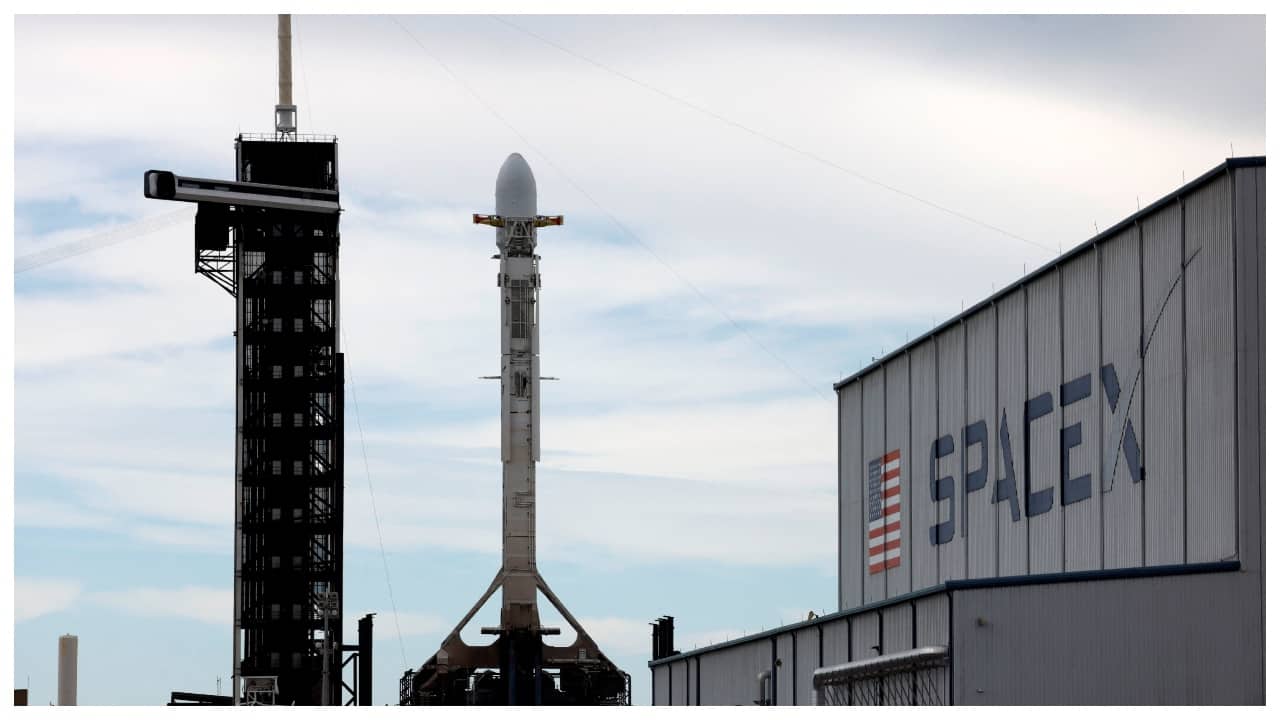
In markets, the most consequential shifts are rarely the loudest. They don’t dominate headlines — they redefine where capital flows next. SpaceX’s confidential filing with the SEC is one such inflection point.
The company is reportedly targeting a $1.75 trillion valuation and a $75 billion raise — more than 2.5 times Saudi Aramco’s 2019 record — with a June listing on the Nasdaq. If those numbers hold, it will be the largest IPO in history.
What SpaceX actually is
This is not merely a rocket company going public. Following its February 2026 merger with xAI — which set the combined entity at $1.25 trillion before the IPO re-rate — SpaceX now sits at the convergence of three structural forces: launch economics it has already re-written, Starlink’s roughly $11 billion run-rate in subscription connectivity, and an AI stack attempting to own the data layer that satellites generate.
The last decade rewarded cloud and software platforms. The next may belong to firms that own both the physical and digital infrastructure beneath artificial intelligence. SpaceX is attempting to lead that shift.
But price is the question no column should skip
At the reported target, SpaceX would debut at roughly 108x trailing sales — nearly four times Meta’s IPO multiple, and more expensive than Nvidia was at the peak of the 2023 AI surge. Reported financials disagree materially: Reuters suggests an $8 billion profit on about $16 billion of 2025 revenue; The Information reports a $5 billion loss on about $18 billion. The S-1 will resolve this. Until it lands, every valuation argument rests on incomplete data.
Extraordinary companies can still be ordinary investments if the entry price is wrong.
The base rate is sobering
Of the five largest mega-IPOs of the past fifteen years, four — Alibaba, Saudi Aramco, Uber, and Rivian — have underperformed the S&P 500 meaningfully since listing. Only Meta outperformed over the long run, and even Meta traded below its IPO price for roughly fifteen months. Professor Jay Ritter’s data on 9,300+ US IPOs since 1980 tells the same story: hype compresses, fundamentals re-assert.
The SpaceX moment therefore asks two different questions of Indian investors. The narrow one — whether to buy at IPO — probably answers itself: patience usually wins. The broader one matters more.
The 3% portfolio problem
India now accounts for just under 3% of global market capitalisation. The remaining 97% includes almost every company defining the AI, semiconductor, cloud, and now space cycle. Add the rupee’s long-term depreciation against the dollar, and a domestic-only portfolio carries two quiet costs: it sidelines the innovation economy, and it compounds wealth in the softer currency.
SpaceX is not the reason to go global. The structural composition of the world’s investable universe is the reason. SpaceX is simply the catalyst that makes the gap visible.
Access, without recklessness
Direct retail participation in the IPO will be limited for Indian investors. But global investment platforms — including domestic brokers now offering seamless US access under LRS, alongside GIFT City feeder routes — have significantly lowered the barriers to entry. Post-listing, exposure is available through individual shares and, within months, through the major US technology and growth ETFs that will almost certainly add SpaceX to their holdings.
The right posture is neither domestic insularity nor IPO-day enthusiasm. It is a patient, rules-based build of global exposure — sized to portfolio, not to headlines.
Those who recognise the shift early will not simply witness the next decade of wealth creation.
They will participate in it — on the right terms.
Disclaimer: The views and investment tips expressed by experts on Moneycontrol are their own and not those of the website or its management. Moneycontrol advises users to check with certified experts before taking any investment decisions.