SBI Mutual Fund files for IPO with SEBI; up to 20.37 crore s...
21 Mar 2026



Dear reader,
Noel Tata is pushing for a shorter, two-year extension for Natarajan Chandrasekaran as chairman of Tata Sons, instead of the usual five-year term, as the group weighs a broader leadership overhaul.
Trustees are expected to discuss a new structure that separates the roles of chairman, CEO and managing director, along with a possible deputy CEO. The idea is to use a truncated extension to firm up succession plans before Chandrasekaran’s current term ends in February 2027.
The move follows concerns from Noel Tata over the performance and capital intensity of newer bets such as aviation, e-commerce and semiconductors, which have together drawn over $11 billion in investments.
However, not all trustees agree. Leaders like Venu Srinivasan and Vijay Singh have backed a full third term, citing the need for continuity amid a challenging business environment.
The final call will test the balance of power between the Tata Trusts, which own a majority stake, and the Tata Sons board as it navigates leadership transition at India’s largest conglomerate.
On to, the best of Mint’s journalism from this week:
What counts as an “industry”: The Supreme Courts wants to find out
The Supreme Court of India has set up a nine-judge bench, led by Surya Kant, to revisit what legally counts as an “industry”, a definition that decides who gets labour law protection. At the centre is the 1978 Bangalore Water Supply and Sewerage Board v. A. Rajappa ruling, which broadly included even non-profit entities like hospitals and universities. If the court narrows this definition, several sectors could fall outside labour laws, reducing workers’ legal recourse while giving employers more operational flexibility.
Jio nears IPO filing in blockbuster market debut
Jio Platforms is set to file its draft IPO papers with SEBI within weeks, marking what could be India’s largest private listing. The company plans to sell a 2.5% stake, valuing it at $100–120 billion. The move follows relaxed listing norms allowing lower public float for large firms. Backed by Mukesh Ambani, the IPO comes amid cooling market sentiment, testing investor appetite for telecom plays even as India’s IPO boom shows early signs of slowing.
Government maps spectrum plan for connected cars
India is moving to enable connected vehicles, with the DoT asking Trai to frame rules on spectrum for vehicle-to-everything (V2X) technology. The plan centres on allocating airwaves to support real-time communication between vehicles and road infrastructure. While in-car devices may be licence-free, roadside units could get administratively assigned spectrum. The push, alongside efforts by the ministry of road transport and highways, aims to improve safety and traffic efficiency. With high accident rates and rising connected car adoption, India is laying the groundwork for a nationwide smart mobility ecosystem.
India adopts a calibrated global playbook on FDI
India is reshaping its foreign investment strategy with a calibrated easing of Press Note 3, signalling a more pragmatic, globally aligned approach to capital flows. By allowing low-risk Chinese-linked investments under the automatic route and fast-tracking approvals in key sectors, New Delhi is balancing economic needs with strategic caution. The shift mirrors evolving global practices, where countries welcome foreign capital but impose guardrails in sensitive sectors. For India, the move addresses falling inflows, supply chain gaps and import dependence on China.
India’s fertilizer dependence poblem
India grows its own food, but not all the nutrients behind it. Despite strong urea production, the country still relies heavily on imports for key fertilizers like DAP. Why? Because the real bottleneck isn’t capacity, it’s raw materials like gas, phosphate, and potash, most of which come from abroad. Now, with the West Asia conflict threatening supply routes, that dependence is back in focus. Stocks are comfortable for now, but what happens if disruptions stretch longer? Can India truly become self-reliant without fixing its raw material gap and investing in new tech like green ammonia?
Markets test investor nerves
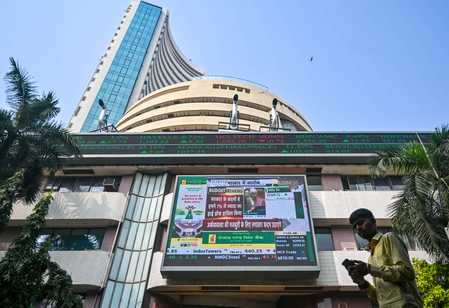
2026 hasn’t been kind to Dalal Street. With the Sensex down over 12%, rising crude prices, now above $100, are casting a long shadow on earnings and growth. Every oil spike widens India’s deficit and chips away at corporate profits. But is this a breakdown or just a breather? History suggests markets often stumble early, only to recover later. Even now, experts see this as a risk-off phase, not a structural crack. If oil stays elevated, will earnings take a hit?
Aviation crisis deepens
Just when India’s airlines were hoping for a smoother ride, a fresh storm hits. The West Asia conflict is squeezing the sector from both sides, with higher jet fuel costs and disrupted routes. Fares are already rising, with airlines hiking ticket prices, while longer flight paths and cancellations are pushing costs even higher. West Asia accounts for up to 20% of airline revenues. Will this lead to costlier tickets or deeper losses? With most airlines already struggling, this could delay any recovery.
Life under uncertain skies
In Dubai, a surreal night of flashing skies and missile alerts quickly turned into something quieter-adaptation. One moment, teenagers watched what looked like fireworks; hours later, families were building makeshift shelters and sleeping closer than usual. And yet, by morning, cafes filled, gyms buzzed, and routines returned. Between rumours and reassurance, what stood out was a shared instinct to hold on to normalcy. From flower workshops to WhatsApp fact-checking, the city chose calm over chaos.
Chasing dreams, crossing borders
Anil Kumar once dreamed of running for India. Today, he’s building scaffolding, and chasing a different finish line in Russia. Like many others, he’s swapping passion for paychecks, drawn by wages that can be twice what India or even the Gulf offers. From Navi Mumbai to Siberia, a quiet migration is underway. Workers aren’t ignoring the risks of war, they’re weighing them against family needs. For many, it’s simple; better money means better futures back home. And sometimes, that’s a race worth running.