SpaceX board approves Elon Musk pay package tied to 7.5 tril...
29 Apr 2026


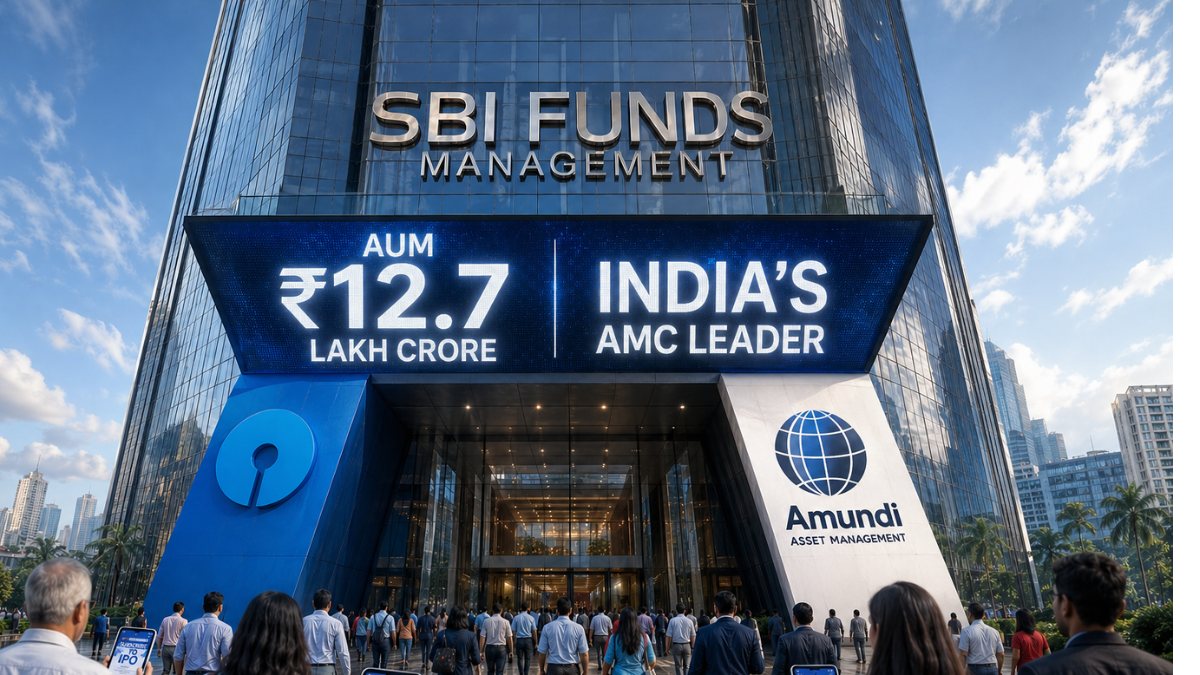
From equity, debt funds, and ETFs to portfolio management services (PMS), it manages over 70 schemes, and the AUM has surpassed Rs 12.7 lakh crore.
Here is a detailed insight into the company’s distribution network, strengths, and why the IPO matters-
SBI Funds Management IPO details
The initial public offering (IPO) of SBI Funds Management comprises 20.37 crore equity shares. It is a 100% offer for sale (OFS) by the promoter selling stake. Since this is an OFS, the company will not receive any money from the IPO and will go to the selling shareholders.
The company is yet to decide on a price band. The shares are proposed to be listed on both the BSE and the NSE.
SBI Funds Management IPO: Promoter selling stake
Here is a quick look at the leading shareholders and the amount of promoter stake on sale
State Bank of India: Offering up to 12.83 crore shares.
Amundi India Holding: Offering up to 7.54 crore shares.
The company will be offering not more than 50% of the offer to Qualified Institutional Buyers (QIBs). Out of the total QIB allocation, up to 60% may be allocated to Anchor Investors on a discretionary basis. The Non-Institutional Bidders (NIBs) will be able to bid for 15% of the offer. The company reserved 35% of the offer for retail buyers.
SBI Funds Management: Promoters
The company was originally incorporated as ‘SBI Funds Management Private Limited’ on February 7, 1992, in Mumbai. It was converted into a public limited company in 2021.
The company’s promoters are SBI, Amundi India Holding, and Amundi Asset Management. As of the date, SBI holds 61.86%, and Amundi India Holding holds 36.33% of the equity share capital. Amundi Asset Management: Identified as a promoter but does not directly hold any equity shares as of the prospectus date, and Amundi India Holding is a wholly owned subsidiary of Amundi Asset Management.
It is a joint venture partnership between SBI, India’s largest bank, and Amundi, the largest asset manager in Europe. This partnership combines SBI’s extensive domestic franchise and brand trust with Amundi’s global investment expertise and distribution network.
Partnership evolution
1992: SBIFML was incorporated as a wholly owned subsidiary of SBI.
2004: It became a joint venture when Société Générale Asset Management S.A. (SGAM) acquired a 37% stake.
2011: Following the merger of Crédit Agricole’s and Société Générale’s asset management businesses, Amundi India Holding acquired the shareholding previously held by SGAM.
Key agreements between SBI and Amundi
The partnership is governed by several critical agreements executed on March 19, 2026:
Commercial Agreement: Establishes a “preferred partner” relationship. SBI treats the company as its preferred partner for mutual fund services, while the company treats Amundi as its preferred partner to market expertise globally and utilise Amundi’s global distribution capabilities.
Governance Agreement: Outlines rights regarding management and operations, including requirements for certain matters to be jointly placed before the Board by the MD & CEO (SBI nominee) and the Deputy CEO (Amundi nominee).
Inter-se Agreement (ISA): An agreement between SBI and Amundi India Holding (to which the company is not a party) covering voting arrangements for director appointments and compliance with public shareholding requirements.
Strategic Synergies and Integration
Domestic reach: The company integrates with SBI’s network of over 22,000 branches and its YONO digital platform, which had over 96 million users as of December 31, 2025.
Global expertise: Amundi contributes global best practices in risk management and investment processes. There are 6 Amundi experts embedded within the company’s functions, including investment management, risk management, and technology.
Technology: The company is currently implementing Amundi’s “Alto Invest” front-office system to enhance its investment management infrastructure.
International business: The partnership has enabled an international business with Rs 266,56.96 crore in co-managed and advisory mandates as of December 31, 2025, serving international institutional investors in regions like Japan, Australia, and Europe.
Governance structure
The partnership maintains a balanced leadership structure:
SBI rights: Entitled to nominate three directors, including the Chairman (who has a casting vote) and the Managing Director & CEO.
Amundi rights: Entitled to nominate two directors (as long as it holds at least 20% equity), one of whom must be the Deputy CEO.
Management committees: Both the MD & CEO and the Deputy CEO are required to be members of all internal governance and operations-related management committees.
SBIFML IPO: BRLMs and registrar
Kotak Mahindra Capital, Axis Capital, BofA Securities, HSBC Securities, ICICI Securities, Jefferies India, JM Financial, Motilal Oswal, and SBI Capital Markets are the Book Running Lead Managers of the IPO. KFin Technologies is working as the registrar of the issue.
SBI Funds Management: About the company
SBI Funds Management is the largest AMC in India by mutual fund quarterly average assets under management (QAAUM), a leadership position it has held since March 2021. Established as a joint venture, the company combines the extensive domestic reach of the State Bank of India with the global investment expertise of Amundi.
Business operations and market position
As of December 31, 2025, the firm had a mutual fund market share of 15.4% with a QAAUM of Rs 12,49,970 crore. It is also the largest passive asset manager in India, with a 29.6% market share in ETFs and index funds.
The company manages a diversified portfolio of 126 mutual fund schemes. Beyond mutual funds, it provides:
Portfolio Management Services (PMS): Ranked 1st in India with a 39% market share as of December 31, 2025.
Alternative Investment Funds (AIF): Offers various category funds for sophisticated investors.
Specialised Investment Funds (SIF): Operates the largest SIF platform in India (61% market share).
Distribution network
The AMC utilises an omnichannel approach, including SBI’s vast branch network, over 130,000 third-party distributors, and digital platforms like the InvesTap mobile app.
Key Strengths and Strategy
Dual Parentage: The integration with SBI provides a trusted brand and massive distribution scale, while Amundi contributes global best practices in risk management and investment processes.
SIP Franchise: The company has a market-leading Systematic Investment Plan (SIP) franchise with 15.76 million live accounts as of December 31, 2025.
Growth focus: Its strategies include deepening retail penetration in “B-30” (beyond the top 30) cities, expanding its passive and alternative product suites, and capturing international opportunities through its GIFT City platform.
Lowest expense ratio: The company maintains the lowest operating expense ratio among the top 10 AMCs in India (0.08% for FY25).
SBI Funds Management IPO: Financial structure
On to the financial performance of SBI Funds Management in the last few years-
SBI Funds Management: 3-year profit
The AMC’s profitability has grown consistently over the last two fiscal years, with net profit growing at a CAGR of 37.70% between FY23 and FY25. The company’s net profit margin expanded to 59.98% in FY25 from 55.53% in FY23. This margin expansion is primarily driven by strong operating leverage, as total income has grown significantly faster than total expenses.
The company’s net profit for the first nine months ended December 31, 2025, stood at Rs 24,32.91 crore, marking a growth of 25.86% YoY compared to the same period in 2024.
It is to be noted that the latest nine-month period profit was also supported by a favourable one-time income tax reversal of Rs 31 crore relating to earlier periods.
SBI Funds Management: Total revenue and income
SBI Funds Management primarily generated its revenue via investment management and advisory services, with its performance directly linked to its Quarterly Average Assets Under Management (QAAUM).
The company’s revenue from operations comes from management fees of the mutual fund, Alternative Investment Funds (AIF), Portfolio Management Services (PMS), and advisory mandates. Secondly, the total income includes revenues for operations and ‘other income’ such as net gains on financial instruments.
Historical financial performance shows consistent growth:
(The YoY change for the nine-month period is calculated against the revenue of Rs 2,641.91 crore for the nine-month period ended December 31, 2024.)
The company’s revenue witnessed consistent growth at a Compound Annual Growth Rate (CAGR) of 29% between FY23 and FY25.
Also, SBIFML has shown strong operating leverage, as revenue from operations in FY24 grew by 24.47%, while total expenses grew by only 17.26%.
SBI Funds Management: Key revenue drivers
AAUM growth: The consistent increase in revenue was primarily driven by growth in Average Assets Under Management (AAUM), particularly in equity and equity-oriented schemes, which typically command higher fee rates.
Asset Mix: Fee yields vary significantly across product categories. Equity-oriented schemes and actively managed funds usually generate higher management fee rates compared to debt-oriented schemes and passive products like index funds or ETFs.
Weighted Average TER: The weighted average Total Expense Ratio (TER) across SBIFML’s schemes was 0.88% for the first nine months of FY26, up from 0.82% in FY23, primarily due to an increased share of equity AUM.
Revenue Components
The company earns majorly through two segments, which are management fees and portfolio management, and other advisory fees. The major chunk of the revenue is reported under the former category.
Management Fees: This is the primary source of income, comprising fees from mutual fund schemes and AIFs. It accounted for approximately 96% to 98% of total revenue from operations between FY23 and FY25.
FY25: Rs 3,437.79 crore.
9M Ended Dec 31, 2025: Rs 3,130.09 crore.
Portfolio management and other advisory fees: Fees earned from providing customised investment services to PMS clients and other advisory mandates.
FY25: Rs 159.97 crore.
Nine Months Ended Dec 31, 2025: Rs 120.55 crore.
This points to one thing that, despite being ranked as the highest PMS of the country, the revenue generation from this segment is very limited. One of the key factors could be that there are very few investors that merits for PMS and a handful of investors have the stomach for PMS fees.
It is to be noted that, as the management fees are calculated as a percentage of the daily net assets of the schemes, any market depreciation or investor redemptions that reduce QAAUM directly impact revenue.
Geographic Breakdown
While the company’s majority revenue is generated within India, international operations are also growing.
In India (FY25): Rs 3,480.37 crore.
Outside India (FY25): Rs 117.39 crore.
For the nine months ended December 31, 2025, revenue from international markets came in at Rs 92.81 crore, driven by foreign advisory mandates and India-focused investment management for overseas institutional investors.
SBI Funds Management IPO: Risks involved
As the company deals with financial products, it faces the risk of volatility owing to a breadth of reasons. However, SEBI’s new rules, shift in investing trend, and high royalty pose a higher risk for the company that investors need to watch out for. Here are some important key risks taht has been highlighted in the company’s DRHP:
#1 Profitability squeeze from the new BER framework
SEBI has notified a new framework for mutual fund fees. The market’s watchdog has introduced SEBI (Mutual Funds) Regulations, 2026, effective April 1, 2026, which brings in the Base Expense Ratio (BER) framework. This new structure will reduce management fee income by lowering fee caps and requiring the company to absorb certain expenses that were previously charged to schemes. The company admitted there is no assurance it can offset these fee reductions through cost savings or AUM growth, which could fundamentally impact its profit margins.
#2 Revenue cannibalisation by passive products
The industry trend is changing significantly towards passive investment products like ETFs and index funds, which carry substantially lower management fees than active funds. As of Q3FY26, passive products already constituted 32% of the company’s total mutual fund QAAUM. A continued shift in investor preference toward passives will put downward pressure on the weighted average fee yields, meaning the company may see declining profitability even if its absolute AUM levels remain stable.
#3 Large unprovided contingent liabilities
The company has outstanding legal and tax proceedings that are not yet reflected in its financial statements. Most notably, there is a disputed GST liability of Rs 131.93 crore (including tax and penalty) for which no provision has been made. If these cases are determined against the company, it would require substantial cash outflows.
#4 Lack of ownership of the “SBI” brand
In its DRHP, the company said it does not own the “SBI” trademark or logo, which are critical to its brand identity and investor trust. These are used under a license agreement that can be terminated by State Bank of India at any time with prior notice.
#5 Trademark and high royalty
Let’s understand it further. SBI Funds Management operates its business under a licensing arrangement for the “SBI” brand, as it does not own the “SBI” trademark or the logo. The company uses the brand name and logo as per the SBI Trademark License Agreement dated March 29, 2012, and a supplementary agreement dated October 15, 2024.
Under this arrangement:
Grant of rights: State Bank of India (SBI) has granted a non-exclusive, non-transferable license to use its registered trademarks and logo.
Scope of use: The license covers the company’s corporate and brand names, as well as its use on corporate materials like stationery, labels, and promotional content (including websites and URLs).
Subsidiaries: The supplementary agreement extends these rights to SBIFML’s subsidiaries.
Royalty payments
The company must pay SBI a royalty fee for the use of this intellectual property. The royalty is equal to 0.20% of total income or 2% of profit after tax, whichever is higher, based on the financials of the previous year.
These expenses have been increasing as a percentage of the company’s total costs:
9M Ended Dec 31, 2025: Rs 38.15 crore (5.19% of total expenses).
FY25: Rs 41.26 crore (4.73% of total expenses).
FY24: Rs 26.62 crore (3.54% of total expenses).
On the other hand, its peer ICICI Prudential Asset Management Company paid Rs 20.5 crore in FY25 to use the Trademark, while it was Rs 15.16 crore in FY24, as per the data in the AMC’s Annual Report.
Termination clauses
The problem is not just limited to paying high royalty fees, but the agreement is not permanent and can be terminated by SBI under several conditions, such as:
Shareholding drop: If the SBI Group’s shareholding in SBIFML falls below 26% of the equity share capital on a fully diluted basis.
Breach of terms: Failure to pay the required royalty.
Registration and infringement risks
The biggest is not even laying royalty and termination clauses; it is the critical “fine line” that the specific logo used by the company is not registered under the Trade Marks Act, 1999. Since SBIFML is significantly dependent on the brand name and customer trust associated with the SBI name, any loss of the right to use it would impact its business prospects.
This creates two specific risks:
Third-party use: Because the logo is not registered, the company faces a higher risk of third parties using or infringing upon its visual identity.
Legal protection: While the company intends to defend its intellectual property, there is no assurance that these rights can be adequately protected in a timely manner without formal registration.
Conclusion