Kissht parent OnEMI Tech sets IPO price band at ₹162-171: Ch...
27 Apr 2026


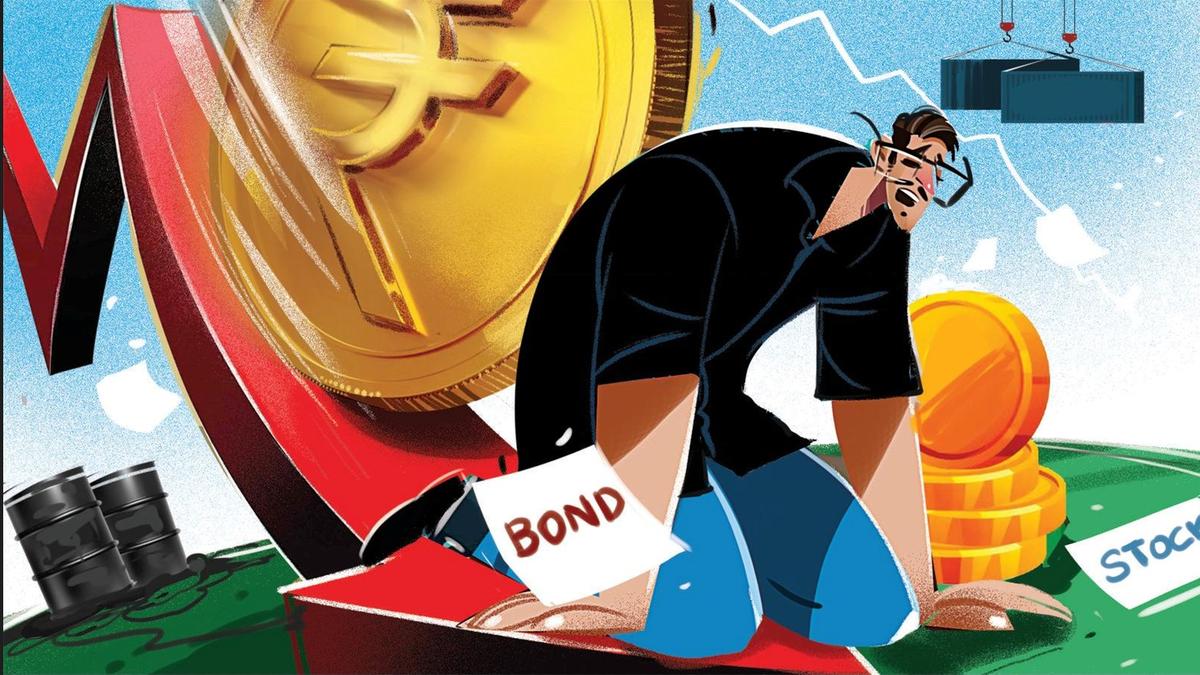
In the recent past, there has been lot of apprehensions on the weakening of our currency, and rightly so. For a perspective on the extent of weakening of INR, over the past few decades, it depreciates on an average 2.5% to 3% per year against the U.S. Dollar.
We as a growing economy import a lot, higher than our exports, and to manage this, our currency depreciates. The issue in the recent past has been that in 2025-26, INR moved from 85.53 to the greenback on March 31, 2025 to 92.76 on March 30, 2026 i.e. a depreciation of 8.45%. If we look at the intermediate low point of 94.71 on March 23, 2026, till that point of time, our currency had depreciated 10.73%. How does this impact you?
Equity investments
The exchange rate does not have much of a direct impact on the equity market, as long as you are investing in India. Currency depreciation does have a negative impact on sentiments in the market, but the market is the confluence of ‘n’ number of factors, and we see the movement as the cumulative effect.
The correction we are witnessing in the equity market is due to multiple reasons e.g. selling by foreign portfolio investors (FPIs), crude oil price flaring up, etc., and rupee depreciation is just one of those reasons. This is not something under your control and you need not worry much about this.
Debt investments
Weaker currency leads to something called imported inflation. As an example, when we import crude oil, there is a certain price in U.S. dollars. That gets converted to our currency at the prevailing exchange rate. Weaker the currency, higher is the landed price.
This adds to our inflation. High inflation is a negative for both equity and bond markets, but more so for the bond market as inflation is a bigger variable for interest rates. A weak INR would contribute to imported inflation going forward.
The RBI, in the policy review on April 8, 2026, projected consumer price inflation at 4.6% in 2026-27. For this projection, the RBI assumed normal monsoon (which is a question mark now), crude oil price at $85/ barrel (lower than current prevailing price) and INR at 94 (weaker than current level). That is to say, currency weakness has already been factored in, for projecting inflation at 4.6%. Going forward, if currency does not depreciate significantly from current level, it should not be a major concern for your investments.
We discussed so far, the adverse impact of rupee depreciation on your portfolio. There are two investment avenues that benefit from this. One is gold. There is an international price of gold denominated in U.S. dollars.
This gets converted to rupees at the prevailing exchange rate. Weaker the rupee, higher is the INR price of gold. History shows that the returns gold has given us, over the decades, while the major part is gold price movement per se (in USD), a substantial chunk is due to weakening of our currency. The learning is, you should have some allocation to gold in your portfolio.
Having said that, allocation to gold should be say 10% of your portfolio, or maximum 15 %. The rationale is, gold is not a mainstream investment like equity or bonds.
The other investment that benefits from currency weakness is global investments. When you invest in stocks or bonds or funds in USA (or any other country), it gets converted from INR to USD (or any other currency). When you redeem your investments, it gets converted back to INR. During the investment period, if rupee depreciates (which it usually does), you get that benefit as well.
You can invest abroad though relevant Mutual Fund products available in India. You can invest directly in stocks or bonds or other avenues abroad, which would be part of the Liberalized Remittance Scheme (LRS) limit. Outbound products available at GIFT City are part of the LRS limit.
Expenses
Your expenses in India are impacted due to inflation i.e. purchasing power of rupee comes down progressively. Even if part of this inflation is due to currency weakening, it is not under your control, and you cannot do much about it. Rather, if it is about your expenses abroad, in USA or any other country, then there is something you can do.
Apart from expenses, you can look at investing abroad as part of portfolio allocation and get the benefit of diversification. If and when expenses crop up, which you are envisaging now, you can redeem to the extent required, otherwise let it continue.
(Joydeep Sen is a corporate trainer (financial markets) and author)
Published on April 27, 2026