
Gujarat Gas Fixes Record Date for Composite Scheme on May 12...
29 Apr 2026


Synopsis
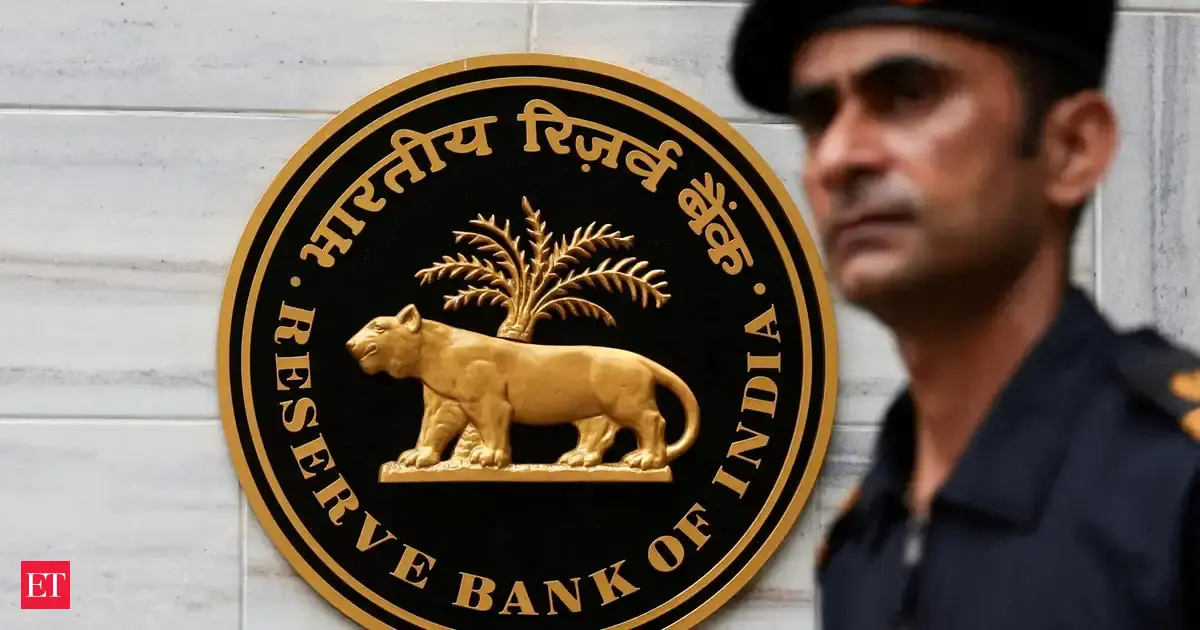
The Reserve Bank of India has rejected several suggestions from Non-Banking Finance Companies. Equity investments in group entities will not be excluded from indirect public funds. Borrowings from promoters and related parties will be treated as public funds. Intra-group loans will be considered customer interface. These decisions are part of final directions for small NBFCs.
Reserve Bank of India (RBI) has rejected non banking finance companies (NBFC’s) suggestion to exclude equity investment in the group entities from being referred to indirect receipt of public funds because it was difficult to establish whether such investments were funded from owned capital due to leverage, multiple layers and fungibility of money.
The central bank also rejected NBFCs suggestion that said that borrowings from promoters, directors, shareholders or their relatives may not be treated as public funds. “Public funds are essentially any type of borrowings irrespective of their source. Such funds reflect as debt and do not carry loss absorbency like capital due to repayment obligations, and they rank superior to the claims of capital holders.
Also Read: GJC pushes RBI for revamped Gold Monetisation Scheme
Further, it is clarified that the money availed through margin trading facility constitutes public funds,” RBI said in the annex after taking feedback from the companies as it released final directions on small NBFCs with asset size of less than Rs 1000 crore.
Post its monetary policy review in February, RBI had exempted NBFCs which do not have any customer interface and with asset size of less than Rs 1000 crore from registration. However, these NBFCs will continue to be subject to other provisions of the RBI Act, in case any concerns/ risks are observed. RBI will also reserve the right to penalise these NBFCs, the had RBI had said.
Live Events
In the final guidelines the central bank also rejected NBFCs’ suggestion not to consider intra-group loans, loans to directors/shareholders, their family members, relatives, friends, Group entities, etc as customer interface. “Loans/ guarantees with group entities, directors, promoters, etc., attract the provisions on KYC/asset liability, credit information reporting, etc. The prudential regulations are agnostic to the type of borrower,” RBI said in its response.
Also Read: Gold to clinch $8,000 in just 5 years? Germany’s Deutsche Bank makes bold prediction
NBFCs’ suggestion to remove registration requirement and other guidelines for overseas investment in financial services sector of these small NBFCs was also rejected by the RBI. “Overseas direct investment in financial services sector by Indian entity is governed under the provisions of FEMA and Rules/Regulations/ Directions/ Notifications made thereunder. The relevant rules stipulate registration with or regulation by financial services regulator in India and other guidelines. Further, it has been decided that they may be allowed to undertake investments only in financial services sector,” RBI said.
RBI also rejected suggestions to remove the Rs 1000 crore asset size limit and to exempt NBFCs with miniscule instances of customer interface because the limit is viewed as threshold level for systemic significance requiring oversight of the RBI. “The intent is to provide exemption only to those NBFCs having conscious and long-term business model of operating without public funds and customer interface,” RBI said.
(You can now subscribe to our Economic Times WhatsApp channel)
Amid FII flight and BoP strain, India bets on ‘patient capital’
INR35k-cr windfall: What Hormuz crisis, rising crude mean for ONGC, OIL
First-time buyers, entry cars: The missing links in India’s auto boom
They couldn't make Indians play squash or rugby, but made them run
Natural diamonds lose sheen globally, in India they’re still ‘forever’
For investors with long-term perspective: 5 mid-cap stocks from different sectors with upside potential of up to 30%
1
2
3