
Globe Civil Projects Files Q4FY26 Monitoring Agency Report;...
Source: scanx.trade
06 May 2026


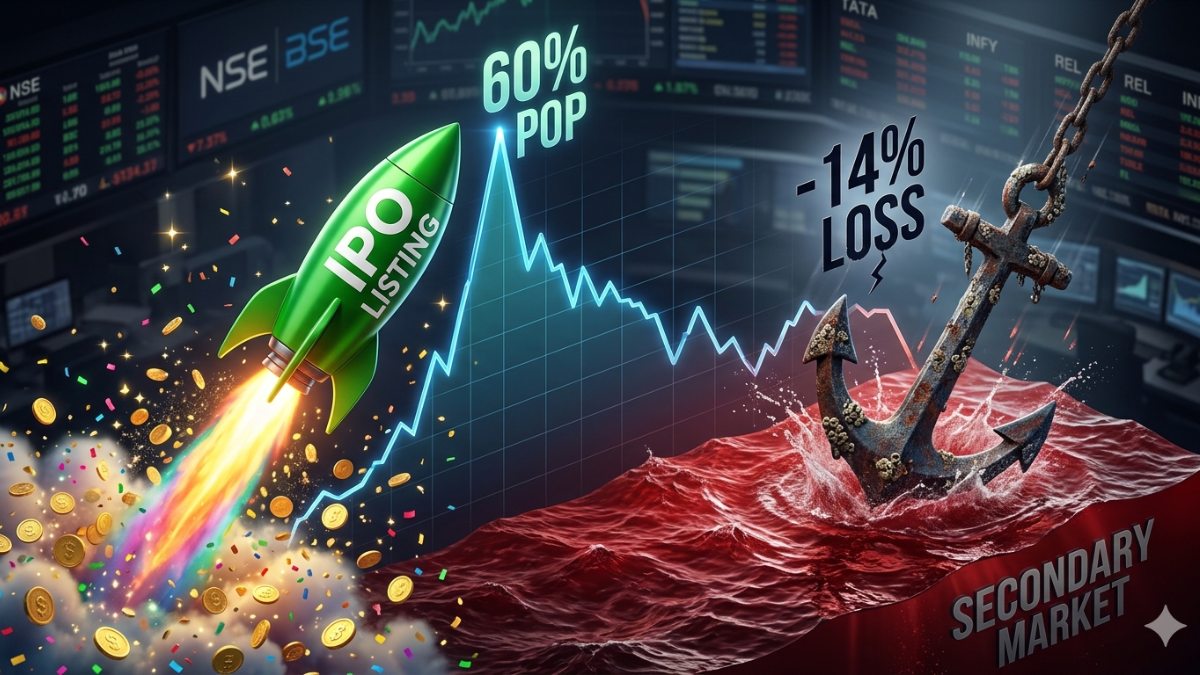
From green to red: Decoding return slump among new listings
Recent data from the PRIME Database showed that almost 60% of companies listed at a premium to their issue price since January 2025, supporting the idea that IPOs are still profitable, at least in the short-term. These listing-day spikes have been caused by a multitude of factors, including high subscription numbers, strong grey market premiums, and liquidity-driven participation. But if you dig deeper, the story is a little different.
As of April 30, 2026, 67 out of 115 IPOs between January 2025 and March 2026 (approximately 58.2%) were trading at a negative gain relative to their offer price. Out of the 115 IPOs with listing data, 71 recorded a positive listing gain (where the listing day close price was higher than the offer price). This represents a success rate of approximately 61.7%, which means 6 in 10 IPOs popped.
But the momentum has proven difficult to sustain.
“It is unfair to expect all IPOs to not just give a positive return on the listing day but also to continue to trade above the issue price for the rest of their entire life cycle,” said Pranav Haldea, Managing Director at PRIME Database Group. “After a company gets listed, it becomes like any of the other 2000+ listed companies whose share price moves on the basis of the company’s performance, how the sector is doing and how the broader market and economy are performing.”
“It’s equity ultimately, and there is no guaranteed return like in fixed income. Some of them may give a stupendous return, some may give an average return, and some will not give any return or even negative returns,” he added.
Around 34% of these IPOs are currently trading above their issue price only, indicating that almost two-thirds have dropped below their listing price over time. The median return is approximately -14%, suggesting that a typical investor who held stocks beyond listing day is sitting on a loss. The average return, at around -6.85%, further underlines that the underperformance is not limited to a few outliers but is spread across the primary markets.
The contrast between listing-day performance and current returns points to a growing disconnection between IPO demand and long-term value creation.
The valuation trap: Why debut gains dry up quickly
A deeper look at the distribution of returns reinforces this trend. The downside is quite significant. Several IPOs have corrected 30- 60% from their listing or issue prices, pulling down overall performance. This indicates that while the upside on debut is often modest and short-lived, the downside risk for investors who stay invested can be significantly larger.
At the same time, the data suggest that listing gains have only a moderate relationship with future performance. While some stocks that list strongly may continue to perform, a large number fail to hold on to those gains. This inconsistency weakens the case for using listing-day performance as a benchmark for business strength or future returns.
Spotting the outliers: Why listing gains don’t guarantee future growth
This trend highlights a clear bifurcation in market behaviour. IPOs are increasingly being approached as short-term trading opportunities by retail investors rather than as a long-term investment route. Thus, it indicates Investors who exit on or shortly after listing are more likely to capture gains, while those with a longer holding period face a higher probability of negative returns.
Now, several factors could be behind this shift. Higher valuations at the time of listing leave limited room for investors once the stock begins trading in the secondary market.
All in all, while listing-day gains remain common, they are increasingly short-lived. For investors, the distinction between participating in an IPO and holding it post-listing has become critical. In the current scenario, success in IPO investing appears to depend less on entry and more on timing the exit.

Source: The Economic Times