Himalaya Food International Board Approves Capital Increase...
07 Apr 2026


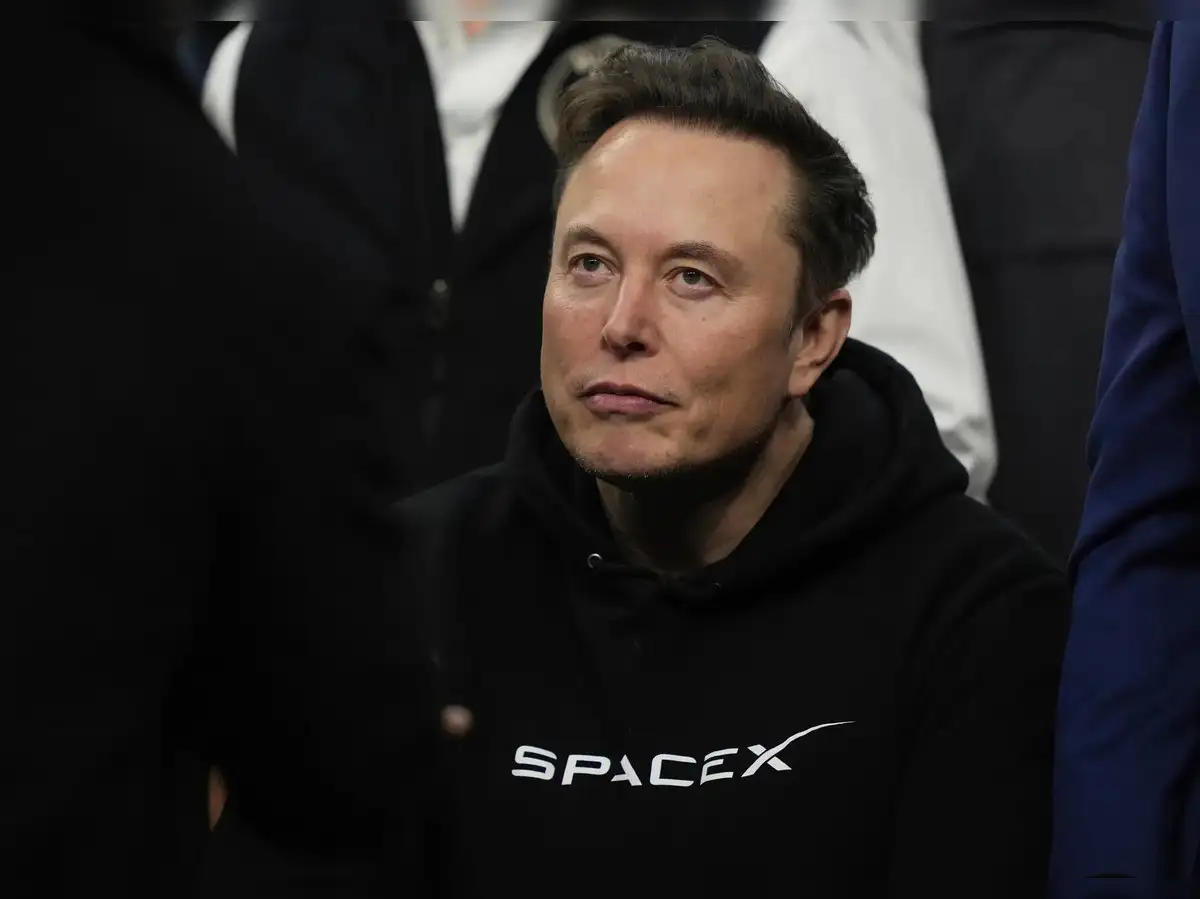
SpaceX and investment bankers will host meetings to pressure-test the Elon Musk-led company's targeted $2 trillion valuation, a crucial step as it drives toward the largest-ever initial public offering, people familiar with the matter said.
Two months after a merger with xAI, senior bankers are poised to begin talks around the rocket, satellite and AI company's initial public offering, to determine if its vaunted valuation will still lure in investors. Its market value is now expected to top $2 trillion, up from expectations of $1.75 trillion less than two weeks ago, people familiar with the matter said.
"What you've got to be convinced of - and this is what they'll be working on until this is filed publicly - is continuing to sell the dream and basically there's nobody that's been better at selling the dream than Elon Musk," said David Erickson, an adjunct associate professor at Columbia Business School and a former co-head of global equity capital markets at Barclays Plc.
Representatives for SpaceX didn't immediately respond to requests for comment. Musk appeared to push back on the valuation target of $2 trillion in an April 3 X post, saying "don't believe everything you read."
At more than $2 trillion, SpaceX would be bigger than all but five of the companies in the S&P 500 Index - Nvidia Corp., Apple Inc., Alphabet Inc., Microsoft Corp. and Amazon.com Inc. Despite generating a fraction of the revenue, its market value would dwarf Meta Platforms Inc. and Musk's own Tesla Inc., the two other members of the so-called Magnificent 7 stocks.
Such a valuation implies a price-to-sales ratio of more than 100-times on a trailing basis, according to analyst estimates, easily topping that of retail-favorite Palantir Technologies Inc.'s lofty ratio of roughly 79 times - by far the highest in the S&P 500 Index.
Bloomberg Intelligence estimates SpaceX's rocket launch program and Starlink satellites will generate the majority of its revenue, approaching $20 billion in 2026, with xAI likely to generate less than $1 billion.
"The reality is it's not about the fundamentals, nobody is going to get there on the fundamentals from a math standpoint because the math doesn't work," said Erickson.
A pair of rocket test launches are expected ahead of a potential June trading debut, which the company has been targeting, people have told Bloomberg. Those will be "crucial for what happens to the IPO," according to Franco Granda, a senior analyst at PitchBook.
"If any of those two fail there's a chance the IPO might not even happen," he said in an interview. "This will dictate everyone's direction toward the IPO."
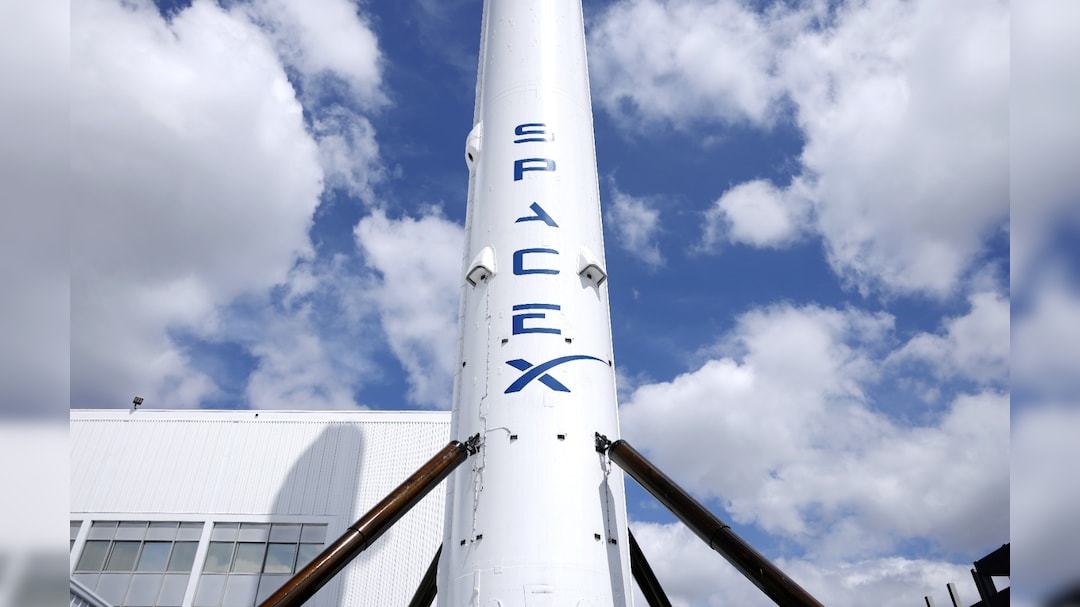
The first flight of SpaceX's latest iteration of its reusable, super heavy-lift launch vehicle is four to six weeks away, Musk said in a post on X Friday.
A listing for SpaceX could raise as much as $75 billion, Bloomberg News has reported. At that size, it would dwarf the biggest ever IPO, Saudi Aramco's $29 billion debut in 2019. The company would use the money raised in an IPO to fund Musk's vision of AI data centers in space and a factory on the moon.
ALSO READ: OpenAI Calls For Investigation Into Musk By California, Delaware
The billionaire's grand plans will require unprecedented amounts of capital, and resources that span several of the companies he controls. Musk said in March that his Terafab project, which would eventually manufacture his own chips for robotics, AI and space data centers, will be jointly run by Tesla and SpaceX.
PitchBook's Granda, who called its targeted valuation "justifiable" a month ago, cautioned that Musk's ever-expanding vision could present upside but also add to mounting risks.
"When you start to go higher than $1.75 trillion, it becomes a question of 'how much can they rely on Musk's public persona to drive this up?'" he said.
The prospect of an IPO at a $2 trillion valuation is a steep climb from the $1.25 trillion assigned to SpaceX after merging with xAI. It would also be more than double the $800 billion valuation when some company insiders sold shares in a tender offer in December.
However, private market activity in the company through murky special purpose vehicles soared in the run-up to a confidential filing submission. Hundreds of millions of dollars were traded entirely through these SPVs, according to Caplight Technologies, in the first three months of the year.
ALSO READ: Elon Musk's SpaceX Files Confidentially For IPO Ahead Of AI Rivals
The total volume was double what was observed by the data provider in the final six months of last year, according to Caplight, which tracks transaction data reported by a network of hundreds of broker-dealers, registered investment advisers and other qualified institutional investors.
Bank of America Corp., Citigroup Inc., Goldman Sachs Group Inc., JPMorgan Chase & Co. and Morgan Stanley have senior roles on the IPO, and SpaceX has added more banks to the lineup, people familiar with the matter have said.
The company has scheduled a call with the broader bank syndicate for Monday, and there will be an analyst briefing later in April, a person familiar with the matter said. IFR and Reuters previously reported the syndicate call and analyst briefing respectively.
The ultimate outcome of those meetings may depend on whether Musk can get investors to keep their eye on the vision rather than the numbers.
"It went from a story of being such a great, capital-intensive company," said PitchBook's Granda. "Now you're starting to throw real sci-fi initiatives in here and the numbers are not favorable to them."