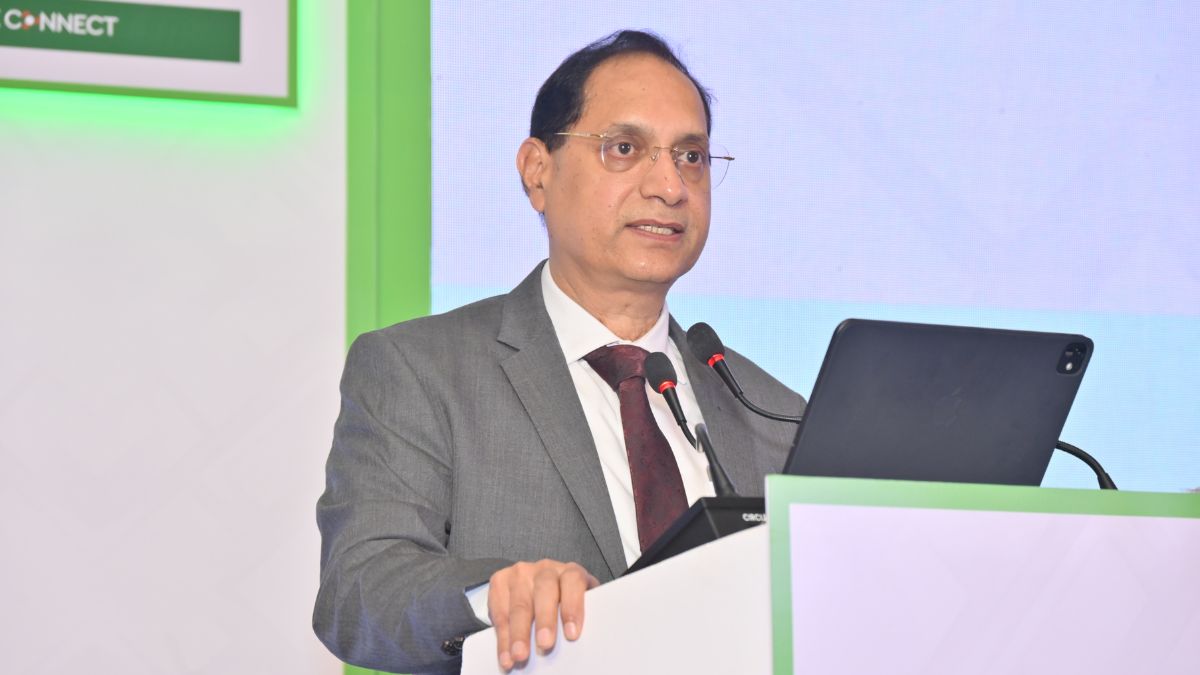

In a Rs 15 lakh crore alternative investment fund (AIF) ecosystem, Crisil data shows that realised cash distributions remain concentrated among a limited set of funds, with a majority of schemes yet to return invested capital. As multiple fund vintages now overlap, data highlights wide dispersion in outcomes across managers and a growing reliance on secondary transactions and IPO-linked exits to facilitate liquidity at an ecosystem level.
India’s AIF ecosystem moving from capital formation to ‘outcome accountability’ as alpha holds
India’s AIF ecosystem moves from capital formation to ‘outcome accountability’ as alpha holds India’s alternative investment fund (AIF) market is entering what industry participants describe as a decisive shift from capital formation to performance accountability, with fresh benchmarking data showing sustained alpha over listed markets even as liquidity timelines and dispersion sharpen investor focus.
The third edition of the CRISIL–Oister benchmarking report, released this week, tracks 170 Category I and II AIF schemes investing in unlisted equities and signals what Oister Global Co-CEO Sandeep Sinha calls the ecosystem’s “next phase”.
“The first edition was about establishing a credible performance baseline,” Sinha told Moneycontrol. “The second broke outcomes stage by stage. This edition reflects a market where outcomes carry more weight than momentum.”
Across seven benchmarking cycles between March 2022 and March 2025, the aggregated benchmark delivered a pooled internal rate of return (IRR) of 24.02%, compared with 15.3% for the BSE Sensex TRI — implying an average alpha of about 8.7%.
Early-stage funds generated 10.11% alpha over the BSE 250 Smallcap TRI.
Growth and late-stage funds outperformed the BSE 200 TRI by 8.03%.
Early-stage pooled IRR stood at 22.62%.
Growth and late-stage pooled IRR was 17.22%.Overall alpha across the aggregated universe stood at 4.91% after classification adjustments. “The conversation about whether private markets genuinely generate alpha has now been established across three cycles of benchmarking,” Sinha said. “This is no longer anecdotal — it is measurable.”
He added that the intent of partnering with CRISIL was to introduce standardisation and comparability in a rapidly expanding ecosystem where performance data historically lacked uniform benchmarks.
Dispersion: the defining variable
While aggregate alpha remains positive, dispersion across managers remains pronounced.
Within the benchmark:
The top 50% of funds generated 13.6% alpha.
Top-half early-stage funds produced ~12.5% alpha.
Top-half growth and late-stage funds delivered ~8.4% alpha.
Top-quartile IRRs in certain vintages crossed 30%.
“The dispersion between a good fund manager and an average one in private markets is massive,” Sinha said. “Unlike listed markets, where information is widely available, private markets require proprietary sourcing, deep diligence and domain expertise.”
He argued that this structural difference explains why performance gaps are significantly wider in private markets compared with mutual funds or listed strategies.
“It is not about industry maturity,” he said. “Across the world, dispersion in private markets is significant. Manager selection is paramount.”
From IRR to realised cash
The report places particular emphasis on distributions — a metric increasingly under scrutiny amid longer global exit cycles.
Of the 170 schemes analysed, 142 have made distributions. 42.25% have returned at least 50% of paid-in capital (0.5x DPI), taking 6.51 years on average. 25.35% have crossed 1x DPI, taking 7.21 years on average.
At the 1x DPI threshold, average DPI stood at 2.03x, while top-quartile funds that fully returned capital recorded DPI of 3.49x.
“Earlier, the focus was on capital expanding rapidly,” Sinha said. “Now investors are asking — how long do I have to wait? What are the exit patterns? Is liquidity real?”
He described the current stage as “100% outcome accountability,” adding that investors are increasingly evaluating realised cashflows rather than headline IRRs alone.
Secondaries becoming structural
With IPO windows more selective and listing timelines elongated, secondary transactions are emerging as a structural liquidity channel.
India’s secondary deal value rose to Rs 377 billion in FY25, up 32% year-on-year. In H1 FY26 alone, deal value reached Rs 361 billion — nearly matching the prior full fiscal year.
Average deal size expanded from Rs 2.28 billion in FY20 to Rs 8.39 billion in H1 FY26.
“IPO cannot be the only single way to create liquidity,” Sinha said. “Secondaries are now beginning to play a very critical role.”
He noted that globally, secondaries have evolved into a mature asset class, and within India, they exhibit comparatively lower dispersion relative to early-stage strategies.
“If you look within private markets, secondaries tend to be more predictable,” he said.
Domestic capital deepens participation
Another structural shift highlighted in the report is the increasing share of domestic capital in Category I and II AIFs.
Domestic participation has risen to about 55%, up from roughly 50% a year ago.
“There is a strong focus on encouraging domestic capital,” Sinha said. “If this represents India’s innovation economy, ownership and value creation should not disproportionately reside outside.”
He attributed the rise partly to improved regulatory clarity and benchmarking transparency, which have enhanced investor confidence.
The AIF ecosystem has expanded rapidly. Cumulative commitments stand at nearly USD 160 billion (around Rs 15 lakh crore). Nearly 1,600 AIFs are registered. Two-thirds have been launched since FY21.
The sector mix is also broadening. The share of the top five sectors in total PE/VC investments has declined from about 85% to 66%, indicating diversification beyond concentrated consumer exposure into areas such as health tech, climate tech and manufacturing-linked themes.
Large-ticket transactions are driving value creation, with deals above ₹50 crore accounting for roughly 30% of deal count but nearly 90% of deal value in FY25.
Taken together, India’s AIF market is transitioning into a phase where benchmarking transparency, manager differentiation and liquidity mechanisms define the narrative. “The conversation is no longer about formation,” Sinha said. “It is about accountability.”