
Sebi grants one-time relaxation for IPO validity, minimum pu...
07 Apr 2026


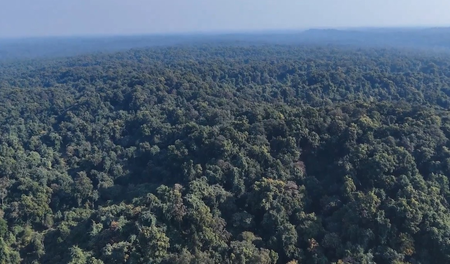
New Delhi, April 7 India has emerged as a credible voice across the world for climate justice, equity and sustainable development, demonstrating that conservation and climate action are mutually reinforcing pillars of growth, and that prosperity for the people and protection of the planet can proceed together.
It is one of the world's 17 mega-biodiverse countries, accounting for nearly 8 per cent of all recorded species worldwide, despite occupying just 2.4 per cent of the global land area, according to an official document.
The country is home to over 96,000 animal species and 47,000 plant species, including almost half of the world's aquatic plant species.
Considering the rich natural heritage, conservation is not merely an environmental concern, but a national imperative, stressed a Press Information Bureau explainer on energy and environment.
India’s green pathway represents a comprehensive transformation, it explained, expanding protected areas, restoring ecosystems, scaling renewable energy, and embedding climate action into governance.
The vision of living in harmony with nature by 2050 is no longer aspirational rhetoric but a roadmap backed by measurable progress across sectors.
The biodiversity governance framework is anchored in the Biological Diversity Act, 2002, supported by the National Biodiversity Action Plan and aligned with the Convention on Biological Diversity, which India signed in 1992. Protected areas in the country have expanded significantly from 745 in 2014 to 1,134 in 2025.
Flagship programmes such as Project Tiger, Project Elephant, and Project Dolphin have seen significant gains, while Project Cheetah and Project Snow Leopard mark new milestones in species recovery, added the Press Information Bureau report. India also leads the International Big Cat Alliance, underscoring global conservation leadership, it added.
Recognising the pressures of climate change, forest fires, and habitat degradation, India has adopted a multi-layered strategy for ecosystem restoration.
The biosphere reserve network now covers over 91,000 square km, with 13 reserves recognised under UNESCO’s World Network.
Additionally, coastal resilience is being reinforced through the National Coastal Mission, extended until 2031 with an allocation of Rs 767 crore.
Meanwhile, people’s participation campaigns, like “Ek Ped Maa Ke Naam (One Tree in Mother’s Name)” encourage citizens to plant a tree as a tribute to their mothers while contributing to environmental protection.
It has become one of the largest people-centric environmental movements, where 262.4 crore saplings had been planted till the end of last year.
Also, Mission LiFE (Lifestyle for Environment) has mobilised over six crore citizens in climate-conscious actions, demonstrating how behavioural change can complement structural reforms.
India’s efforts are closely aligned with the Sustainable Development Goals. The SDG India Index score rose to 71 in 2023-24, reflecting progress in clean energy, climate action, and inclusive growth.
Energy efficiency gains, expanded recycling, and strengthened biodiversity governance together reinforce the country’s commitment to sustainable development.
The conservation strategy also extends to wetlands and coastal regions, which play a critical role in biodiversity conservation, water security and climate adaptation.
The Mangrove Initiative for Shoreline Habitats and Tangible Incomes restored 4,536 hectares of mangroves in 2025. India now boasts 98 Ramsar wetlands, the highest in Asia.
The country’s climate strategy is driven by the National Action Plan on Climate Change and its updated Nationally Determined Contributions under the Paris Agreement.
The country has already reduced emissions intensity by 36 per cent between 2005 and 2020 and achieved over 50 per cent installed electricity capacity from non-fossil sources, five years ahead of its 2030 target.
The National Green Hydrogen Mission, launched in 2023, aims to make India a global hub for green hydrogen, targeting five million metric tonnes of annual production by 2030.
Complementing this, renewable energy capacity has surged to 263 GW, the official document shared, placing India third globally in solar power and fourth in wind and overall renewable capacity.
Landmark projects such as Gujarat’s Modhera, India’s first 24x7 solar-powered village, and Madhya Pradesh’s Omkareshwar Floating Solar Park exemplify innovative approaches to clean energy.
India’s environmental governance also addresses immediate challenges of pollution and waste. The National Clean Air Programme has improved air quality in 103 of 130 targeted cities, with 25 cities achieving a 40 per cent reduction in PM10 levels. Fly ash utilisation has reached 97 per cent, with applications in road construction, cement, and brick manufacturing.
Waste recycling infrastructure has expanded from 829 plants in 2019-20 to over 3,000 by 2025. Extended Producer Responsibility frameworks for plastics, e-waste, tyres, and batteries have registered more than 71,000 producers, facilitating recycling of 375 million tonnes of waste.
India’s domestic progress is reinforced by active international engagement. At COP30 in Brazil, India emphasised the need for enhanced climate finance and technology transfer.
The country continues to lead the International Solar Alliance under the vision “One World, One Sun, One Grid,” and has made significant strides under the Montreal Protocol, achieving a 67.5 per cent reduction in hydrochlorofluorocarbons by 2025, added the report.
Disclaimer: This post has been auto-published from an agency feed without any modifications to the text and has not been reviewed by an editor
Open in app

)