Gujarat Gas Limited Fixes Record Date for Share Allotment Un...
Source: scanx.trade
10 May 2026


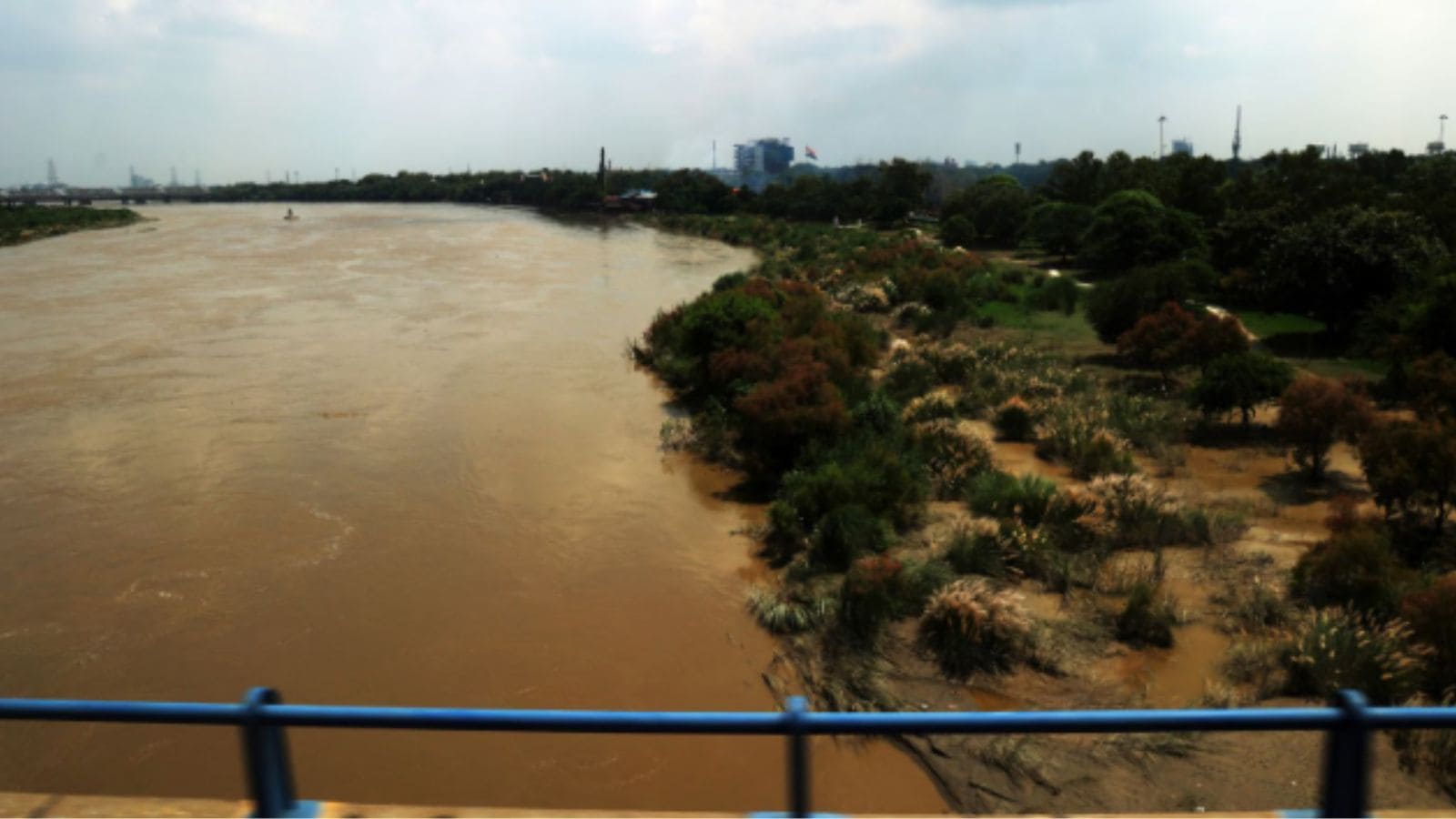
The restoration project has, however, taken a troubling turn in recent weeks. Hundreds of families living along stretches of the Yamuna floodplain have received eviction notices asking them to vacate their homes or face demolition. These settlements are officially classified as “encroachments” under Delhi’s Master Plan because they fall within the ecologically sensitive O-Zone meant to protect the floodplain. The ecological rationale behind protecting floodplains is, therefore, not difficult to understand. Healthy floodplains absorb excess water, prevent erosion and recharge groundwater. But the social and economic implications of Delhi’s reclamation drive require scrutiny. As reports in this newspaper have shown, many residents fear the collapse of already fragile livelihoods and support systems built painstakingly over years.
Delhi depends heavily on domestic workers, sanitation workers, ragpickers, street vendors, construction labourers and daily-wage earners. Successive governments and master plans have done little to create adequate affordable housing or equitable land-use systems for this workforce, many of them migrants, who sustain the city’s everyday economy. Informal settlements on floodplains are products of an urban model that has failed to provide dignified accommodation within the formal city.
This pattern extends beyond Delhi. Across India, environmental protection has often hardened into policies of exclusion. Forest conservation has displaced Adivasi communities and coastal regulations have disproportionately affected fisherfolk settlements. Homes and livelihoods of the poor become the targets of conservation even though they are rarely the principal drivers of ecological degradation. The Yamuna’s decline is fundamentally the result of untreated sewage, industrial discharge, unregulated construction and decades of planning failure. Yet Delhi’s BJP government appears to be following the playbook of the Congress government in the first decade of the 2000s, which pursued eviction-first policies without ensuring viable economic alternatives. Several reports and scholarly studies have shown that families relocated to resettlement colonies such as Bawana took years to rebuild their lives.
The problem is, of course, not unique to India. In the US and Europe, scholars are increasingly writing about “green gentrification”, where waterfront restoration, climate-resilient development and new urban parks improve environmental conditions but also raise land values, pushing poorer residents out of neighbourhoods they can no longer afford. In parts of Africa, wildlife protection initiatives created sanctuaries by evicting communities who had coexisted sustainably with forests and savannahs for generations. Climate policies in several countries have triggered social unrest when the poor and lower middle classes perceived that the burden of green transition was falling disproportionately on them.
Even then, the displacement of the poor in the name of ecology is especially troubling in India because the country possesses a rich tradition of what scholar-activist Anil Agarwal described as the “environmentalism of the poor”. Unlike in many industrialised countries, where mainstream environmentalism historically emerged from concerns about wilderness preservation or lifestyle quality, several of India’s most important ecological movements emerged from the survival struggles of vulnerable communities. Forests, rivers and commons were seen not merely as abstract ecological entities but closely linked with people’s lives. The Chipko movement, for instance, was rooted in the dependence of mountain communities — especially women — on forests for fuel, fodder and water. Across the country, fisherfolk, forest dwellers and environmental movements have maintained that ecological protection cannot be separated from livelihood rights. In Delhi too, environmental groups and citizen’s collectives have repeatedly pointed out that Yamuna is a living ecological entity whose revival requires public participation, scientific planning and sensitivity to the lives connected to the river.
Households living on the floodplains themselves lead precarious lives. During heavy rains, low-lying settlements face inundation, waterlogging and destruction of fragile homes. Floodwaters contaminate drinking water, trigger disease outbreaks and deepen economic insecurity. Climate change is likely to intensify these risks through more erratic rainfall and extreme weather events. In that sense, restoring the Yamuna and protecting its floodplains are not merely ecological imperatives; they are also necessary for the long-term safety and resilience of vulnerable populations.
Delhi requires an approach that joins the dots between ecology, economy and human dignity. Inclusive floodplain conservation would begin by recognising that people living along the Yamuna are not “encroachers”, but workers who sustain the city’s functioning. In several parts of India, successful wildlife conservation has depended on the participation of communities dependent on forests. The recognition that local populations are not antagonistic to ecology, but can often become its most effective custodians, has shaped conservation thinking. The same principle can guide the restoration of the Yamuna.
There is, of course, no one-size-fits-all approach for conservation. But planners should not lose sight of a central lesson from India’s best environmental traditions: Ecology and equity were never opposing goals. They fed into each other.
Till next time
Kaushik Das Gupta

Source: The Economic Times

Source: The Economic Times

Source: The Economic Times

Source: Business Standard