South Korea's KOSPI was the best performing equity market in the region, having gained over 75% in 2025. The gains had extended into the new year as well, with the index having gained nearly 50% in the first two months of 2026.
Explained - Why the best performing Asian market of the last two years fell 12%
According to Daniel Yoo of Yuanta Securities, the recent drop in the Kospi should be viewed as a correction after a strong rally rather than a fundamental shift in the market’s outlook, adding that stability was likely to return once oil prices settle.
By Hormaz Fatakia
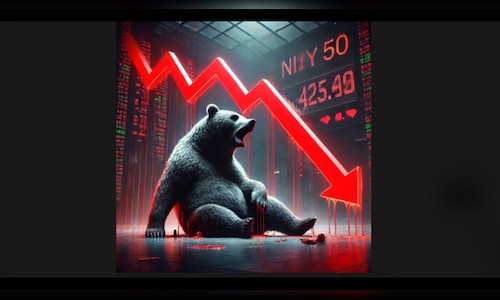
KOSPI, the benchmark index of South Korea, fell as much as 12% on Wednesday, March 4, triggering a trading halt on at least two occasions.
A circuit breaker was even put in place on the KOSDAQ, which is the broader market index, which also fell 13%.
South Korea's KOSPI was the best performing equity market in the region, having gained over 75% in 2025. The gains had extended into the new year as well, with the index having gained nearly 50% in the first two months of 2026 as well, as investors continued to pile into the AI and semiconductor theme, by diverting flows into their heavyweight stocks, SK Hynix and Samsung Electronics.
And it is these heavyweights, that are leading the losses and dragging the KOSPI lower this week. Both Samsung Electronics and SK Hynix are already down 18% so far in the three trading sessions. According to data from Morningstar, both Samsung and SK Hynix together contribute to 50% of the index, that comprises of over 800 stocks.
“The decline in the KOSPI can broadly be attributable to the single-name concentration that we see in the Korean markets,” said Lorraine Tan, Asia director of equity research at Morningstar.
Additionally, South Korea's stock market is particularly sensitive to swings in oil prices and geopolitical shocks in the Middle East, as rising energy costs could pressure industrial and export-oriented sectors.
According to Daniel Yoo of Yuanta Securities, the recent drop in the Kospi should be viewed as a correction after a strong rally rather than a fundamental shift in the market’s outlook, adding that stability was likely to return once oil prices settle.
The KOSPI index is currently trading 10% lower on Wednesday at 5,226.1.
(With Inputs From Agencies.)