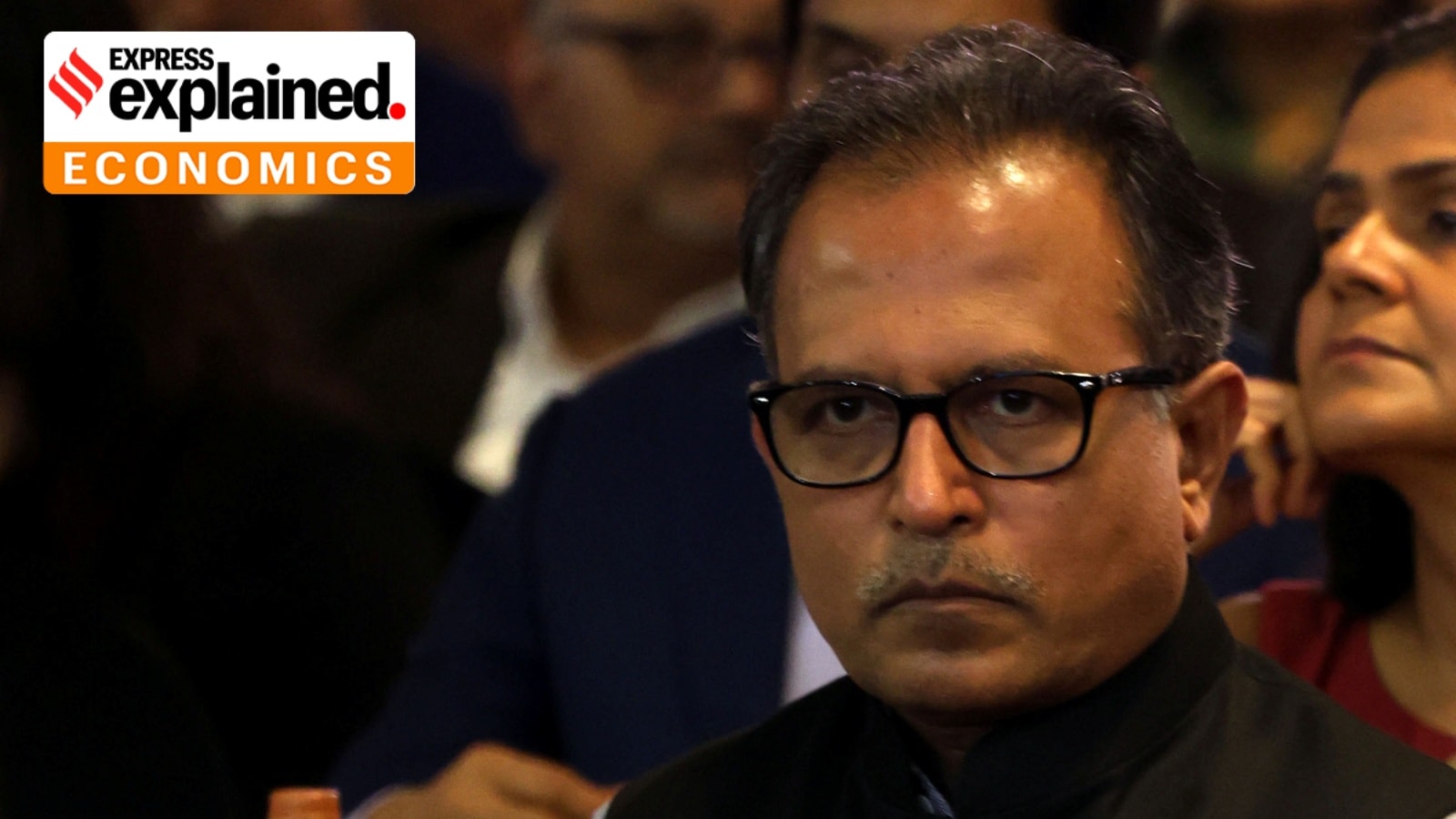
Nilesh Shah, MD at Kotak Mahindra AMC, said that investors can look at domestic focused sectors such as banking and financial services and consumer durables as they do not get directly impacted by rising oil prices.
Expert Explains | ‘This is not the time to be overweight equity… invest in large and mid cap if underweight equity’
After a period of six years, investors are again dealing with uncertainty and with no clarity of an end to that in sight. How do you see it and how is it different from the uncertainty during Covid times?
During Covid, it was a rational and unpredictable uncertainty. We knew there is a virus, there will be medicine, and there will be a vaccine.
Today we are dealing with irrational and unpredictable uncertainty. In Covid, we were dealing with a virus for which there was a vaccine and medicine, a cure — and that confidence came because for generations, mankind has dealt with viruses and found solutions.
Now, we are dealing with human minds that can either be driven by rationality or emotions and we have to go back in history to see how things may evolve, such as during the times of Iraq invasion of Kuwait or US-Iraq war etc., that led to spike in oil prices. In most of the cases in the past, it could be seen that the market bottomed out way ahead of the closure of the war.
Even when war prolongs such as in the case of Russia-Ukraine war, the markets get adjusted, supply chain evolves, economy finds ways and market corrects and then finds a balance from where it can start to move up.
Story continues below this ad
Also, in the Covid crisis, people who panicked converted notional loss into real loss and people who stayed invested, eventually ended up making money, so these are the lessons we have accumulated over the years based on similar scenarios. Will that work? Well, this is what we will have to hold on to. There will be volatility, there will be pain, the market anticipates the impact of higher oil prices on rupee, interest rate, inflation, GDP growth, jobs, employment and the situation of remittances from the Middle East.
So, the market will consider all these factors and which is why it is coming down. But, at some point of time, the world will get adjusted to prolonged war, alternate supply chains will emerge and human entrepreneurship will take over which will create a bottom for the market.
Now, the market is down by 10% and we don’t know where the bottom lies or how the war will evolve. In that case, how do you think investors should behave? Should they hold on to equities and invest further or should they be moving to safer instruments?
Please follow the dharma of asset allocation. In a market like today, you need to understand your investment time horizon and risk taking ability.
Story continues below this ad
If you are overweight equity based on your investment objective or risk profile, please redeem. This is the time to be neutral with equity and not overweight.
On the other hand if you are equal weight, meaning your allocation to equity is in line with your risk profile and investment objective, then continue your SIP but don’t put lumpsum money.
However, if you are underweight equity, then look to invest in a calibrated manner. Markets are likely to remain volatile till such time that clarity emerges on the geopolitical front.
How about investment within equities and physical assets?
Within equity, investors can put slightly overweight positions on large and mid caps because they will be less volatile. You can also add to domestic focused sectors which are not directly impacted by higher oil prices, such as banking and financial services and consumer durables.
Story continues below this ad
Outside equity, you need to focus on debt. In debt, interest rates are likely to go up because of higher fiscal deficit. So, in that scenario you can invest at the shorter end of the debt yield curve — arbitrage fund, short term bond fund, money market fund — so that you don’t carry duration risk in a rising interest rate environment.
On precious metal, one can look to invest in both gold and silver because they normally benefit from global uncertainty. Right now, they have fallen a bit because of the rise in interest rates in the US. Gold does well when US interest rates fall and there is global uncertainty. The US interest rates will eventually come down and that will support precious metal prices. So, one can look to add in the portfolio.
But one should remember that there is no intrinsic value in precious metal but emotional value, so one should invest but only a certain percentage of your portfolio.