Could Elon Musk become world’s first trillionaire? SpaceX IP...
Source: Times of India
21 May 2026



The filing showed that SpaceX has been aggressively investing in artificial intelligence (AI), Starlink satellites and future space missions
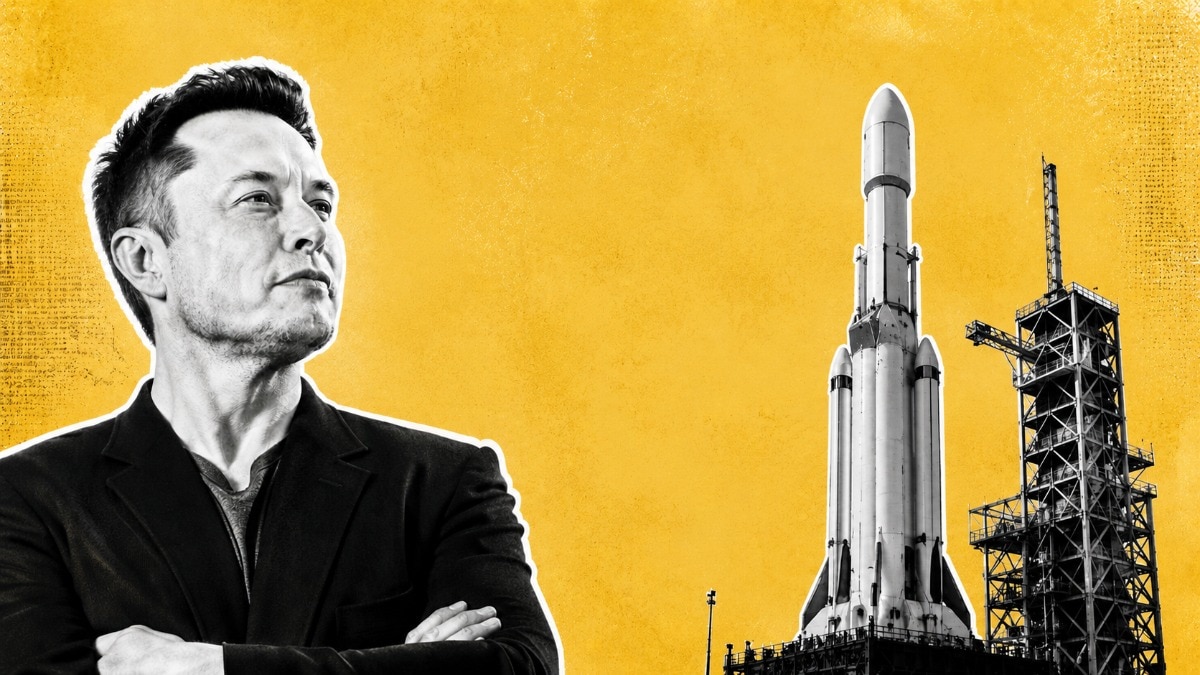
One of the biggest questions surrounding the IPO is whether it could eventually make Musk a trillionaire. (Photo: Reuters)
Vrinda Goel New Delhi
Listen to This Article
Elon Musk-led SpaceX has officially filed for an initial public offering (IPO) with the US Securities and Exchange Commission (SEC), paving the way for a potential Nasdaq debut as early as next month.
The company, formally known as Space Exploration Technologies Corp, plans to list under the ticker symbol SPCX, according to filings made on Wednesday (local time). The prospectus offers the first detailed look at the company’s finances, leadership structure, spending patterns, revenue streams and long-term ambitions.
However, one major detail remains undisclosed: how much SpaceX plans to raise through the IPO and the valuation it expects to command in the public market.
The filing stated that SpaceX aims to begin investor roadshows for the IPO on June 8. Following its merger with xAI earlier this year, the company was valued at $1.25 trillion, setting the stage for what could become one of the largest IPOs in history. The offering is being led by Goldman Sachs, Morgan Stanley, Bank of America, Citigroup and JPMorgan Chase & Co., alongside 18 other banks.
Heavy AI spending pushes SpaceX into losses
The filing showed that SpaceX has been aggressively investing in artificial intelligence (AI), Starlink satellites and future space missions.
Despite generating $18.7 billion in revenue in 2025, up 33 per cent from the previous year, the company slipped into losses. After posting a profit of $791 million in 2024, SpaceX reported a loss of $4.9 billion in 2025. It had also recorded a loss of $4.6 billion in 2023.
The losses have continued into 2026. In the first quarter of this year, SpaceX reported a net loss of $4.28 billion on revenue of $4.69 billion, compared with a net loss of $528 million on revenue of nearly $4 billion during the same period last year.
A major portion of the expenditure has gone towards AI infrastructure. SpaceX said it spent $20.7 billion in 2025 alone, including $12.7 billion on AI projects. Another $4.2 billion was invested in its Starlink satellite network, while $3.8 billion went towards rockets and other space ventures. The company’s capital expenditure has risen sharply over the past few years, reported CNN.
Which business divisions are driving SpaceX’s revenue?
The filing portrays the company as a mature conglomerate, an uncommon position for a pre-IPO firm. Total revenue stood at $18.7 billion in 2025, compared with $14 billion in 2024. However, during the same period, the company swung from a profit of $791 million to a loss of $4.94 billion.
According to Bloomberg, the majority of SpaceX’s revenue currently comes from its Starlink satellite internet business, which contributed nearly two-thirds of total sales during the first quarter of 2026.
Starlink’s subscriber base has expanded rapidly over the past few years. Subscribers increased from 2.3 million in 2023 to 4.4 million in 2024, before reaching 8.9 million in 2025. Revenue from Starlink operations climbed to $4.42 billion last year, up from $2 billion a year earlier.
Although SpaceX dominates the global space transportation market and remains a major rocket launch provider for both Nasa and the Pentagon, the filing showed that its launch business continues to operate at a loss.
What are SpaceX’s future ambitions?
SpaceX said it plans to continue rapidly launching satellites while simultaneously building systems that could eventually support “a base on the Moon and cities on other planets.”
The company described its addressable market opportunity as “the largest actionable total addressable market in human history,” estimating a potential $28.5 trillion opportunity across AI, connectivity and space technology.
Of this, SpaceX estimates that $1.6 trillion could come from connectivity services powered by Starlink satellites, while $26.5 trillion could stem from artificial intelligence opportunities. The AI projections include $2.4 trillion linked to plans for data centres in space and another $760 billion from potential consumer subscriptions. SpaceX also projected a $600 billion opportunity in digital advertising and $22.7 trillion in enterprise applications.
Central to these plans is the company’s massive Starship rocket programme. The filing warned that delays or failures in Starship development could pose significant risks to the company’s future.
Who is leading SpaceX?
The filing also disclosed details of the company’s board leadership for the first time.
Elon Musk serves as chairman of the company, while President and Chief Operating Officer Gwynne Shotwell is also a director on the board. Other board members include Chief Financial Officer Bret Johnsen, venture capitalists Randy Glein, Steve Jurvetson, Luke Nosek and Ira Ehrenpreis. The board also includes private equity executive Antonio Gracias and Donald Harrison of Google.
Could the IPO make Elon Musk a trillionaire?
One of the biggest questions surrounding the IPO is whether it could eventually make Musk a trillionaire.
According to the filing, Musk owns a substantial portion of SpaceX. Through a 12.3 per cent stake in common shares and 93.6 per cent ownership of Class B shares, each carrying 10 votes, Musk controls 85.1 per cent of the company’s voting power.
The filing stated that Musk could receive 15 separate stock tranches if SpaceX achieves valuation milestones of up to $7.5 trillion and successfully establishes a permanent human colony on Mars with at least one million inhabitants. He would receive those shares only if both targets are achieved and he remains employed by the company.
Following the merger with xAI, SpaceX also inherited parts of Musk’s compensation structure from his AI and social media ventures. The company cancelled that earlier compensation package and said it would instead grant Musk another 302 million shares if SpaceX reaches multiple valuation milestones and launches data centres capable of delivering 100 terawatts of computing power annually.
The filing also shed light on Musk’s salary. Despite leading the company for years, Musk has drawn an annual salary of just $54,080 since 2019.
Don't miss the most important news and views of the day. Get them on our Telegram channel
First Published: May 21 2026 | 8:23 AM IST
Source: The Financial Express

Source: The Economic Times

Source: The Economic Times