How Navi is sharpening its IPO pitch ahead of a fresh FY27 f...
Source: Livemint
04 May 2026



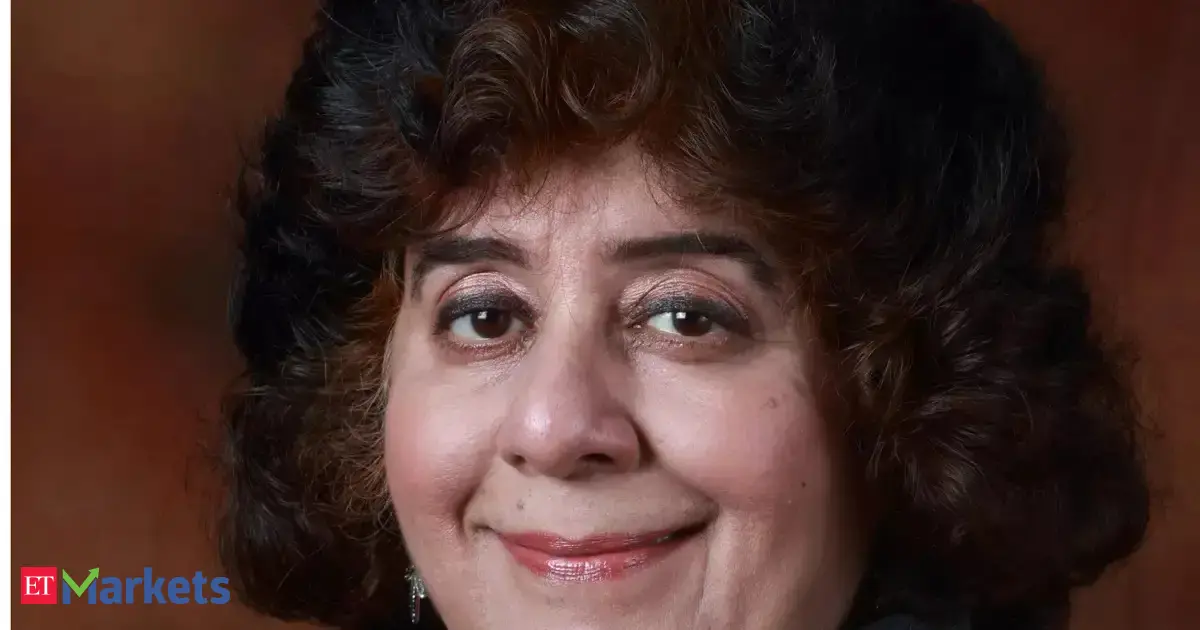
For the managing director and chief executive officer of DSP Mutual Fund, the past 18 months have been less about reacting to headlines and more about respecting cycles. As gold surged to outsized gains, Parekh trimmed exposure to his gold mining fund and leaned more heavily on hybrid strategies that automatically recalibrate equity allocations.
“My philosophy hasn’t changed, only prices have,” he said—underscoring a disciplined approach rooted in asset allocation, mean reversion and ignoring market noise.
A lot has changed in the markets over the past 18 months. Has your investment philosophy evolved?
A philosophy, by definition, has to be long-term and consistent. I work with three broad beliefs: first, the future is unknowable. Second, equities outperform bonds over long periods, but go through phases of overvaluation. Third, asset classes are cyclical and mean-reverting. I don’t chase what has done well recently. Instead, I look for what hasn’t performed for a while but has strong fundamentals.
But I have used the recent developments to rebalance some of my portfolio. Gold and silver have delivered returns equivalent to 2–3 decades in just one year. As a result, my gold allocation rose to about 22% of my portfolio. I typically prefer it at 10–15%, so I’ve been rebalancing by reducing exposure to gold mining funds and reallocating to hybrid strategies in value fund, equity savings funds and multi asset funds.
Have you made changes to your equity allocation as well?
Yes. By shifting from gold to hybrid funds, my equity exposure has increased. Also, my hybrid funds automatically raised equity allocation as markets corrected. Overall, my equity exposure has increased around 7% in the last six months.
Your global equity allocation last year was 17%. Have you increased it and which geographies are you invested in?
Global equity is about 25% currently in my portfolio. I’ve learned that geography matters less than valuation and business quality. My approach is simple: buy good businesses available at reasonable prices.
Globally, outside of AI and semiconductors, most sectors have corrected 20–40% or gone sideways in the last few years. This is not country specific. Stocks of several core sectors across Asia, Europe and Canada have corrected significantly. That’s where opportunity lies.
A board member once told me: “Buy free cash flows, cheap.” That stayed with me. And that’s what I apply to my overall equity investment philosophy, whether in India or globally.
What are you consciously ignoring despite market noise and why?
I’m ignoring the noise itself. Monthly SIP numbers, FII flows—these have no relevance for a 10–20 year investor. Markets constantly create narratives: “We don’t need FIIs” one year, “Why aren’t FIIs coming back?” the next. It’s all noise. My job is to maintain asset allocation, not react to headlines.
Where do you see opportunities given the current valuations?
First, it’s interesting that we point out valuations have corrected after they fall. When they were rising, very few called them expensive.
Today, markets are less expensive, but not very cheap. Some pockets are reasonable. BFSI is closer to fair value. Select small-caps—good businesses with strong management—are down 30–40%. IT stocks are correcting. So opportunities are emerging, but nothing is screaming cheap yet.
What is your underlying philosophy for debt investments and how do you approach them?
Fixed income serves two roles in my portfolio. One, it provides stability and behavioural comfort. Two, it gives dry powder.
The idea of “buy when there is blood on the street” only works if you actually have money to deploy. If your entire portfolio is in equities, your incremental salary is too small to take advantage of corrections.
So I keep 20–40% in fixed income. When equities are expensive, it’s closer to 40%. When valuations are reasonable, closer to 20%. I invest in debt mutual funds for my fixed income allocation.
Do you invest in real estate or alternatives?
No. I stick to equities, bonds and gold. Over long periods, most alternative investments haven’t beaten equities after costs and taxes. Real estate, especially in Mumbai, is expensive relative to income levels and comes with liquidity and execution challenges. My only real estate exposure is my home.
What role does gold play in your portfolio?
Gold is a very important diversifier, especially in emerging markets. We had done a study two years back when gold was not doing much that showed that in 24 out of 25 emerging markets, gold outperformed their own stock markets.
It acts as a hedge against currency and systemic risks. In the ongoing geopolitical landscape, paper assets like stocks and bonds will be volatile, but not gold as it’s a physical asset.
But timing matters. You should not hoard it after a big rally, what we are seeing now. Instead, accumulate when gold is underperforming. I bought it during the last eight years when it was stagnant. But I never go overboard and maintain 10–15% allocation, adjusting based on cycles, for diversification.
What is your current life and health insurance cover like?
I have a fairly substantial health insurance cover. A few years ago, I faced a medical emergency in the family, which involved significant expenses, so I’ve been consciously topping it up to ensure it remains adequate. I also had a large life insurance cover earlier, but its relevance has reduced over time as my financial assets have grown.
What’s the biggest behavioural shift that improved your investing outcomes?
I made two big shifts in 2008–2009. First was to not chase past performance. I read this important observation that past returns don’t belong to you; they belong to someone who invested three or five years back. After I learned the concept of cycles and mean reversion, it was almost an epiphany that any asset that mean reverts—buy it in a low cycle, not in its up cycle.
Second, to not interrupt compounding. Once I choose a good fund or manager, I stay invested. The temptation to exit underperformance and chase winners is the biggest destroyer of returns.
Note to readers: Through this series, we try to highlight the basic tenets of personal finance such as asset allocation, diversification, and rebalancing. We do not suggest replicating the asset allocation of Parekh, as personal finance is individual-specific and differs from one person to another.
Shipra Singh
Shipra joined Mint’s personal finance team in September 2021, and writes on tax, credit cards, banking, estate planning and investments. She began her career in personal finance as an intern with Outlook Money magazine in 2017, and has since worked with The Economic Times and Entrepreneur India as a business journalist covering fintech and emerging financial services.Over the years, she has reported on key aspects of household finance, tracking regulatory changes, market trends and evolving consumer behaviour. Shipra’s main beats are tax and banking products, with a focus on compliance gaps and their real-world impact for readers navigating complex financial decisions. Her reporting on GST and personal tax, particularly foreign asset disclosures and NRI taxation, has contributed to wider policy discussions and subsequent changes.She also interviews market experts for the Mint Money podcast, covering topics ranging from stock market investing to how credit scores shape financial outcomes and access to credit.Shipra has a keen interest in data-driven analysis and writing human-centric features that explore how people’s habits around spending, investing and wealth creation are evolving. Her work focuses on helping readers make informed financial decisions in an increasingly complex economic landscape.Shipra holds a Bachelor’s degree (Honours) and a Master’s in English Literature from Delhi University.
Source: The Economic Times

Source: The Financial Express