How multi-asset funds use smart diversification in equity, d...
23 Apr 2026


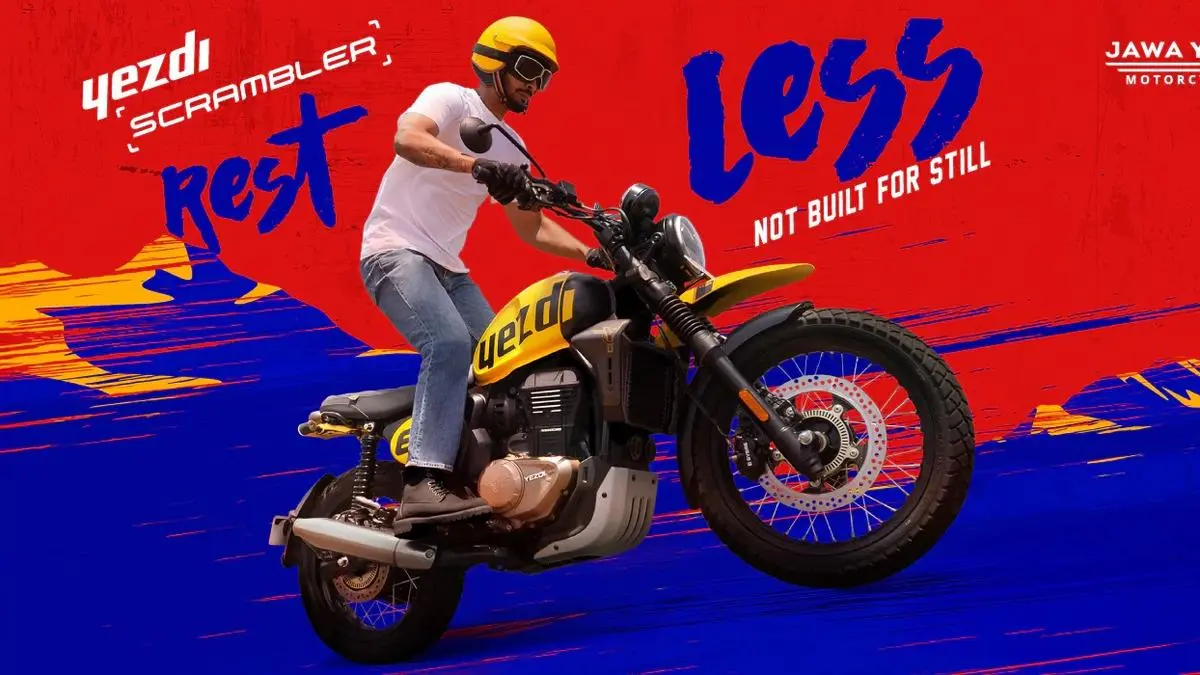
Classic Legends, the Mahindra-backed maker of Jawa, Yezdi and BSA motorcycles, is targeting a public listing by 2028, by which time co-founder Anupam Thareja says the company’s global expansion strategy will be sufficiently in place to justify raising capital from the public markets.
The IPO is not positioned as an exit for the founders or investors, but as a funding instrument to scale internationally — taking BSA into Western markets, Jawa into Eastern Europe and South America, and Yezdi across India.
“There is no need right now,” Thareja told businessline at the launch of two new scramblers in Mumbai on Wednesday.
“When I go global in a very big way — which I will — I’ll need a currency on the board that I can leverage when needed.”
Thareja, who has taken 11 companies public, was deliberate in separating the listing rationale from any liquidity motive. The balance sheet is comfortable for a near-term strategy, with annual capex running at ₹300–500 crore.
The two launches on Wednesday reflects the global architecture being assembled. The Yezdi Scrambler, powered by a new liquid-cooled 350 CC engine named Katar and India’s lightest scrambler at 174 kg, is priced from ₹1,99,950 — just below the ₹2 lakh threshold, where its primary competitors sit. The BSA Scrambler 650, carrying India’s only 650 CC single-cylinder engine in the segment and drawing design inspiration from the Gold Star Catalina and A10 Spitfire, starts at ₹3,24,950 and is scaled through a separate joint venture with Tube Investments. “Scramblers are the SUVs of motorcycling,” Thareja said. “Built for confident city riding, but agile and rugged enough to inspire you to explore terrain beyond roads on the weekends.”
The three-brand architecture sits on a shared global platform: BSA as an authentically British marque for Western markets, Jawa for Eastern Europe and Latin America, and Yezdi as the domestic flagship. “I will proudly sell this as Indians not being taken for granted anymore,” Thareja said. “The same platform, sold as Yezdi in India, BSA in London, and Jawa in Eastern Europe.”
The financial base has strengthened materially. Classic Legends sold around 57,000 motorcycles in FY26, nearly doubling from about 32,000 units in FY25, with profitability confirmed across every cash metric despite historic commodity cost pressures, especially aluminium. The company also carries no depreciation or interest burden on its manufacturing facility, acquired from the Mahindra group at no cost. “The return on capital is going to be infinite,” Thareja said.
The domestic market, however, remains structurally challenging. Classic Legends operates in India’s mass-premium motorcycle segment, where Royal Enfield dominates with over 1.2 million motorcycles sold annually, accounting for more than 80 per cent of the core market, while Classic Legends, with around 57,000 units sold, holds a roughly 5 per cent share of the segment.
Even with internal targets of 80,000–100,000 units in FY27, its share would rise only to 6–8 per cent, highlighting the difficulty of scaling in a market where leadership is deeply entrenched.
Thareja, however, framed the opportunity differently. “This segment is 5 per cent by volume, 20 per cent by revenue and 40 per cent by profit. I am competing in the 40 per cent profit pool,” he said, shifting the focus from volume to pricing power.
He also argued that the category is being reshaped both functionally and emotionally. Just as SUVs expanded the passenger vehicle market by combining everyday usability with aspiration, scramblers are being positioned as motorcycles that can serve both daily and leisure use. At the same time, he described these bikes as products owners tend to hold on to rather than trade frequently — sometimes even passing them down generations — reflecting a level of emotional ownership that goes beyond utility.
The global expansion is still early but accelerating. Exports rose to about 6,000 units from roughly 1,000 a year earlier, with key markets yet to open. The US has seen no shipments so far, while Brazil and other South American markets are scheduled for entry this year, alongside South-East Asia and Eastern Europe. The company has also entered markets such as Australia, New Zealand, Japan, and Korea, and is expanding its global dealer network from 360 to 500 touchpoints.
Early validation has come from the UK, where BSA emerged as a leading player in its segment within months of relaunch. “If I’d launched a bike called Anupam in London with the same looks and price, it would have taken 100 years,” Thareja said, pointing to the role of brand equity in accelerating adoption.
The 2028 listing window gives the company roughly two financial years to expand into key export markets, scale its three-brand global platform, and strengthen its position in India beyond a mid-single-digit share.
Published on April 23, 2026