Windlas Biotech: Board Approves Share Buyback At ₹1,000 Per...
17 Apr 2026


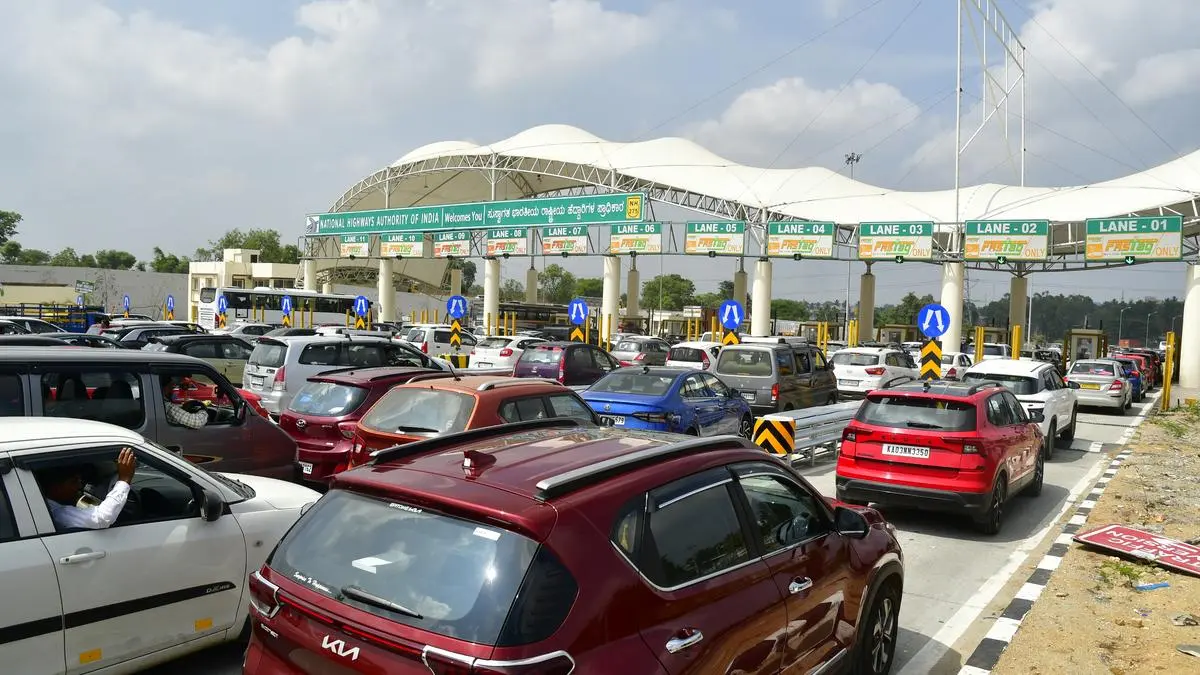
Citius TransNet InvIT’s ₹1,105-crore IPO is the latest road InvIT to hit the capital market. In the recent past, Raajmarg, Anantam and Bharat Highways were among the ones to float public issues. The new offer opens April 17 and closes on April 21.
The net proceeds, of up to ₹1,000 crore, are proposed to be used for the partial or full acquisition of securities of one entity and certain identified projects. Essentially, these will used to buy or redeem sponsor-held securities in certain SPVs, and should not viewed as a simple deleveraging exercise.
Once this restructuring is done, Citius TransNet will get control of an initial portfolio comprising seven toll-road assets and three annuity-road assets.
Epic TransNet Infrastructure, the sponsor, along with certain sponsor-group entities, will hold at least 15 per cent of Citius TransNet’s units on a post-issue basis. The trust is also supported by the wider EAAA India Alternatives platform, which provides the future acquisition pipeline for the InvIT.
Citius has raised ₹497.25 crore from anchor investors on April 16. Shares offered in the IPO to qualified institutional buyers is 75 per cent of the issue size (including anchors) and the balance 25 per cent is for non-institutional investors.
There is no retail investor quota and these investors have to bid in the non-institutional window, with minimum amount of bid at ₹14,850-15,000 (minimum bid lot 150 units). At the upper end of the ₹99-100 per unit (not share) price band, the Citius issue implies a post-issue market capitalisation of about ₹6,100 crore.
The initial portfolio has 10 road assets. These assets together span 3,406.7 lane-kilometres (measured by the total length across all lanes). It is skewed towards toll roads (around 88 per cent of 9MFY26 operational revenue). Citius (see table) offers higher growth potential through traffic-linked toll collections, but also leaves the trust more exposed to economic activity, freight movement and periodic traffic disruptions.
It also has a Right of First Offer (ROFO) for the acquisition of 11 hybrid annuity model assets (2,366.81 lane-kms) held/to be acquired by the sponsor EAAA platform.
Under the SEBI norms, an InvIT must appoint an independent valuer and obtain valuation reports at specified stages, including for assets proposed to be offered in an IPO. Using Citius’ enterprise value (EV), provided by the valuer, of ₹10,494 crore for the initial portfolio and projected FY27 EBITDA of about ₹1,865 crore, the implied forward EV/EBITDA (including contribution from HAM assets) works out to roughly 5.6 times. This is at the lower end of some peer road InvITs (6x-11x).
The company’s EV (m-cap+ net debt) comes to ₹10,347 crore and that is at marginal discount to the valuer’s number. This may be justified to an extent given the shorter expiry period of concessions for some toll roads in Citrus’ portfolio.
In short, Citius looks better than a plain-vanilla yield play at a reasonable valuations. But at the same time this cannot be viewed as a stock you invest in for high compounding, InvITs are mandated to distribute 90 per cent of their net distributable cashflows as dividends to investors. So InvITs are like quasi-equity quasi debt instruments. Hence, this is for investors who want regular income (from annual net distributable cash flows) with modest capital appreciation over the long term.
It may be a good bet for investors seeking annual yields and with a 4-5 year time horizon to benefit from potential capital appreciation. The long horizon is required because InvIT valuations can also come under pressure when rates rise, as their yields look less attractive against fixed-income options. With the domestic easing cycle largely mature, scope for further yield-led rerating may be limited. Returns will depend on asset performance, leverage, refinancing costs, and distribution growth.
Also, this is not a buy-and-forget, utility-like asset. Investors will need to track traffic, refinancing, and the pace of ROFO asset additions.
What works
Toll assets earn from user toll collections. Annuity assets earn fixed payments from the authority.
The key thing to track is cash generation. And since an InvIT must distribute most of its cash flow, future growth depends on acquiring new assets through fresh debt or equity.
An InvIT’s growth model rests on four pillars: yield from mature cash-generating assets, expansion through fresh debt or equity, sponsor-led asset acquisitions, and periodic replenishment of expiring concessions. Without new assets, cash flows will decline as road concessions run off.
The Citius portfolio has operating depth. The project SPVs have a strong operational history, with four toll assets having a tolling history of more than 12 years and two others collecting toll for over five years. Mature roads tend to have more predictable traffic and cost behaviour.
There are supportive sectoral trends too. According to a CRISIL Intelligence report, road freight is expected to maintain healthy growth, with volumes projected to expand by 5-7 per cent annually in FY2026 after 6-8 per cent growth in FY2025. Passenger traffic too could benefit from improved expressways and better intercity connectivity.
Toll revenues also have an embedded inflation cushion. The fee rules specify that applicable toll rates rise by 3 per cent annually along with an adjustment linked to changes in WPI. That provides some natural tariff support over time.
The identified ROFO assets add another source of optionality. The 11 Hybrid Annuity Model (HAM) assets together generated nearly ₹890 crore of annuity in FY25. If acquired at sensible valuations and with prudent funding, they could reduce the trust’s dependence on toll traffic and extend the cash-flow runway. Several of these ROFO assets (see chart below) are still early in their annuity lives, which could help lengthen portfolio duration.
Citius’ operating track record is also improving. Revenue has risen steadily from FY23 to 9MFY26, while EBITDA margin has expanded from 57.5 per cent in FY23 to 72.8 per cent in 9MFY26. \
At an implied m-cap of ₹6,100 crore, the portfolio is estimated to generate an average annual cash yield of 19.5 per cent (average FCFF of about ₹1,200 crore) over the next five years (FY27 to 31) using the estimates provided in the valuer report. However, after accounting for finance cost on debt and mandatory principal repayments, the actual dividend yield distributed to unitholders would likely fall into a lower, more sustainable range. Some privately-sponsored road InvITs are currently offering 8-9 per cent yield (post-tax).
Factors to consider
The portfolio is not perpetual. Several assets have relatively short residual concession lives. Panipat Elevated Corridor (PECPL), for instance, ends in January 2027. Rajkot-Vadinar Tollway (RVTPL), Dhola, Dibang and Jorabat Shillong Expressway (JSEL) also have concession end dates between FY29 and FY31. That means investors cannot simply extrapolate current cash flows indefinitely.
There is also some revenue concentration. The two Gujarat assets—Ahmedabad-Maliya Tollway (AMTPL) and Samkhiali Bhachau Gandhidham (SBGTPL)—together account for more than one-third of portfolio revenue, while the top five stretches contribute more than 73 per cent of projected FY27 revenue. These may be among the better-quality roads in the trust, but it still means a meaningful part of the investment case rests on traffic growth and economic activity in a limited number of corridors.
PECPL is another example of the trade-off. It is the highest revenue-per-km asset in the portfolio, but because its concession ends in January 2027, investors get that rich revenue stream only for a short remaining period.
Maintenance spending is another key variable. Road assets require periodic major maintenance and repairs, which do not occur evenly each year. Instead, they create spikes that can temporarily depress free cash flow and, therefore, distributions. AMTPL Base is a good example: though EBITDA is projected to keep rising, free cash flow drops sharply in FY29 because of a large maintenance bill.
Debt is another factor investors need to watch. Net debt stood at ₹4,247 crore at the end of 9MFY26, and net debt to FY25 EBITDA is about 3.7 times. That is not unusual for a road InvIT, but it is high enough to keep refinancing costs and interest burden relevant.
Investors who assume most EBITDA can be distributed may overstate the likely yield. A better approach is to focus on free cash flow after maintenance, interest and periodic capital outlays.
Conclusion
Citius appears to be a reasonably priced road InvIT with a mix of current yield and some visible growth levers. The starting portfolio has scale, improving margins, decent geographic spread and a pipeline of future HAM acquisitions.
.The investment case rests on traffic growth in a few key corridors, the pace and pricing of future acquisitions, periodic maintenance cycles, refinancing discipline and the trust’s ability to replace maturing assets before concession expiry starts reducing portfolio cash flows.
Published on April 17, 2026