Elon Musk settles X lawsuit for a cup of (cheap) coffee. Wha...
Source: Livemint
05 May 2026


15
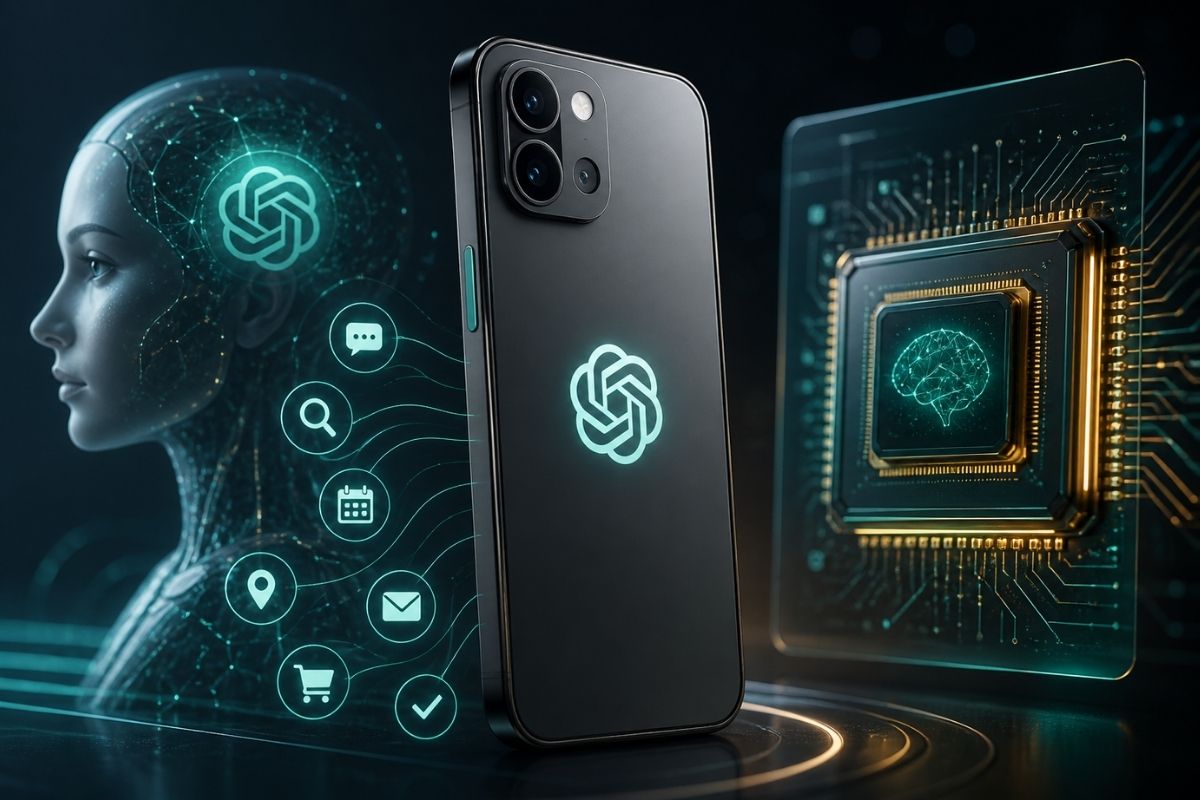
Artificial Intelligence giant OpenAI is reportedly gearing up for launch of its first smartphone, but not like Apple and Samsung, whose handsets areare built around application developed by third parties whereas the OpenAI smartphone will be an AI agent phonewhere, insteadof navigating through multiple apps, users would use AI to complete tasks. The media reports and experts claim that the company is fast-tracking the development of its first AI agent smartphone, and it is likely to go into mass production as early as the first half of 2027.
Greg Brockman, President OpenAI while appearing as a witness in ongoing trail on Elon Musk’s civil lawsuit against OpenAI, recently confirmed that the company is gearing up for an IPO.
The experts also suggestthat the company will launch the phone before IPO to make the company look more attractive to investorswhereasanother reason behind the quick launch could be increasing competition in the AI-powered smartphone segmentwhere companies are rushing to offer more advanced AI features.
OpenAI Phone Hardware and Chipset
In an X post shared by industry expert Ming-Chi Kuosuggests that OpenAI has partnered with both MediaTek and Qualcomm to develop the processor for the handset. However,it seemsthat the company hasfinalised MediaTek as the key supplier of the processor for the smartphone due to better specifications.
The X post furtherreveals that the chipset for the smartphone will be based onDimensity 9600 and will be built usingthe TSMC N2P node (2nm-class semiconductor node). The handset is likely to go into the production phase in the second half of 2026.
“Other key specs include a dual-NPU architecture for heterogeneous AI compute, LPDDR6 + UFS 5.0 to ease memory bottlenecks, andpKVM + inline hashing for security. If development stays on track, combined 2027–2028 shipments could reach around 30 million units,” Ming-Chi Kuo wrote in an X post.
Why OpenAI is making a smartphone
The company is developing a smartphone as AIagent phones have access to location, activity, communication, and context, which makes AI agents work better on phones than on any other device.
In terms of business model, the company could bundle subscriptions with hardware and developa new AI agent ecosystem involving developers, potentially reshaping how software is distributed andmonetised on mobile devices.
The experts and mediareports suggest that if everything goes as per plan, the total number of units shipped over 2027 and 2028 combined could be around 30 million
However, the company has not specified any launch timeline and further detailsregarding the phone
Also Read: Samsung Galaxy Z Flip 8 Vs Galaxy Z Flip 7: Slimmer Design, Improved Hinge, And New Chipset — Check All Upgrades And Launch Timeline

Source: The Economic Times

Source: The Economic Times

Source: The Economic Times