Share Samadhan Board Approves FY26 Audited Results and Key A...
Source: scanx.trade
14 May 2026


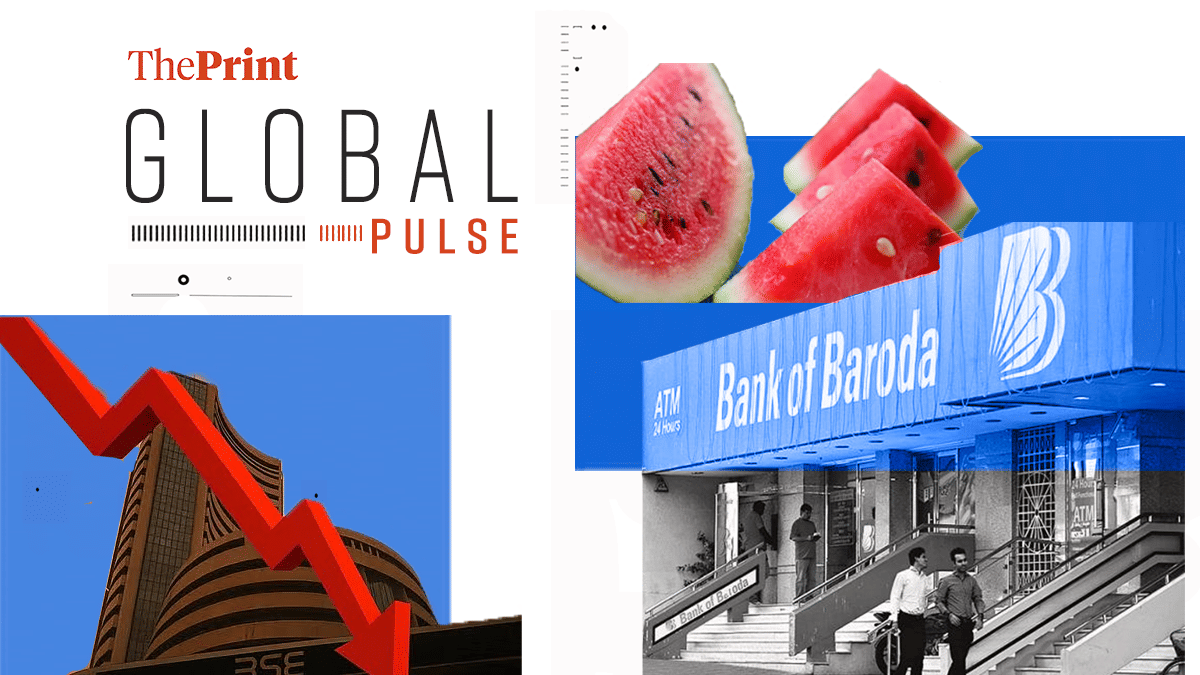
“India has had a sharp pullback in private equity dealmaking, with investors deterred by high valuations demanded by business owners and mounting uncertainty over the country’s economic outlook.”
As the report notes, private equity funds are increasingly cautious “as economic disruption mounts and valuations remain stubbornly high”.
The trouble with investments is especially coming at a “turbulent” time for India’s markets.
“Last year’s decline in activity was partly attributed to the 50 percent tariff imposed by US President Donald Trump on Indian goods, which has since been negotiated down.”
Private equity deal values dropped to $19.6 billion last year.
The war in West Asia, however, still hangs over investments in India. “Foreign funds have pulled more than $20bn out of Indian equities since the start of the war with Iran, piling pressure on the rupee and adding to investor concerns,” the report says.
For the current fiscal year, economists at USB have recalibrated their GDP growth forecast for India, down to 6.2 percent from 6.7 percent.
Meanwhile, there is good news for one of India’s biggest lenders: Bank of Baroda.
Siddhi Nayak of Bloomberg reports that “strong economic growth” will propel the bank to double its balance sheet over the next five years.
“Debadatta Chand, chief executive officer of the bank, which absorbed two state-run lenders in 2019, said larger balance sheets will be crucial as lenders look to compete globally,” Nayak reports.
“Indian banks have grown their balance sheets rapidly since the COVID-19 pandemic, supported by strong deposit inflows, rebounding credit demand and infrastructure spending in the world’s fastest-growing economy.”
Over the last five years, Bank of Baroda has expanded its assets to Rs 21 trillion—a nearly 75 percent increase. Over the same period, the State Bank of India’s assets grew by 72 percent and Punjab National Bank’s assets grew by 57 percent.
In other news, an unsolved tragedy is at the center.
The BBC report by Geeta Pandey, Dipali Jagtap, and Alpesh Karkare is headlined, ‘Rat poison watermelon deaths puzzle Indian investigators’.
Three weeks after a family of four in Mumbai died after eating watermelons, investigators told the BBC they are no closer to knowing what actually happened.
“The Dokadia family—Abdullah, his wife Nasreen, and their two daughters, Ayesha and Zainab—were found dead at their home on 25 April in Mumbai’s Pydhonie area,” says the report.
Last week, forensic tests revealed that zinc phosphide—a compound used to kill rats—killed the Dokadias. Traces of zinc phosphide were found in the watermelon, the last food item the family shared.
“But despite the revelation, the case is far from being solved, and there are many unanswered questions. On Wednesday, sources in the Mumbai police told the BBC that there is still no clarity on the motive or how the poison entered the watermelon.”
Citing another news report, the BBC reports that the building in which the Dokadias lived had a rodent problem, and residents used repellents, poison cakes, and glue pads to drive away rats.
On Wednesday, a senior police official told the BBC that they were still puzzled by how the rat poison ended up in the fruit.
(Edited by Madhurita Goswami)

Source: The Financial Express