Power & Instrumentation Allots 3.54 Lakh Equity Shares Throu...
16 Mar 2026


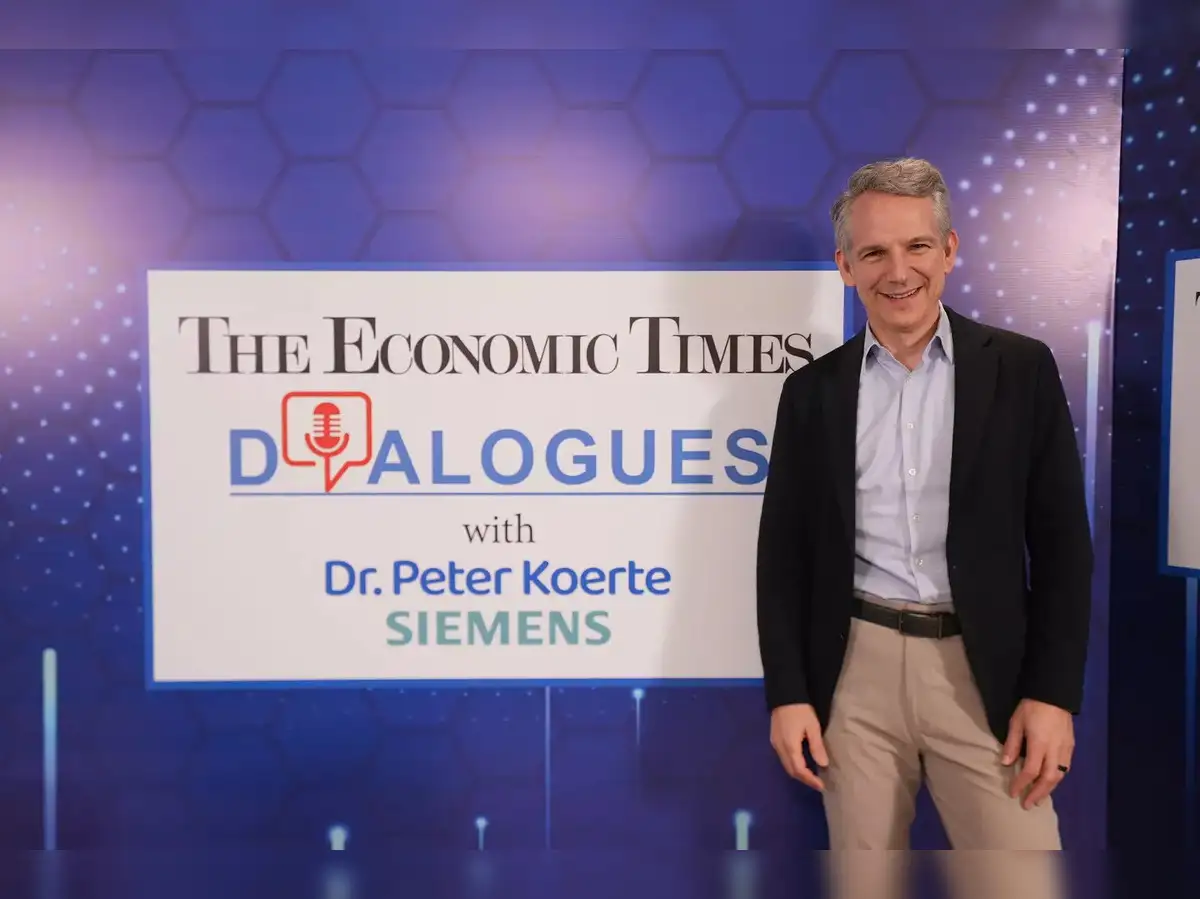
Siemens CTO Dr. Peter Koerte is looking to change the way buildings are managed, cutting down energy consumption by a third.
In an era where artificial intelligence is reshaping industries, Dr. Peter Koerte, Chief Technology Officer of Siemens, shares how industrial AI is transforming the way businesses operate. From optimizing energy consumption in buildings to powering smart factories through platforms like Siemens Xcelerator, Siemens is integrating AI deep into physical infrastructure.
In this conversation, Dr. Koerte explains how industrial AI differs from consumer AI, why reliability and engineering data are crucial, and how technologies like digital twins are enabling smarter, more efficient industrial ecosystems.
Q : What is the difference between industrial AI and the regular AI that we use?
Yeah, there’s many differences, but let me pick three. The first one is industrial AI. Where’s it being used? So obviously it’s not in the consumer space, but in the industrial space where we talk a lot about physical AI, meaning making the physical infrastructure better, more productive, more resilient. The second one is that that AI that we’re using because very often it’s mission critical. It needs to be very safe. It needs to be reliable. It needs to be trustworthy. It must not hallucinate. And the third one is the way we develop this AI, because the AI in the industrial world is not usually based on words and language that you can train on. And by going to the internet and downloading all those web pages. Actually, it is being trained on engineering data, production data.
Q: Siemens says it’s powering the industrial AI revolution. I mean this is all good but where are your customers seeing results first?
The number one thing that they see this is usually in energy and energy consumption. And where we can cut a significant amount of energy that’s being consumed. And one of the most obvious ones for that are the energy heavy industries such as indeed buildings as we’re sitting in here right now. It turns out thirty percent of all the energy worldwide is consumed in buildings because for humans, ninety percent of our time we spend in here. We want to feel comfortable as we do right now. There’s a lot of energy wasted today that goes into cooling of buildings. We’ve developed an application or an AI that is called comfort AI. That actually takes a reading every fifteen minutes, learns, updates itself and cuts energy costs by a third.
Q: Give us a sense of how Siemens is planning for this kind of scale that AI industrial AI is going to use.
The AI that we provide is usually through the means of a platform that is called Siemens Xcelerator. And Siemens Xcelerator is: think of it as a portfolio of software that enables our customers to achieve their results. This is where the AI is embedded. And this is where you and I would be actually working with applications that are all AI powered, and that help us to design better ways of how to produce cement or how to operate these cement mills, or how we operate these buildings. This is where it’s built into these applications.
Q: Could you describe an ambition to build an AI operating system for the industry?
It is not an after the fact insertion, it is the very core of the industry itself. If it’s an OS. If industrial AI is the OS of the industry, what are the building blocks of this OS? Yeah, the building blocks are essentially lifeblood of that is actually having access to that data. And if you think about it today, uh, if you go into a factory in particular, a brownfield factory that’s there for many years. Um, usually there’s very little data because these machines are very manual. They’re mechanical and there’s, there are no sensors. So, the first step is, do you have already enough data to understand about shop floor.
Q: Digital twins are very exciting. It’s been the stuff of science fiction. So, how do you make a digital twin actively intelligent?
The idea, and this is in the process how was the digital twin created? That was usually created by greenfield applications. You wanted to build a new building, you wanted to build a new machine, you wanted to build a car, a plane, whatever you choose to. And then you had the digital replica, first the twin, and then you had the physical part, and this was it. And then they co-existed next to each other. And then you had a versioning issue because one of the two would change, right. And so, they would be coming out of sync. If you were to change this in your model, then of course you have. And then retrofit the real world and vice versa. What we see in the meanwhile is
that the two worlds, the digital twin and the real object, they are connected because of data and sensors and so on.
To explore more insights on industrial AI, visit the microsite.
Siemens Innovation Day 2026 – TRANSFORM | Industrial AI, Automation & Digital Innovation
https://economictimes.indiatimes.com/spotlight/et_siemens2026/129072414.cms?upcache=2
To know more about how industrial AI is transforming industries and improving energy efficiency, watch the complete video interview below:
Disclaimer: Content Produced by ET Grey Cell.
(You can now subscribe to our Economic Times WhatsApp channel )
(Catch all the Business News, Breaking News and Latest News Updates on The Economic Times.)
Subscribe to The Economic Times Prime and read the ET ePaper online.
...more