
ELANTAS Beck India Formally Notifies Record Date for 70th AG...
15 Apr 2026


Synopsis
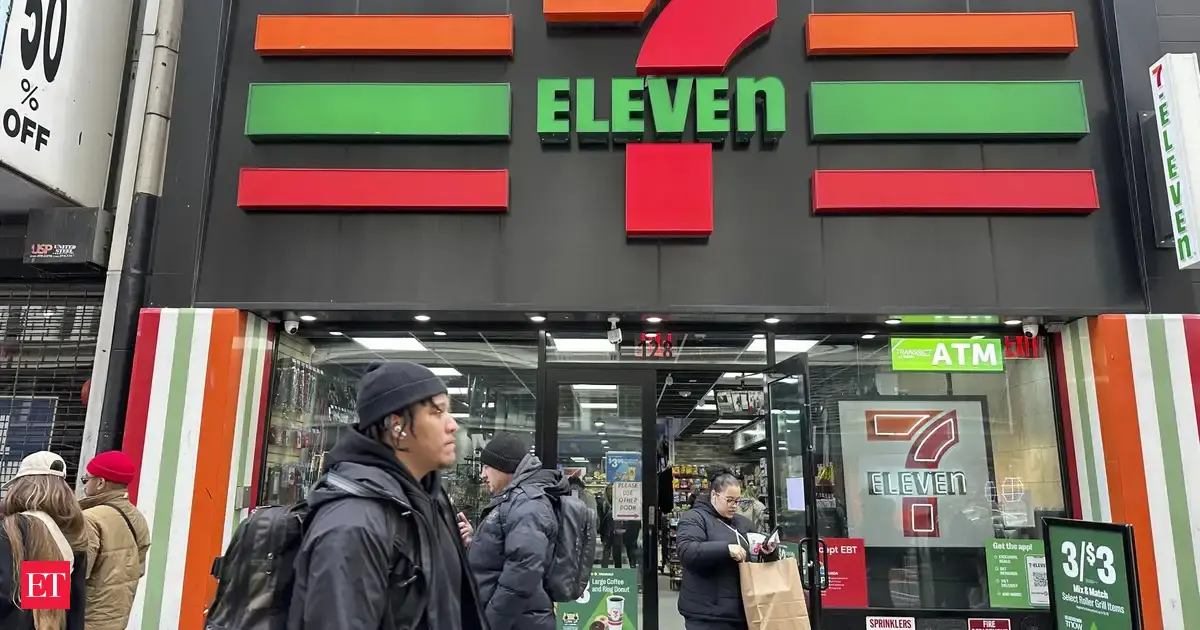
7-Eleven will close 645 North American stores by fiscal year 2026 as part of a strategic pivot to larger, food-focused locations. This move aims to modernize its retail footprint and compete with rivals offering enhanced dining experiences. The closures are part of a broader restructuring ahead of a planned IPO for its North American business.
In a strategic shift reflecting changing consumer habits and a broader reinvention of its business model, 7-Eleven, the American multinational convenience store giant, has announced plans to close 645 convenience store locations across North America during its fiscal year 2026 (March 1, 2026 – February 28, 2027).
The move, included in earnings filings from parent company Seven & I Holdings, underscores the brand’s pivot toward larger, food-focused retail experiences amid competitive pressure in the convenience sector.
7-Eleven’s decision to shutter hundreds of sites is not simply a cost-cutting measure but part of a comprehensive restructuring aimed at modernizing its retail footprint. The company is moving away from its traditional small-format convenience store model toward “large-format, food-focused” locations that emphasize fresh meals, beverages, and enhanced in-store experiences.
These new formats are designed to better compete with regional rivals like Wawa and Sheetz, which have drawn customers with expanded food menus and destination-style stores.
Industry data supports this transformation in consumer behavior. According to the 2024 State of Convenience report by NIQ, growth in the convenience store sector is increasingly being driven by offerings like higher-quality prepared foods and beverages, even as traditional categories such as tobacco and fuel remain important.
Live Events
Prepared food sales across the industry saw a double-digit increase, illustrating a shift in what customers seek when they visit convenience stores.
The forthcoming closures represent a continuation and acceleration of a trend that’s been unfolding over several years. Analysts note that 7-Eleven had already shuttered more than 600 locations across 2024 and 2025 combined as part of portfolio optimization efforts aimed at removing underperforming sites.
These actions followed earlier closures in 2024 where around 444 stores were targeted due to weak sales, inflationary pressures and declining foot traffic.
By the end of the 2026 fiscal year, the company’s North American store base is expected to shrink from over 13,000 to approximately 12,272 convenience outlets.
At the same time, 7-Eleven plans to continue adding new locations, projecting the opening of around 205 net new stores during the same period, with many adopting the new “food-first” format.
Another key motivation driving 7-Eleven’s restructuring is the planned initial public offering (IPO) of its North American business. Originally targeted for a 2026 launch, the IPO has been postponed to the fiscal year ending February 2027 in order to allow time for the company to strengthen its performance and valuation ahead of a stock-market debut.
When flight costs more than cure: Air ambulance becomes an Iran war casualty
Natural diamonds lose sheen globally, in India they’re still ‘forever’
SpiceJet desperately hunts for lifeline, starts job cuts
Bold promises vs. hard proof: Indian IT faces an AI test this fiscal
How a cozy club controls India’s gold imports
The right mix: Annuity income, domestic focus and fresh demand. 6 power sector stocks with upside potential of up to 40%
1
2
3