
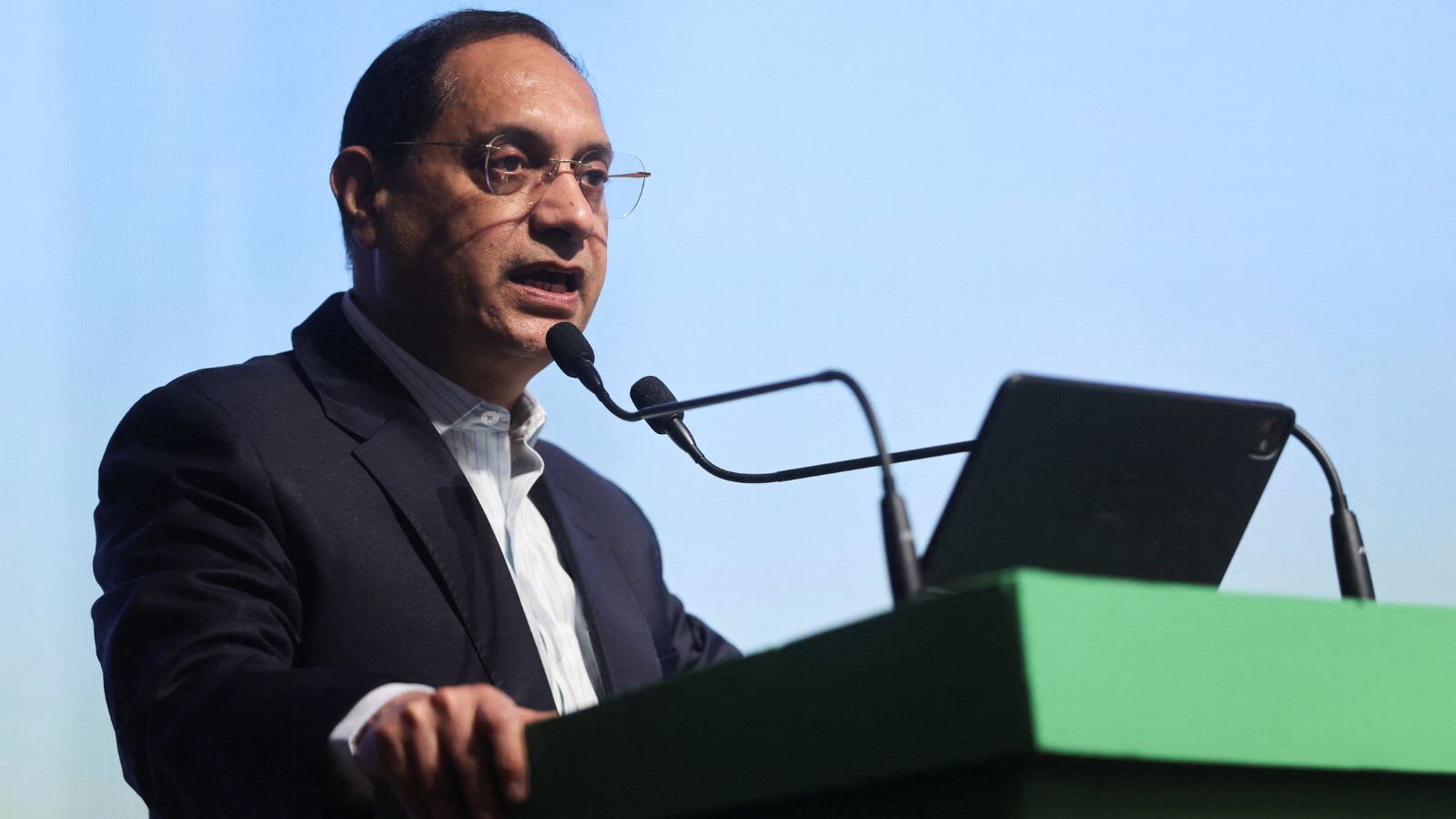
The Securities and Exchange Board of India is reworking the method used to determine the closing price of derivatives contracts on expiry days after liquidity concerns emerged following the rollout of a new auction mechanism. SEBI Chairman Tuhin Kanta Pandey said Thursday that the regulator was reviewing the process for determining derivatives closing prices through the Closing Auction Session, or CAS, on expiry days.
Pandey said MSCI had acknowledged that the rebalancing process under CAS had gone well. But the rollout of the mechanism across jurisdictions had faced some initial liquidity issues.“Liquidity builds over time,” Pandey said, suggesting that the concerns could ease as market participants become more familiar with the mechanism.
The comments came as SEBI outlined a broader push to use technology in market supervision, including a framework for artificial intelligence and a pilot project involving tokenised corporate bonds. SEBI steps up AI oversightSEBI is working to implement an artificial-intelligence supervisory toolkit developed by the International Organization of Securities Commissions, or IOSCO, in India's securities market.
Pandey said the toolkit would help regulated entities manage risks arising from AI and establish an appropriate governance framework. SEBI had earlier said it would incorporate the IOSCO framework into its broader AI strategy. The regulator's technology push comes as financial firms increasingly use AI for areas such as trading, risk management, compliance and customer-facing services, creating new supervisory and operational risks.
Tokenised corporate bonds get a test runSEBI and the Reserve Bank of India are also preparing a pilot for tokenised corporate bonds under the Demat 2.0 initiative. The project combines tokenised securities with settlement through the central bank digital currency and smart contracts.
Pandey said three issuers had issued tokenised corporate bonds under Demat 2.0 in recent days. The pilot is aimed at testing whether securities can be issued and settled using newer digital infrastructure while retaining the safeguards of the regulated market.
Technology providers face closer scrutinySEBI's technology-led supervision will increasingly use data, analytics and AI to identify patterns that may not be apparent through traditional supervisory methods and to detect emerging risks earlier, Pandey said.
But regulated entities will remain responsible for compliance, resilience and market integrity even when they rely on outside technology providers. SEBI plans to take a risk-based approach to such providers, with greater scrutiny for companies whose systems are closely linked to trading, settlement, sensitive data or investor outcomes.
The regulator is also concerned about the risks created when a single technology provider serves multiple financial institutions. A failure at such a provider could potentially disrupt several institutions at the same time. Such providers could therefore face greater regulatory scrutiny, although that would not necessarily mean they would be directly regulated as financial intermediaries.
Contracts with critical technology providers should allow regulated entities, auditors and regulators to access relevant data, systems, premises and personnel, Pandey said. Cybersecurity, data protection, business continuity and incident management would remain key requirements.
SEBI also plans to monitor technology providers after they are onboarded, rather than treating the initial assessment as a one-time exercise. AI models, software and technology architectures can change over time, creating new risks even after a provider has been approved.
Critical providers could therefore face ongoing testing, requirements to report material changes and periodic reassessment.