
Public sector banks opened the new financial year with strong credit growth, driven largely by retail, agriculture and MSME lending, but a slower pace of deposit mobilisation highlighted a familiar challenge for lenders.
Provisional business updates released by nine state-owned banks for the quarter ended June 30 showed advances growing much faster than deposits, reflecting sustained demand for loans despite increasing competition for customer deposits.
The disclosures were compiled by PTI.
Among the large lenders, Bank of Baroda reported a 17.4 per cent year-on-year increase in global advances, while deposits rose 13.8 per cent. Bank of India posted loan growth of 18.64 per cent against a 14.92 per cent rise in deposits.
Punjab National Bank recorded a 12.85 per cent increase in advances, compared with an 8.5 per cent growth in deposits. Canara Bank reported loan growth of 18 per cent, while deposits expanded 11.7 per cent. Indian Bank registered broadly balanced growth, with advances rising 13.9 per cent and deposits increasing 13.3 per cent.
Among the lenders, Central Bank of India emerged as the fastest-growing in terms of credit, with advances jumping 28.8 per cent year-on-year, although deposits grew at a slower 11.7 per cent.
UCO Bank reported 21.3 per cent growth in advances and an 11 per cent increase in deposits, while Punjab & Sind Bank posted a 19.5 per cent rise in lending against 12.2 per cent growth in deposits.
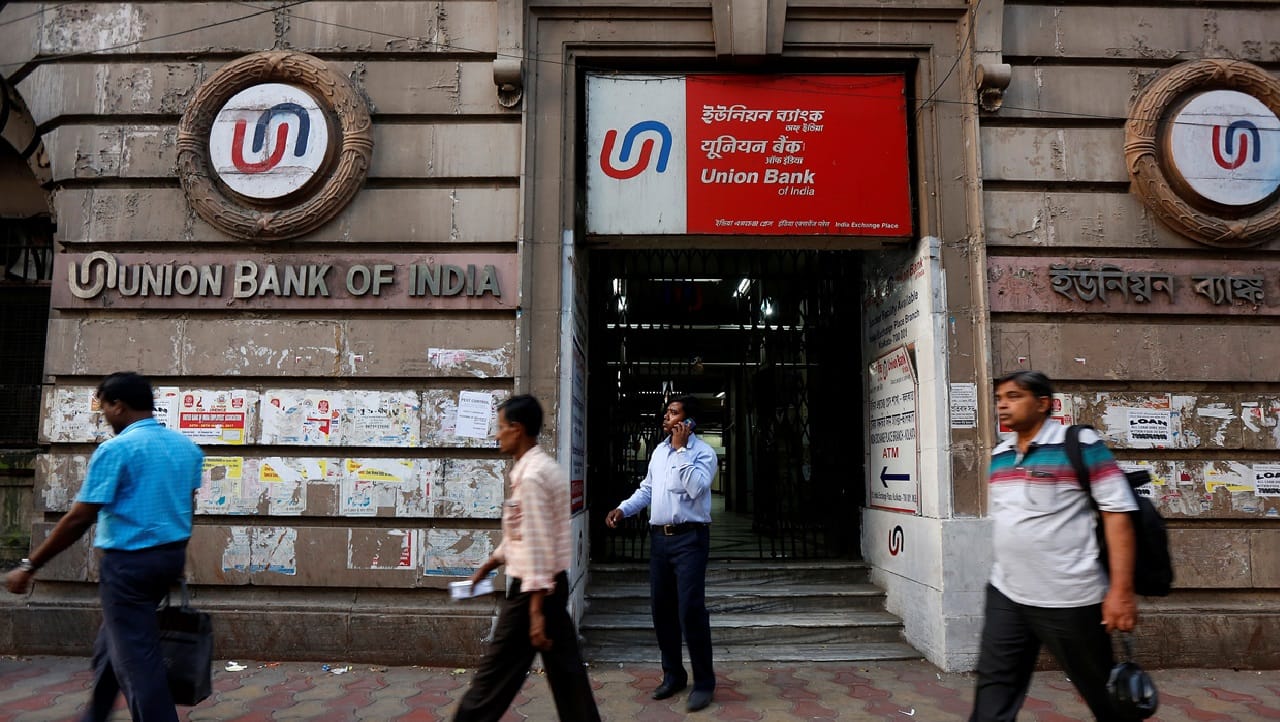
Union Bank of India stood out for relatively weak deposit mobilisation. Its deposits rose only 3.5 per cent year-on-year even as advances increased 12.5 per cent.
Retail, agriculture and MSME (RAM) loans continued to remain the biggest drivers of credit expansion across the banking sector. Canara Bank led its peers with 21.3 per cent growth in domestic RAM loans, followed by Bank of India at 19.7 per cent and Bank of Baroda at 18.5 per cent. Indian Bank and Union Bank also posted double-digit growth in the segment.
The faster pace of lending pushed credit-deposit ratios higher at several banks.
Punjab National Bank's global credit-deposit ratio improved to 73.92 per cent from 71.1 per cent a year earlier, while UCO Bank's ratio climbed to 82.15 per cent from 75.38 per cent. Union Bank's domestic credit-deposit ratio also moved above 83 per cent.
At the same time, banks continued to face pressure in attracting low-cost current and savings account (CASA) deposits. Union Bank, Central Bank of India and Indian Bank all reported marginal declines in their CASA ratios, suggesting competition for inexpensive funding remains intense.
The business updates offer an early snapshot of the banking sector's performance in FY27, indicating that credit demand remains resilient, although sustaining loan growth will depend on banks' ability to mobilise deposits at a faster pace.