
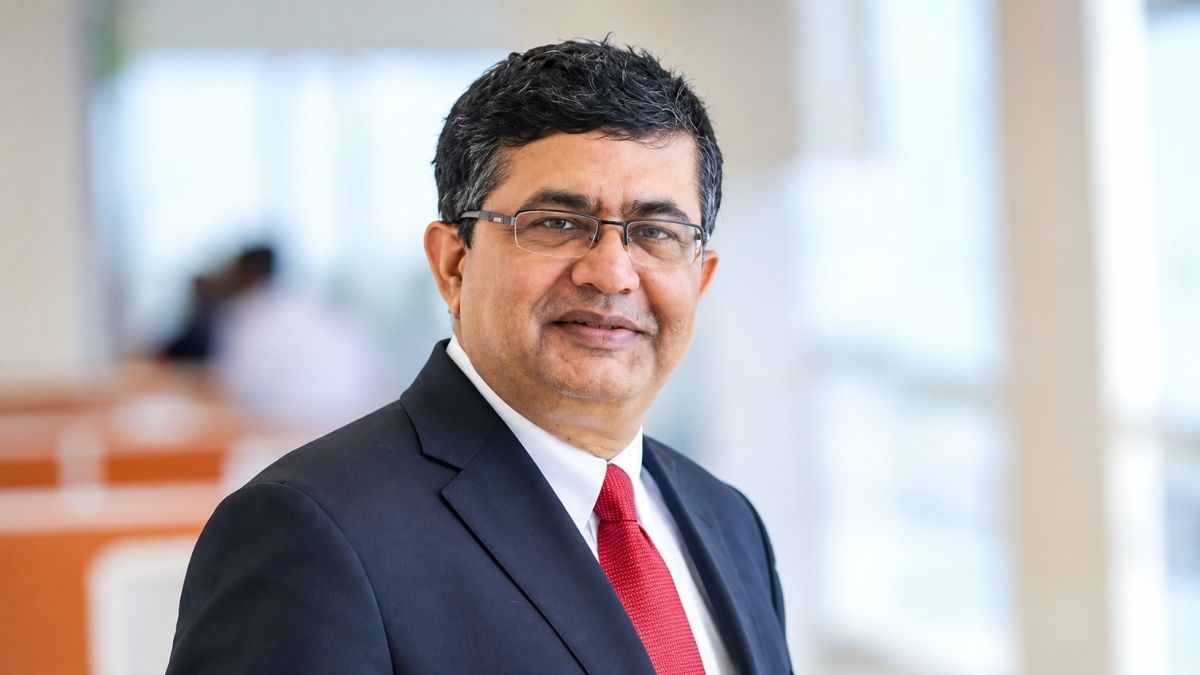
The National Stock Exchange (NSE)’s IPO price band was determined in consultation with its merchant bankers, with a conscious effort to leave some value on the table for investors. NSE MD and CEO Ashishkumar Chauhan explains to Prasanta Sahu the rationale behind the IPO valuation and its plans to diversify revenue beyond equity derivatives. Excerpts:
There have been some questions around NSE’s IPO valuation, as the premium in the unlisted market is much higher. What is the rationale?
We appointed merchant bankers and, based on their advice, decided on the price range for the IPO opening on September 17. They started with a base price that was very close to the price at which the shares were being traded in the informal market.
However, after speaking to a large number of investors, they felt that some value needed to be left on the table for retail investors. That is how the price range of Rs 1,700–Rs 1,785 was arrived at.
Your anchor book opens tomorrow. What has been the broad feedback so far?
We have met a large number of institutions across the country and around the world, and there has been very strong interest.
Tomorrow, you will see the result of that interest. If the issue is oversubscribed, there is also a need to calibrate allocations because the issue size may become slightly smaller than originally planned. With demand remaining the same or increasing, allocations have to be made in a more controlled manner.
What is NSE’s plan to diversify its revenue stream away from equity derivatives?
Broadly speaking, NSE’s income from weekly options—which people have concerns about—accounts for around 42% of our total revenue. The remaining 58% comes from equities, equity futures, monthly equity options, data services, colocation services and index services.
So, we don’t think there is too much concentration risk. This may be a concern for other exchanges where a very large portion of their revenue comes from a single weekly-options product.
SEBI has offered seven options under the new CAS framework. Which of these options do you think would be most suitable?
SEBI issued the CAS framework after putting out a consultation paper and conducting a proper consultation process. After the framework went live, there were various opinions and criticisms, based on which SEBI has again issued a new consultation paper.
Whatever SEBI ultimately decides, the broad objective is to protect the interests of small investors. They will have to take that decision. Over time, when markets feel safer, more and more people will come and trade. That has been our experience over the last 33 years.
Our job is essentially to continue working with SEBI in this regard.
NSE has a subsidiary in GIFT City. What are your plans to expand its operations?
There are currently two large products. One is bond listings, where we have done a very large number of listings on NSE International Exchange.
The second is SGX Nifty, which is now traded as GIFT Nifty. All the orders that come into SGX Nifty are transferred to NSE International Exchange, where they are matched with orders originating locally in GIFT City.
This has now become very profitable. More than $5 billion worth of futures are traded every day on average, while open interest is in the range of $20–25 billion. So, it is becoming very successful.
There are more products that the government and regulators are planning to approve. Once that happens, it will become a much more diversified exchange going forward.