
Liked this AI Summary?
Join our AI Workshop
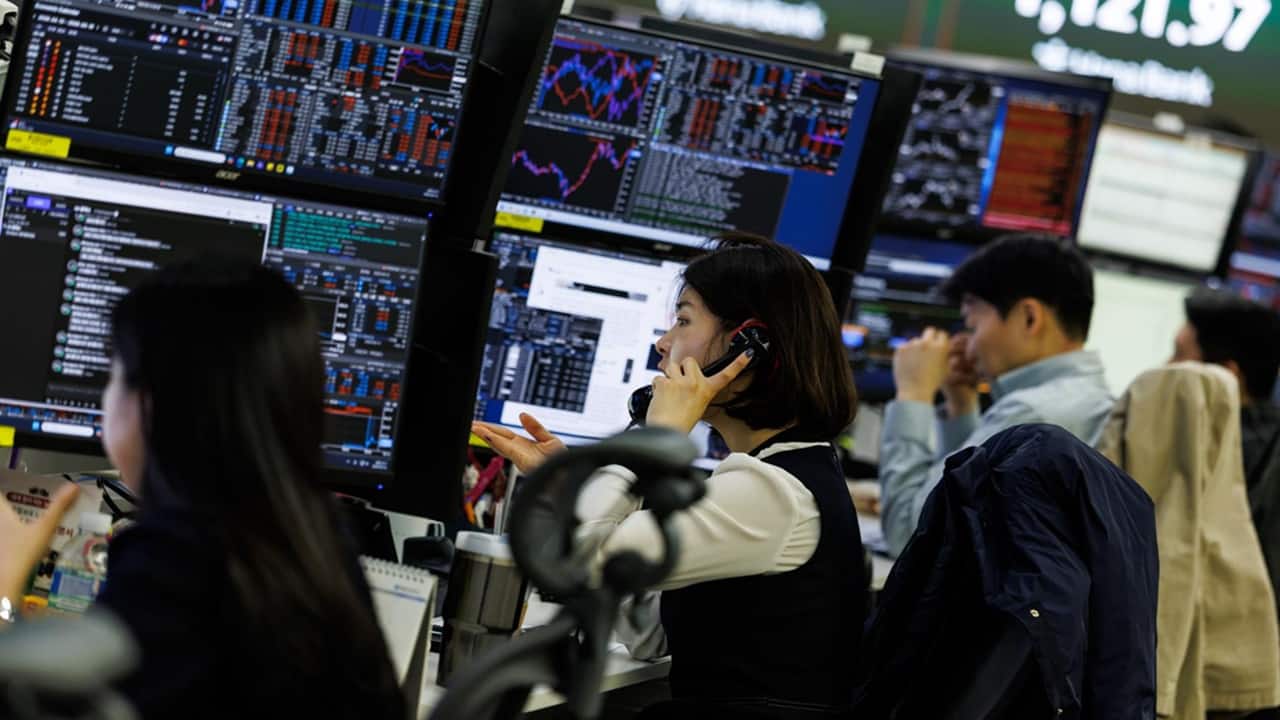
South Korea’s KOSPI has entered a bear market, turning one of the world’s strongest stock-market rallies into one of its sharpest reversals.
The benchmark index closed 5.35 percent lower at 7,246.79 on July 8, its lowest close since May 20, according to Reuters. The fall took the KOSPI more than 20 percent below its June 22 record close of 9,114.55, crossing the threshold commonly used to define a bear market.
The selloff was led by South Korea’s two biggest AI-linked chip stocks. Samsung Electronics fell 6.3 percent and SK Hynix lost 5.7 percent after US semiconductor stocks dropped overnight. The Philadelphia Semiconductor Index fell 4.7 percent as investors questioned whether AI-related spending could continue at the same pace.
That is what makes the KOSPI crash striking. This was not a market falling because earnings collapsed. It fell despite strong numbers.
Samsung Electronics said on July 7 that it expected second-quarter consolidated sales of about 171 trillion won and operating profit of about 89.4 trillion won, based on K-IFRS estimates. That compares with operating profit of 4.68 trillion won in the same quarter last year.
Normally, that kind of profit jump would lift a stock. This time, it did not. Investors had already priced in a near-perfect AI chip cycle. So the question shifted from “Is AI demand strong?” to “Can this growth continue without disappointment?”
For months, South Korea had become one of the clearest global bets on artificial intelligence. Samsung and SK Hynix are central to the memory-chip supply chain, especially high-bandwidth memory used in AI servers. As AI data-centre spending surged, investors chased Korean chip stocks aggressively.
That made the KOSPI powerful, but also vulnerable. Once doubts emerged over memory-chip pricing, AI spending and valuations, the same stocks that drove the rally pulled the index lower.
Reuters cited Kiwoom Securities analyst Han Ji-young as saying there were concerns over a slowdown in memory price growth and uncertainty over whether earnings may peak out, even after Samsung’s strong earnings guidance.
There are three reasons investors are spooked.
First, the AI trade is facing a valuation test. Chip stocks had already rallied sharply on expectations that cloud companies and AI firms would keep spending heavily on servers, graphics processors and memory chips. Any sign that spending may slow, or that memory prices may not rise as fast, can trigger a sharp correction.
Second, South Korea’s stock market has become heavily dependent on chipmakers. The country’s finance ministry said rising concentration in the semiconductor sector had increased market volatility, with swings in chip stocks having a larger impact on the broader market.
Third, leveraged products may have worsened the fall. South Korea’s Financial Supervisory Service said it would monitor recently introduced single-stock leveraged exchange-traded funds linked to chipmakers. The Bank of Korea also warned that such products could amplify one-sided trading and increase concentration in specific stocks.
The volatility was severe enough to trigger a “sidecar” trading curb on July 8, temporarily halting algorithmic trading after the index fell as much as 6.1 percent. The KOSPI had also triggered a circuit breaker earlier in the week, Reuters reported.
SK Hynix adds another layer to the story. The company is preparing a $28 billion American Depositary Receipt offering, one of the world’s largest new share sales. Reuters reported that the bookbuilding was already covered multiple times, with US investors placing large orders.
That means global investors still want exposure to the AI memory-chip story. But the KOSPI selloff shows they are becoming more selective about price, timing and future earnings visibility.
SK Hynix is a key supplier of high-bandwidth memory chips used in AI systems by customers such as Nvidia and Google, Reuters reported. Its planned Nasdaq trading is expected to begin on July 10.
So, is the AI trade over? The evidence does not show that. Samsung’s profit guidance and investor demand for SK Hynix’s US listing both suggest AI-linked memory demand remains strong. What has changed is investor tolerance.
Markets are no longer rewarding every AI-linked stock automatically. They are asking whether earnings can keep rising, whether memory-chip prices can stay strong, and whether valuations moved too far, too fast.
For Indian investors, the direct impact may be limited, but the signal matters. A sharp fall in Korean and US semiconductor stocks can weigh on global technology sentiment. It can also make investors more cautious toward expensive growth stocks that have rallied on a single theme, whether that theme is AI, electronics manufacturing, data centres or digital infrastructure.
In simple terms, South Korea’s bear market is not a verdict against AI. It is a warning about crowded trades.
The companies are still profitable. Demand is still strong. But after a steep rally, investors are no longer willing to pay any price for the AI story.