
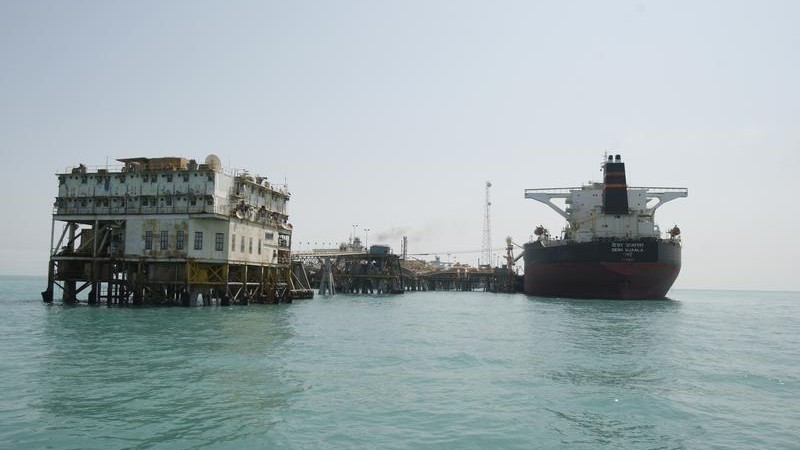
India's biggest state refiners are no longer willing to gamble on the Strait of Hormuz.
Indian Oil Corp. and Mangalore Refinery & Petrochemicals have suspended crude loadings from Iraq after a string of attacks on commercial tankers turned the world's most important oil chokepoint into an increasingly expensive and dangerous place to do business.
According to Bloomberg, Indian Oil abandoned plans to load the VLCC Lila Jamnagar, concluding that sending a fully laden 2-million-barrel tanker through Hormuz was no longer worth the risk. Mangalore Refinery has also halted Iraqi liftings as security in the region continues to deteriorate.
The decision speaks to the new reality confronting today’s crude buyers. Does anyone want to sail through Hormuz to pick up oil, assuming it is available in the first place.
India depends on imports for more than 85% of the oil it consumes, and before the Iran war roughly half of those barrels came from the Middle East. Iraq has traditionally been one of its largest suppliers under long-term contracts that leave Indian refiners responsible for arranging the shipping. That equation becomes a lot less attractive when tankers are being struck by projectiles.
The country's shipping ministry has already instructed shipowners and recruitment agencies not to deploy Indian seafarers on vessels transiting Hormuz until further notice.
The pullback also accelerates India's search for alternatives. Russian crude continues flowing into the country at near-record levels of roughly 2.45 million barrels per day this month, according to Kpler data. Supplies from the UAE and Saudi Arabia have also remained relatively resilient because both countries can bypass Hormuz for part of their exports through pipelines to Fujairah and Yanbu.
Iraq has no such workaround.
The latest disruption comes as Brent crude trades back above $90 per barrel following another attack on a tanker in the Strait and a Houthi naval blockade targeting Saudi shipping in the Red Sea.
India isn't short of crude just yet. But if buyers begin walking away from Iraqi oil because they can't safely move them, another piece of Middle Eastern supply effectively becomes stranded without a single well shutting down.
By Julianne Geiger for Oilprice.com