
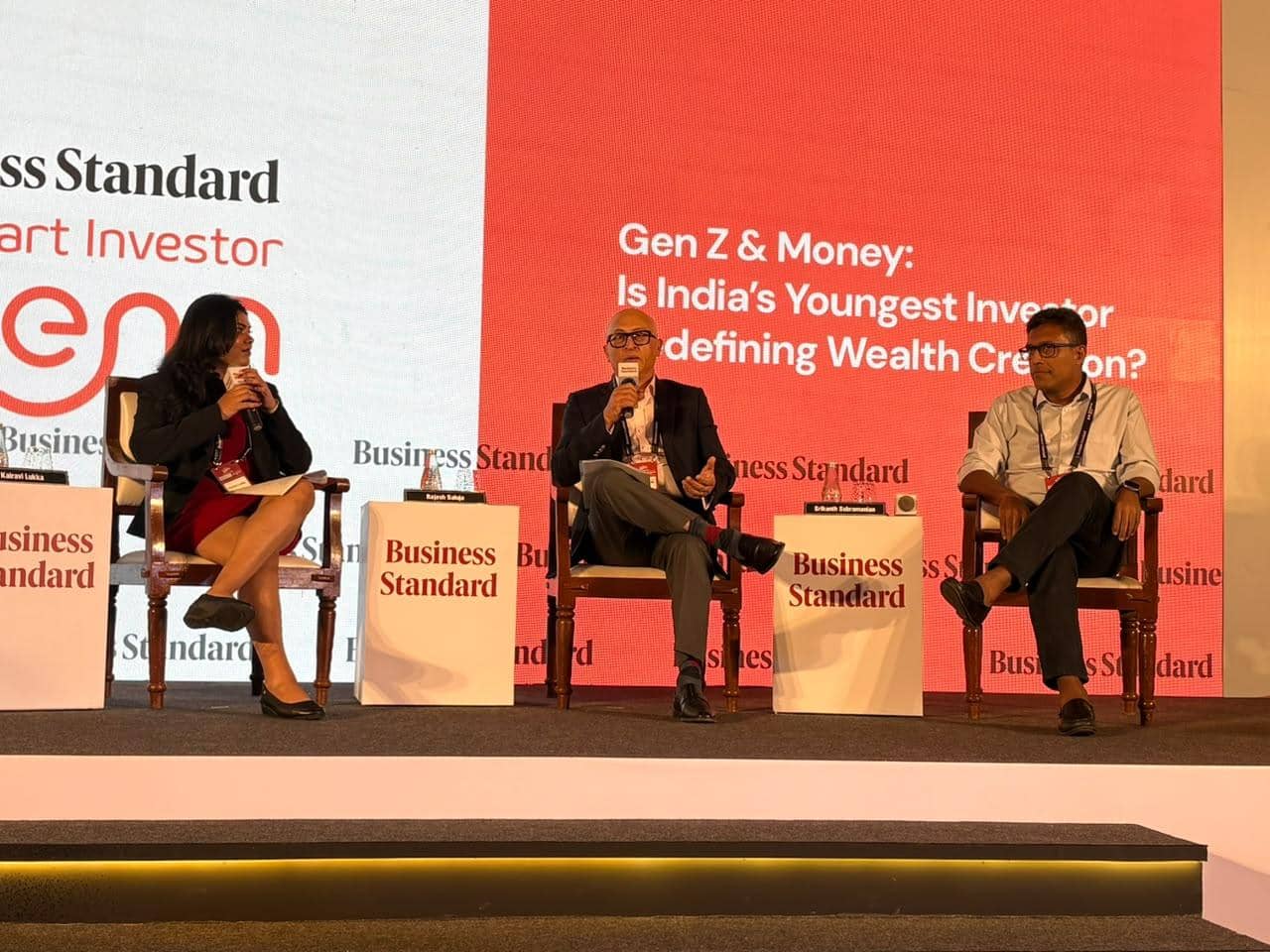
Herd mentality, fear of missing out (FOMO), and the pursuit of quick returns are among the biggest risks facing Gen Z investors, financial experts said at the Business Standard BFSI Insight Summit 2026 Smart Investor Arena on Tuesday, cautioning that easy access to investment information does not necessarily translate into better financial decisions.
Speaking at a panel discussion on 'Gen Z & Money: Is India’s Youngest Investor Redefining Wealth Creation?,' experts urged young investors to stay invested in the market, as they believe age is on their side, while advising them to avoid investments they don't fully understand.
ASK Private Wealth's CEO & MD Rajesh Saluja said that while access to information has made investing easier for the Gen Z investors, the concerns remain about how they consume it and what they do with it. He believes FOMO and peer pressure, like for previous generations, are one of the biggest risks for investors, albeit at a much bigger scale.
"People discuss investments among themselves. This happened in our generation, too: we would receive stock tips from friends and buy without doing our homework. The same thing exists today, but on a much larger scale, whether it is cryptocurrencies, developments in AI around the world, or the stock market," he noted.
He said that investing in a stock based on a friend's tip means you're taking a punt rather than making an informed investment, which is akin to gambling. Investing is a serious business. If you think making money is easy, you're living in a fantasy world, and you will eventually learn that the hard way," he said.
Another concern remains the source of information and who to trust in a quest to make quick money. Srikanth Subramanian, co-founder and CEO of Ionic Wealth, highlighted how the definition of trust has evolved, noting that while earlier generations relied on established brands, Gen Z investors increasingly trust those who bridge information gaps and provide timely access to financial information.
While this has led to the growth of DIY investing and community-based participation, it can sometimes also give rise to herd mentality. The onslaught of information has pushed some investors to take excessive risks in unfamiliar areas, such as cryptocurrencies and other alternative investments, and driven them away from equity investing, which again can prove to be costly.
Drawing on his 35-year experience, Saluja stressed the need for investing in the Indian stock market. He said that "India is an absolutely astounding growth story and one of the best ways to participate in India's growth story is to invest in high-quality equities." With age on their side, he advocated that investors start investing early to capture the benefits of compounding.
Missing out on few days also in the longer scheme can turn out to be costly. If in the last 20 years, equity index delivered annualised returns of around 12–13 per cent, Saluja said most of the returns came from a relatively small number of days, suggesting that timing the market can be costly.
"Building wealth in Indian markets requires patience and the temperament to see through volatility." The current market drawdown has challenged investors' faith in long-term equity investing, especially those who have entered the markets in the last two years.
Both Sensex and Nifty are down 14-15 per cent on a year-to-date (YTD) basis and almost 8 per cent since 2024 highs. However, Subramaniam highlighted that they are neither the first nor the last to go through this dilemma, as the market often moves in cycles and tends to recover from most drawdowns.
How you respond to those cycles can distinguish a disciplined investor from someone who makes reactive decisions. Some of the major crises of the last 25 years — from the dot-com bubble and the global financial crisis to the taper tantrum and COVID — have seen markets recover dramatically, even though the time and extent may differ.
Such markets, however, can offer opportunities to pick stocks at better valuations. "When there is fear in the market, there may be an opportunity to build a good portfolio at better prices. One approach, if you have a long investment horizon and the financial capacity to take the risk, is to increase your SIPs or investments when markets decline.
However, this is only appropriate for money you can afford to invest for the long term," said Saluja.