
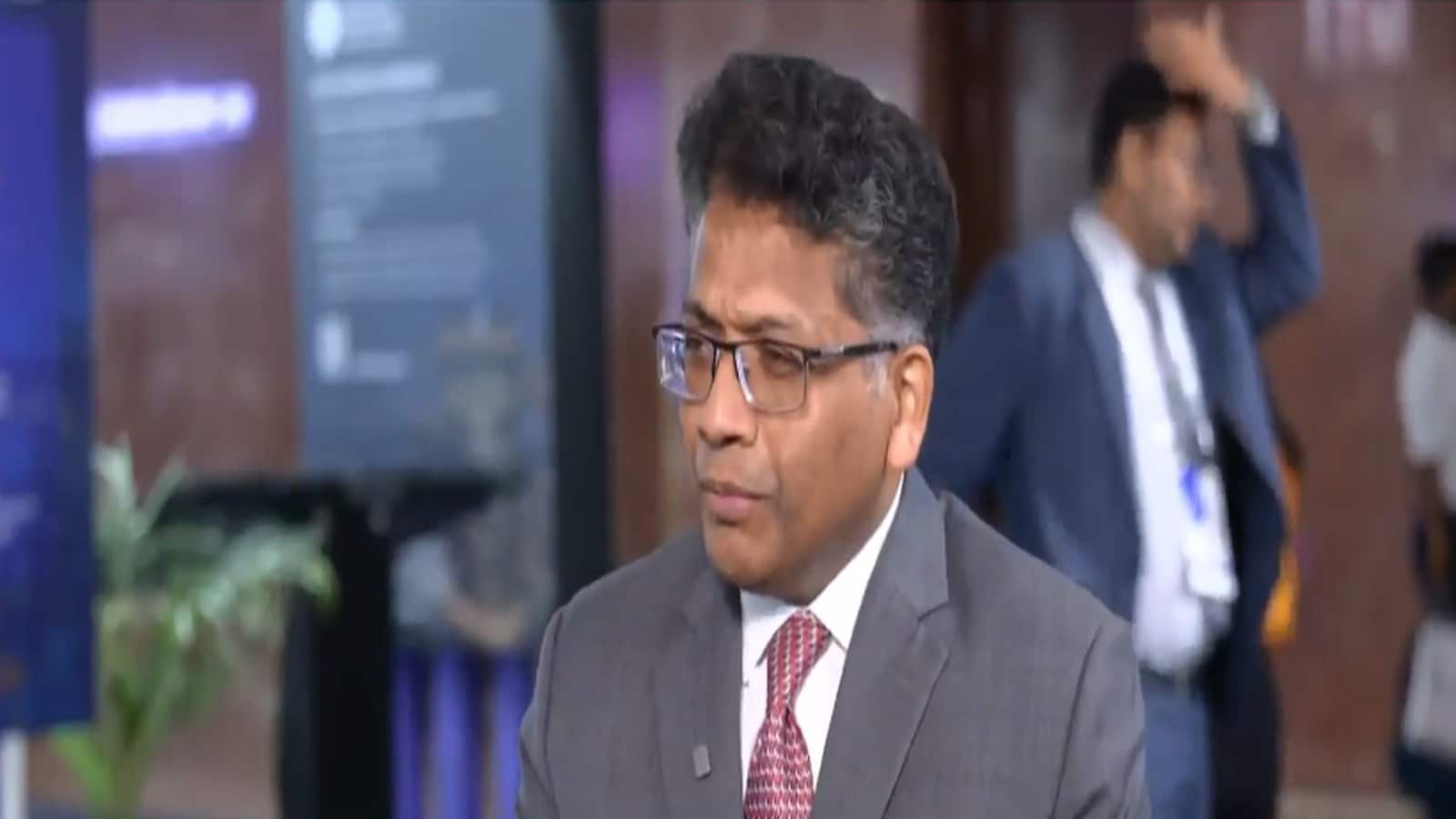
Artificial intelligence is putting pressure on traditional Indian IT companies as enterprise customer budgets shift towards AI-related investments, but the sector could emerge as a significant beneficiary once companies begin adopting AI more widely, according to Vetri Subramaniam, MD and CEO of UTI AMC.
Speaking to CNBC-TV18 on the sidelines of the Global Fintech Festival 2026, Subramaniam said traditional IT companies are currently facing headwinds as spending moves towards hardware and large language models .“For most of the traditional IT companies, they are currently facing headwinds because customer budgets are pivoting towards AI,” he said.
He, however, described the current situation as a transition phase. Once enterprises adopt AI more fully, they will need partners that understand their existing technology systems and can integrate AI into them.“I think the Indian IT industry is currently in that middle where they are struggling with the transition,” Subramaniam said, adding that the sector could play a significant role once enterprises move towards “wholehearted AI adoption”.
Indian IT could offer deep valueFor investors considering Indian IT stocks after the recent pressure on the sector, Subramaniam said the space could appeal to deeply contrarian investors because of its valuations. He said IT stocks are currently trading only slightly more expensively than bonds, making the sector an area worth considering for investors willing to take a contrarian position.“Today, when you look at the valuations of the IT sector, they're sort of trading only slightly more expensive than bonds,” he said.
However, Subramaniam cautioned that a contrarian investment does not necessarily mean stocks will start performing immediately. He said investors are effectively buying “deep value”, which can provide a margin of safety and allow them to take on the associated risk.
For most investors, however, he recommended a diversified approach rather than making sector-specific bets.“For 90% of, I would say, all investors, or maybe 99% of all investors, the simplest is always to just buy diversified funds and let the fund managers worry about what's happening in different sectors,” he said.
India ‘stuck in the middle’Subramaniam also said Indian equities face a valuation challenge when compared with other major markets. While India has delivered strong earnings growth over the past two quarters, he said the growth rate does not stand out when compared with other markets.
This leaves India in an uncomfortable position for both growth and value investors.“We're not growthy enough for those hunting for growth, and we're not cheap enough for those looking for value. So, we've gotten stuck in the middle,” he said. Despite this, Subramaniam maintained a positive medium- to long-term view on India, saying the country's secular earnings growth prospects remain a standout story.
He said the key challenge for equity markets is that corporate earnings need to exceed the expectations already reflected in valuations for stocks to perform strongly. Large-caps offer more comfortWithin the Indian market, Subramaniam said he sees more comfort in large-caps compared with mid- and small-caps, where valuations imply very high expectations for future earnings growth.
He argued that even 20% earnings growth may not be sufficient to drive stocks higher if that level of growth is already reflected in their prices.“The stock market, what you're looking for is not something that is doing well, but is doing better than what it was priced for,” he said.
Banking and finance preferred over capital marketsAmong large-cap sectors, Subramaniam said banking and financial services offer the most favourable balance between valuations and medium-term growth potential. He said the preference extends beyond banks to the wider financial services space, including non-banking lenders.“The banking and finance, the wider space, not just the banks, but the wider banking and finance space, financial services space, is where we see a sector where there is a very good trade-off between what you're paying in terms of valuations and what the potential for medium-term growth is,” he said.
He was less positive on capital markets-related stocks, saying the theme has been well discovered over the past two to three years. Instead, he favours core lending businesses, including banks and non-banks, where he sees favourable starting valuations and potential for lending growth over the coming years.
Investor expectations biggest riskSubramaniam identified investor expectations, rather than geopolitical risks, as the biggest risk to Indian markets. He said investors may have become too optimistic about the returns equities can deliver compared with the earnings growth the economy can generate.
He stressed that equities can create wealth over the long term, but should not be treated as a way to get rich quickly. Watch accompanying video for full conversation.