
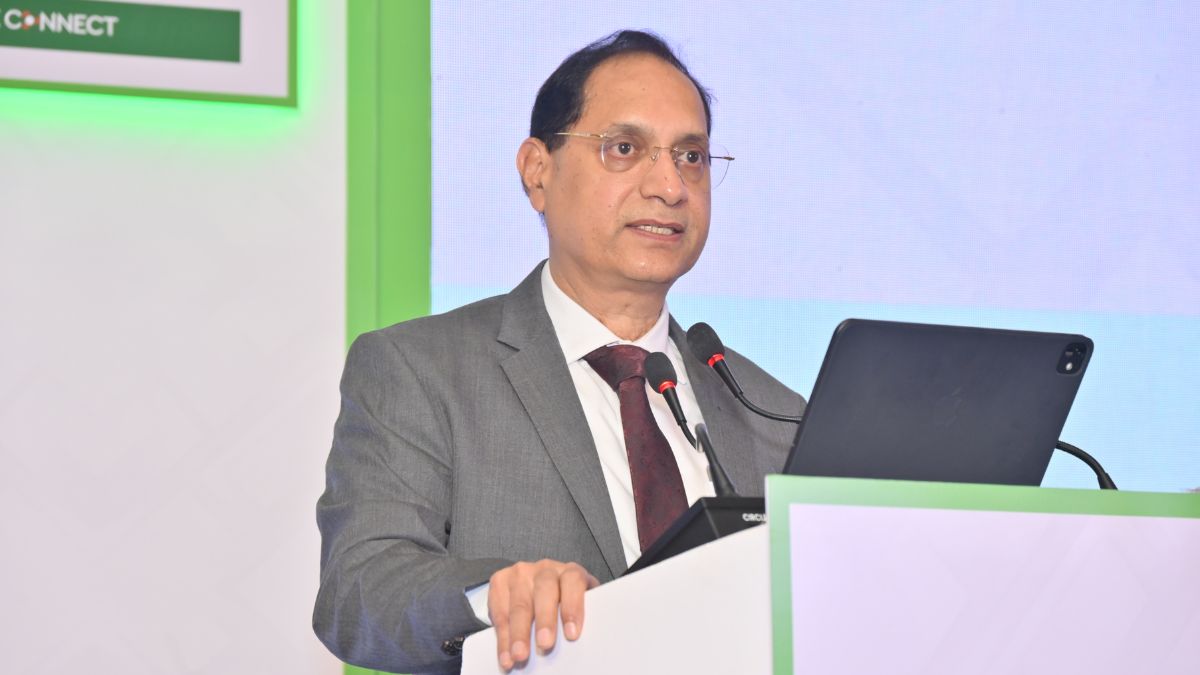
Securities and Exchange Board of India (SEBI) Chairman Tuhin Kanta Pandey announces a review of the LODR framework, reforms to the SME framework, and corporate bond market measures.
While addressing FE Modern BFSI Summit 2026, Tuhin Kanta Pandey also outlined the regulator’s priorities for India’s capital markets. “Our next priorities are simpler rules, deeper markets, responsible innovation and wider access,” he said highlighting that India’s rapidly expanding capital markets require a regulatory framework that can support growth while protecting investors and maintaining market integrity.
Pandey said SEBI will continue reviewing regulations to make compliance easier without weakening investor protection.
The regulator is undertaking a comprehensive review of the Listing Obligations and Disclosure Requirements (LODR) framework to make it more contemporary and streamlined.
“As a first step, we have proposed stronger monitoring of issue proceeds with greater transparency and accountability. Further, proposals will follow, focusing on ease of doing business and simplifying compliance without compromising investor protection.”
The regulator is also reviewing the SME framework to help enterprises raise capital while ensuring adequate safeguards for investors.
A working group examining the harmonisation of rules for investment advisers and mutual fund distributors has submitted its recommendations, which SEBI is reviewing.
Pandey highlighted the rapid expansion of India’s capital markets over the past decade. The country’s market capitalisation has grown nearly fivefold to Rs 472 lakh crore, while the number of unique investors has crossed 15 crore. Mutual fund assets have reached around Rs 83 lakh crore.
He also pointed to India’s growth outlook, noting that the International Monetary Fund’s latest World Economic Outlook projected global growth of 3.1% in 2026, against India’s projected growth of 7% in each of the next two financial years.
“This creates opportunities for domestic and global investors and calls for regulation ready for scale,” he said.
Foreign portfolio investors hold around Rs 74 lakh crore in Indian equities and debt, further highlighting their role in the country’s financial markets.
However, Pandey cautioned that the expansion of markets also increases the complexity of regulation.
“But scale changes the task of regulation. We cannot add a manual check for every new transaction. Safeguards must begin and must work by design,” he said.
Pandey said SEBI is following an approach of “optimum regulation”, under which regulatory requirements should match the nature of an activity, its risks and the level of investor sophistication.
“Investor protection and market integrity remain non-negotiable,” he said.
The regulator has reviewed regulations governing stock brokers, mutual funds, portfolio managers and settlement proceedings to simplify rules, remove ambiguities and provide greater flexibility.
SEBI has discontinued 52 overlapping mutual fund reports and notices. It has also simplified compliance reporting for stock brokers and rationalised penalties across exchanges.
Under the Garuda framework, the regulator has reduced the timeline for launching regular alternative investment fund (AIF) schemes from 30 days to 10 working days. Eligible schemes can be launched immediately upon filing.
SEBI has also eased access for eligible foreign portfolio investors and allowed netting of funds for FPI transactions to reduce funding costs.
“Our objective is clear: reduce regulatory friction without compromising safeguards,” Pandey said.
Pandey said SEBI is increasingly using technology to strengthen market infrastructure, improve settlement efficiency and protect investor assets.
“Technology lets us build safeguards into market systems,” he said.
The introduction of T+1 settlement and clearing interoperability has improved the speed and efficiency of market transactions. Measures such as pledge and re-pledge of securities, upstreaming of client funds and direct payout of securities have also strengthened investor protection.
SEBI is now exploring the use of distributed ledger technology to improve the issuance, settlement and servicing of tokenised corporate bonds.
Pandey said the regulator’s DMAAT 2.4 pilots are examining how the technology can make these processes more efficient without compromising legal certainty or investor protection.
The regulator is also working on Phase 2 of EMAP 2.0, which will enable secondary-market trading of tokenised corporate bonds. The initiative aims to improve liquidity, reduce settlement risks and speed up access to funds.
Pandey said SEBI is using technology to identify potential compliance gaps and suspicious financial promotions at an early stage.
Exchanges and depositories, working with SEBI, have developed alerts for off-site monitoring of intermediaries. The regulator’s in-house Suptak platforms flag potential compliance gaps in filings submitted by intermediaries.
Artificial intelligence-based tools are also helping SEBI identify suspicious financial promotions.
“Together, these tools help us spot risks early and focus scrutiny where it matters most,” he said.
However, Pandey stressed that technology cannot replace human oversight.
“An alert is not a finding. Human judgment remains a must,” he said.
He also highlighted the importance of reliable market infrastructure, particularly during periods of sudden market activity, cyberattacks and outages.
Even a localised disruption can affect retail and global investors, he said.
SEBI has strengthened business continuity, disaster recovery and governance requirements. It is also working to improve cyber resilience among smaller intermediaries.
Exchanges have established market security operations centres, called MSOCs, to provide affordable cybersecurity services to market participants.
Pandey said SEBI will take further steps to deepen the cash and corporate bond markets.
The regulator is reviewing short-selling rules and the securities lending and borrowing mechanism to improve liquidity and price discovery.
For corporate bonds, SEBI is developing a market-making framework to improve liquidity in the secondary market.
The regulator has also proposed fixed-income channel partners to widen retail investor access through regulated online bond platforms.
SEBI has proposed net settlement of funds for mutual fund schemes to reduce funding costs and improve settlement efficiency.
Pandey also referred to proposals aimed at improving the functioning of the corporate bond market.
“We are also working on how we can improve bond markets,” he said.
SEBI also plans to simplify access for global investors, including non-resident Indians (NRIs).
The proposed measures include simpler digital onboarding, easier know-your-customer (KYC) procedures and streamlined documentation, while retaining necessary safeguards.
Pandey said the regulator is working with other authorities to improve access and reduce friction for eligible investors.
He reiterated that the goal is to build capital markets that can accommodate rising participation, support innovation and maintain investor confidence.
“Smart regulation can make markets safer, and trust will make that growth sustainable,” he said.