
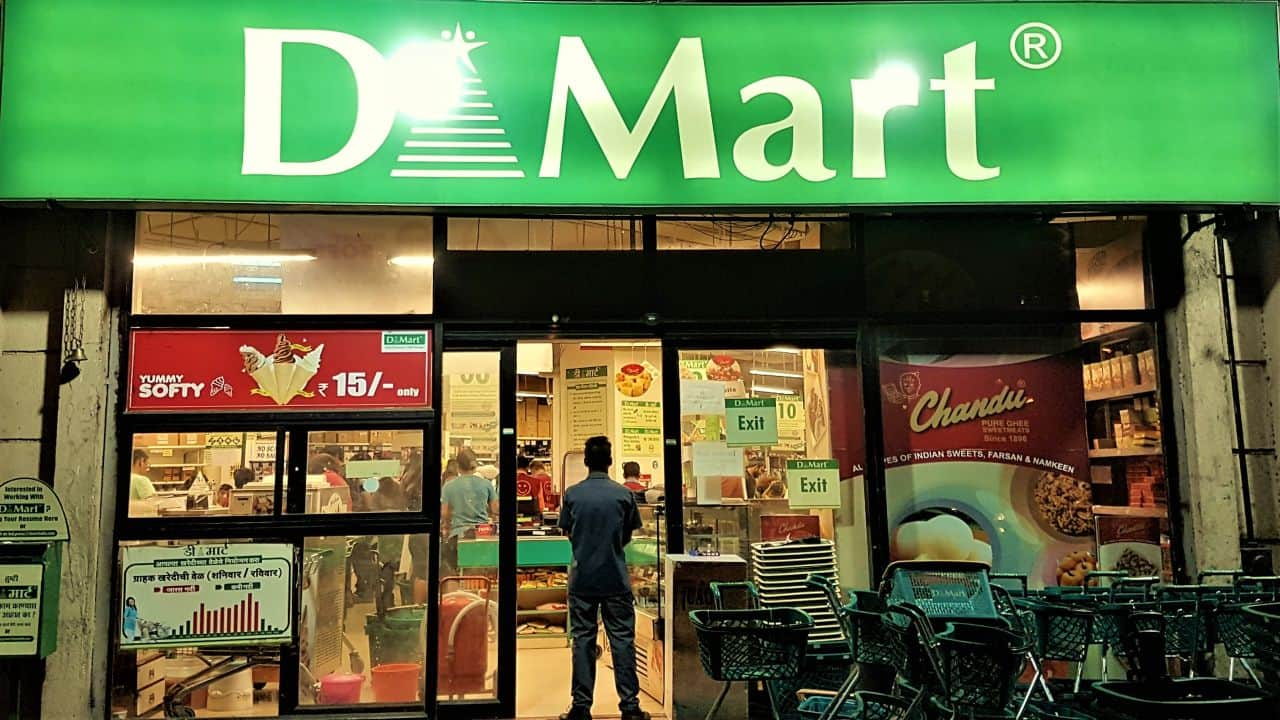
Radhakishan Damani-led Avenue Supermarts, which operates the DMart supermarket chain, is quietly testing its next growth engine: pharmacy retail.
The company has launched pilot pharmacy counters inside select DMart stores in the Mumbai Metropolitan Region (MMR), offering a flat 20 percent discount on medicines in a strategy that mirrors its successful everyday-low-pricing model in grocery retail.
The initiative is being driven through Reflect Healthcare and Retail Private Limited (RHRPL), a wholly owned subsidiary of Avenue Supermarts. DMart veteran Hitesh Shah is leading the venture. RHRPL reported revenue of Rs 12.92 crore in FY25, nearly four times that in FY24, while losses widened to Rs 2.45 crore from Rs 0.69 crore a year earlier.
Data on FY26 pharmacy unit revenue is not available. An email sent to DMart did not elicit a response b the time of publication. This story will be updated as soon as the company responds.
DMart has a network to 503 stores, with a retail business area of around 20.7 million square feet.
Industry insiders says while it’s early days, DMart’s 20 percent flat discount policy could trigger a margin squeeze for neighborhood mom-and-pop chemists (chemist shops) and intensify pressure on e-pharmacies, struggling to achieve profitability while burning cash on home delivery.
The shop-in-shop playbook
Rather than opting for capital-intensive standalone storefronts, DMart’s strategy centres on a "shop-in-shop" model, carving out dedicated pharmacy counters inside its existing brick-and-mortar hypermarkets.
An initial pilot featuring a handful of in-store medical counters has been quietly running in select locations in MMR.
Early customer response has been encouraging enough for the company to evaluate a broader rollout, sources said. However, consistent with DMart’s cautious expansion strategy, a nationwide scale-up is likely to be gradual.
"By having pharmacies within its massive, high-footfall grocery stores, DMart bypasses the two biggest challenges facing traditional and digital pharmacy players — customer acquisition costs (CAC) and incremental real estate overhead," an industry executive, who didn't want to be named, said.
DMart's move comes as India’s retail landscape becomes increasingly competitive. Quick-commerce platforms have intensified pressure on traditional retailers, forcing them to look for categories with higher margins and stronger customer stickiness.
An analyst from a domestic brokerage, speaking on the condition of anonymity, said compared to DMart operating profit margins of 7-8percent, pharmacy offers 25 to 30 percent.
"Pharmacy is a high-frequency, sticky consumer category with gross margins typically ranging between 25-30 percent for branded generics and even higher for private labels. By leveraging its existing real estate, DMart can easily digest a 20 percent customer discount while remaining unit-economic positive," the analyst said.
Fraught with challenges
While the retail trade is watching DMart's entry with keen interest, industry leaders warn that replicating grocery economics in healthcare is fraught with operational challenges.
Speaking on the viability of aggressive, flat discounting models in pharmacy retail, Thyrocare managing director & CEO Rahul Guha flagged long-term sustainability concerns.
A flat 20 percent margin cut leaves very little room for operational errors, said Guha, who is also the president of operations at API Group, which operates PharmEasy and is heavily involved in pharmaceutical distribution.
The pharmacy business is a high-inventory model in which a typical brick-and-mortar store needs to carry a wide variety of medications to ensure high fulfilment rates, he said.
A standard pharmacy must maintain up to 4,000 to 5,000 stock-keeping units (SKUs) at any given time to satisfy diverse local prescription demands. Managing such deep inventory cycles while absorbing a 20 percent discount margin, may not be sustainable in the long run, he said.
Experts also said that unlike the fast-moving consumer goods (FMCG) sector, the fragmented nature of the pharmaceutical industry requires pharmacy chains to deal with 50 to 60 individual manufacturers.