
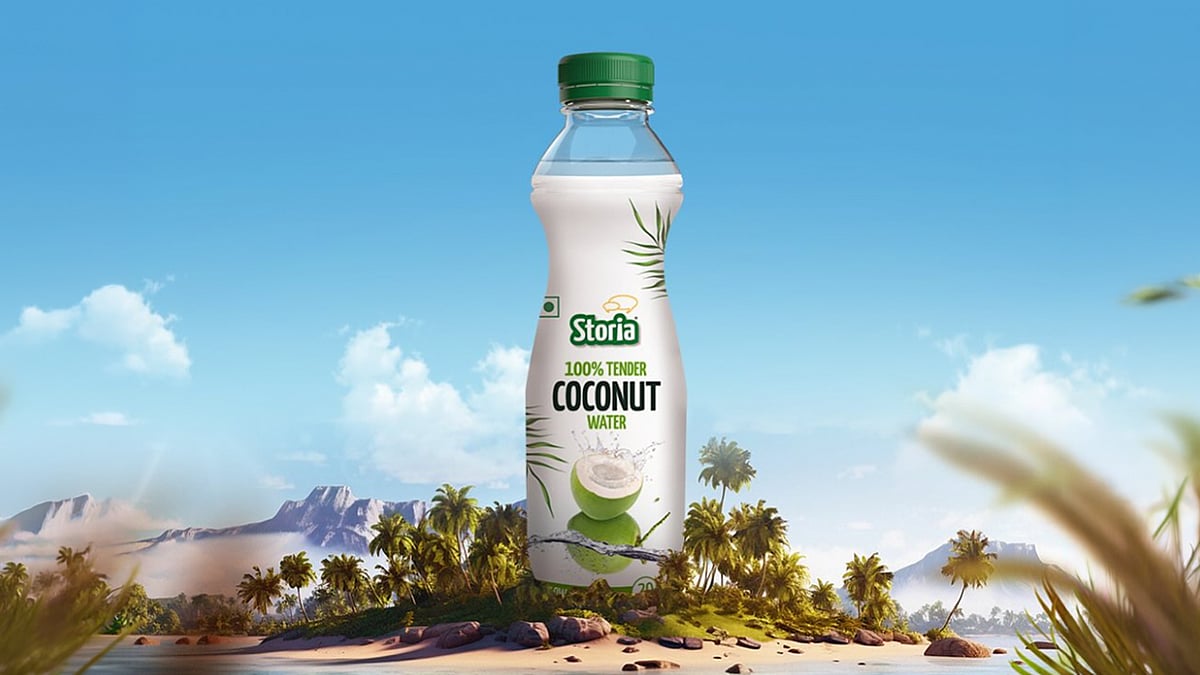
The CCPA found that Storia’s coconut water product was advertised as “100% Tender Coconut Water” and “100% Natural Tender Coconut Water” even though its ingredient declaration showed that it contained water and coconut water concentrate of 9.6%, equivalent to 100% coconut water, marked as reconstituted.
It also examined Storia’s Pomegranate, Mixed Fruit, Mango and Guava Chilli variants, which were advertised as “100% Juice”. The authority noted that the ingredient panels showed that these products were predominantly water, with fruit pulp or concentrate ranging between 4% and 16%, along with apple juice concentrate and water.
The authority also found fault with the use of names such as Pomegranate and Mixed Fruit where apple juice concentrate was present in equal or greater proportion than the named fruit ingredient.
On the coconut water claim, the CCPA rejected Storia’s argument that its disclosures on the back of the pack were enough to inform consumers that the product was reconstituted.
“A disclaimer that seeks to undo what the principal claim has already communicated to the consumer is not a cure,” the authority said.
The CCPA also held that Storia had made health claims such as “Combats Virus”, “Improves Metabolism”, “Kills Fatigue” and “Rehydrates the Body Faster than Water” without adequate product-specific scientific substantiation.
It noted that the “Combats Virus” claim was still visible on Storia’s website in September 2024, despite the company claiming that the statement had been discontinued in December 2023.
The authority directed Storia to immediately discontinue the claims “100% Tender Coconut Water” and “100% Natural Tender Coconut Water” on its website, packaging and e-commerce listings.
It also directed the company to stop using the claim “100% Juice” for its Pomegranate, Mixed Fruit, Mango and Guava Chilli variants on its website and e-commerce listings.
Further, Storia was ordered to discontinue the claims “Combats Virus”, “Improves Metabolism”, “Kills Fatigue” and “Rehydrates the Body Faster than Water” across its website, packaging and e-commerce listings.
The company was also directed not to attribute any health or therapeutic benefit to its products in future advertisements unless such claims are supported by product-specific scientific substantiation.