
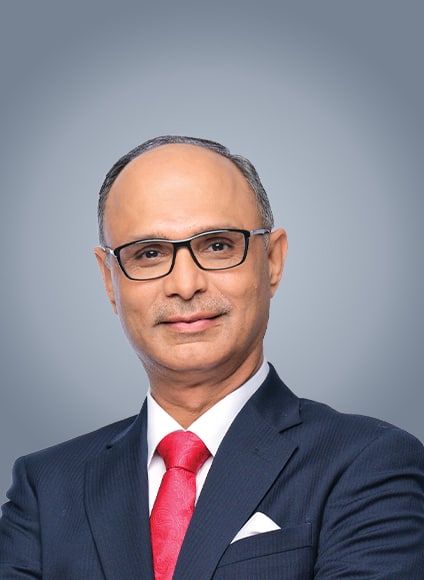
State-run Bharat Petroleum Corporation Ltd (BPCL) has secured sufficient crude oil and natural gas supplies through August and has already lined up part of its cargoes for September despite escalating tensions in the Strait of Hormuz and the Red Sea, Chairman and Managing Director Sanjay Khanna and Director (Finance) VRK Gupta told Moneycontrol. The company, however, cautioned that if the escalation continues, the company may face challenges in securing supplies beyond August and it is evaluating alternative shipping routes for energy supplies.
Commenting on the possibility of a further hike in retail fuel prices, the company said that a further revision would depend upon the movement of global oil prices, adding that global crude prices could ease if disruptions in key shipping routes are resolved.
Excerpts:
How do you think the recent tensions in the Strait of Hormuz and the Red Sea will impact the company’s oil supplies?
This is the recent development on the Strait of Hormuz, as well as the Red Sea side. But let me assure we have completed all the deals, whatever requirement, till October. Suddenly, we need around 3 million metric tonnes of crude every month, including the term and spot. Till August, we have completed all the deals. But due to the war situation, the weightage to spot has gone up from earlier 45-50 percent to almost 60 percent now. That means the term is coming around 40 percent.
For the month of September, we have started looking to evaluate the offer. We have planned for 17 cargos. We need around 15 to 17 cargos (of crude oil) every month. We have already finalised two to three cargoes and we are hopeful that in the next one month and 10 days, we can complete the balance of our requirement for September.
But post September it is very difficult to predict how things will move, in case both the routes are completely closed. Today, even though there are certain issues with the two routes, cargos are still coming. Mainly, cargo from Fujairah and Oman are coming so there is no disturbance. Only from the Saudi side, Strait of Hormuz, crude supplies are not coming but from Yanbu, supplies are coming.
But now there are also certain issues on the Red Sea side. Now, they may find out some additional route. Maybe they can take it to the Suez Canal via Europe. There is a route available, but it requires a long period of transit time, a little bit more freight cost. But another route is available, even if these two routes are choked out.
Then one more route is available, maybe on a test basis. We will shortly look at it, a small cargo we will move and accordingly we are gearing up to use that route also.
We will plan month-on-month basis, how the dynamic changes, market movements and how it changes. But we are hopeful about our core requirement of our refinery, we can choose from anywhere, either from US, or Angola, or Venezuela. And the good thing is that we have tested the Venezuelan crude, and our refineries can process it.
How have LNG and LPG supplies been affected? What is your current supply position, and what contingency measures are in place if Middle East shipments face prolonged disruption?
There is definitely an issue in securing LNG supplies because the major supplier is Qatar only, but we have some term contracts from Australia. So, whatever of is our refinery requirement, definitely we will get that supplied from spot purchases. In spot, we can procure from the East Pacific, East Asia. There will definitely be some issues in supplies from Arabian Gulf because Qatar gas may not cross the strait of Hormuz.
As far as LPG is concerned, we have adequate stock till August end. But if the problem persists, September may become a challenge. But as of now, till August we have supplies and we don’t see any need to shift the petrochemicals mix to increase LPG output. But it all depends how it unfolds in the time to come.
What was BPCL’s crude and gas sourcing mix during April-June?
In Q1FY27, we imported 38 percent of crude oil from Russia, 17 percent from Abu Dhabi, and 16 percent from Saudi Arabia. These three are our major resources. Oman accounted for 9 percent of our overall imports during the quarter. The US sourcing is around 6 percent.
The US is our major LPG supplier. In Q1FY27, we procured around 902 TMT from the US accounting for 71 percent of our LPG supplies.
With the US revoking the sanctions waiver on Iranian oil, what is the status of BPCL’s discussions with Iran on long-term supply arrangements?
We had a discussion with Iran officials when the US announced a sanctions waiver. The team had come here to look forward to a long-term agreement or supply arrangements. But, unfortunately, again, that waivers have been revoked. So, we are not sure whether there will be a new waiver or not and accordingly we will see. Earlier also we took a good amount of volume from Iran. In 2019, we have taken the last volume of Iran oil. So if the waiver continues, we will purchase Iranian oil.
Given crude oil prices remain elevated following the latest geopolitical tensions, can we expect a further revision in retail fuel prices?
We have to wait and see how the price movements occur. If crude prices go up or not. For example, if the things are settled, there is no choking of the two routes then again, crude will come down to maybe $80 per barrel levels. We need to give it a little bit more time, we have to wait and see.
What are BPCL’s capex targets for FY27?
We are having the highest ever capex plan of Rs 25,000 crore, the highest level in the history of BPCL. And in the first quarter of FY27 itself, we have incurred Rs 4,400 crore. We are very much on track, and with the going conflict, in fact, there were concerns whether it will reduce our expenditure. But I think our financial position is very strong and we are very optimistic that we'll be able to spend this money.