
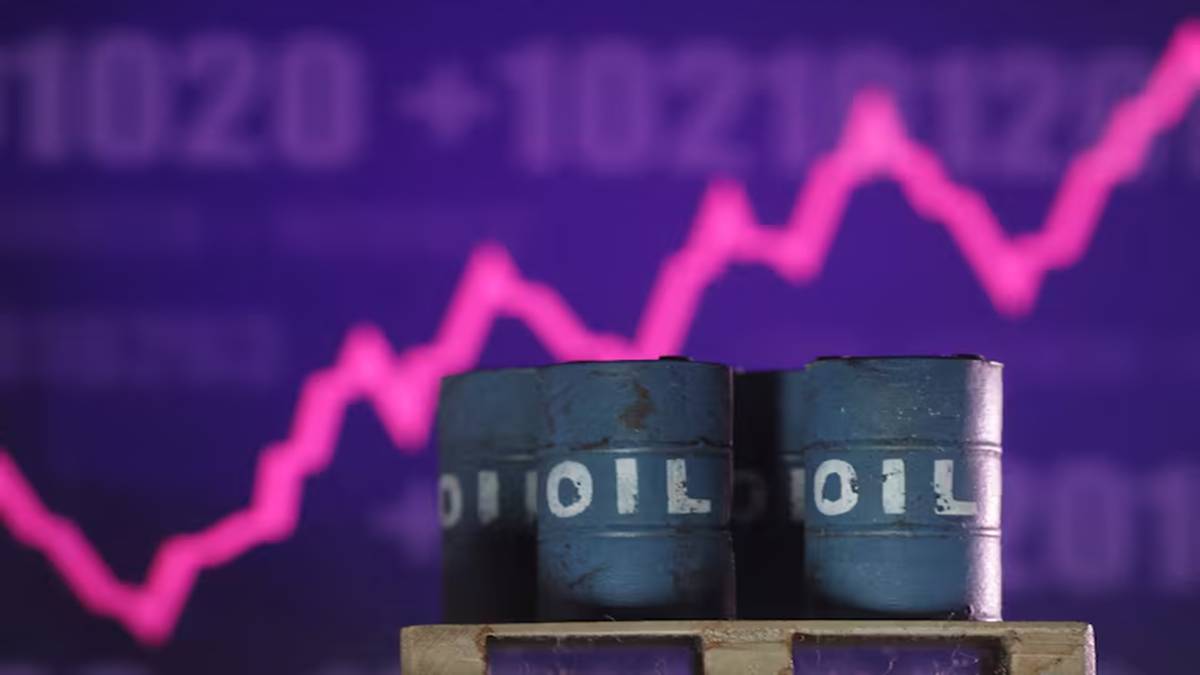
Soaring crude oil prices pushed up benchmark bond yields by 6 basis points on Monday climbing to 7.1848%, the highest levels since April, 2024. Bonds were also weighed by heavier supply at the longer-end and the elevated US treasury yields which were hovering around 5.22%, market participants said.
Meanwhile, the rupee slipped to 95.9825, its weakest levels in more than a week as currency markets fretted over soaring crude prices. The currency was lower by 0.2% over Friday’s closing. Dealers said the central bank had likely intervened in the markets as reflected in dollar sales by some state-run banks.
Brent oil was ruling at $107-108 per barrel with no resolution to the West Asia conflict in sight. The markets are also penciling in tighter monetary policy, with traders pricing in a 25 bps hike at the upcoming policy review.
Dealers noted that stop-losses –for bonds and overnight indexed swaps–may have been triggered paving the way for yields to test 7.25% on the ten-year paper. Apprehensive of a hike in the repo rate, investors are understood to be staying away from longer-dated bonds so as to rein in mark-to-market losses. There is also concern the Reserve Bank of India (RBI) might resort to Open Market Operations (OMO) sales as it soaks up excess liquidity form the system. On Monday, the central bank completed Rs 1 lakh crore of debt sales, the biggest annual.
Last Friday, the government announced the H2 borrowing plan of Rs 7.86 lakh crore, taking the Fy27 gross market borrowings to about Rs 16 lakh crore, lower than the Budget announcement of Rs 17.2 lakh crore. Even so, the heavier concentration of long-dated issuance unsettled markets, pushing up long-end yields. The 15-year bonds saw the sharpest increase, with its share of issuance rising to 17.6% in H2 from 14.5% in H1, while the share of five-year bonds fell to 12% from over 15% in H1. Consequently, 15-year bonds saw a sharp sell-off, with yields rising by 10 bps to 7.37%.
Reuters cited Goldman Sachs analysts as saying the RBI has the ability to keep the rupee within the 94-97 range, or at least manage the pace of its depreciation. A glut of capital inflows sparked by policy measures has given the Indian central bank ammunition to go against the tide but investors are keeping an eye on the persistence of that defence. Between June 8 and September 18, these measures drew in $143.6 billion.